• Skip to primary navigation
  • Skip to main content
  • Skip to primary sidebar
Generation Iron

Generation Iron Fitness & Strength Sports Network

  • Movies
  • Original Content
  • Reviews
    • Supplements
      • Pre-Workout
      • Fat Burners
      • Testosterone Boosters
      • Creatine
      • Protein
      • BCAAs
      • Multivitamins
      • Omega-3
      • Joint Supplements
      • Super Greens
      • Meal Replacement
    • Recovery
      • Best Cold Plunges
      • Best Saunas
      • Best Foam Rollers
      • Best Massage Guns
    • Programs
      • Best Online Workout Programs
      • Best Workout Streaming Services
      • Best Home Workout Programs
  • Equipment
    • Cardio
      • Treadmills
      • Best Exercise Bikes
      • Best Stair Climbers
    • Fitness Accessories
      • Best Apparel
      • Best Gym Bags
      • Weightlifting Shoes
    • Strength
      • Best Dumbbells
      • Best Barbells
      • Best Kettlebells
      • Best Squat Racks
      • Best Weightlifting Belts
      • Best Home Gym Equipment
      • Complete Home Gyms
    • Training
      • Best Knee Sleeves
      • Best Wrist Wraps
      • Best Weightlifting Wraps
      • Best Weightlifting Gloves
  • More
    • About Us
      • Our Team
      • Our Experts
    • Advertise
    • Franchise With Us
    • Exercise Guides
    • Athlete Profiles
    • Patreon
    • Podcasts
    • Power 30
    • Bodybuilding Awards
    • Supplement Awards
  • Shop
News

Could Bodybuilders Be At Risk For This Once Uncommon Kidney Injury?

Jon Salmon Managing Editor Generation Ironby Jonathan Salmon Published on Feb 18, 2021

This post may contain affiliate links (disclosure policy).

No pain, no gain.

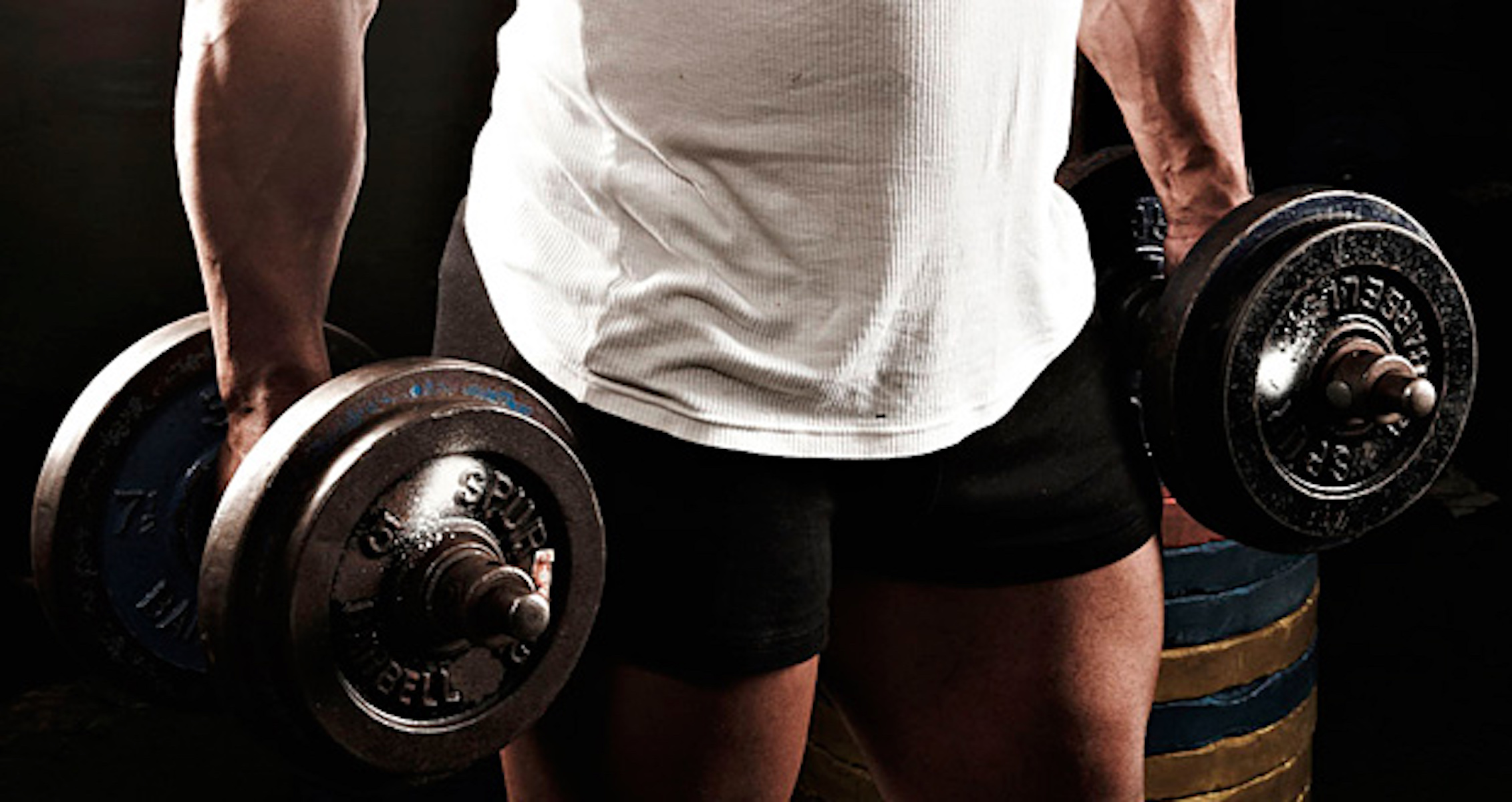
It’s the common adage when it comes to building muscle and strength. If you aren’t feeling your muscles getting pushed to the limit then you’re simply not training hard enough. So much information out there suggests that if you want to make some quality gains then it means pushing your body hard enough to cause a certain level of muscle damage in order to have your muscles repair and grow.

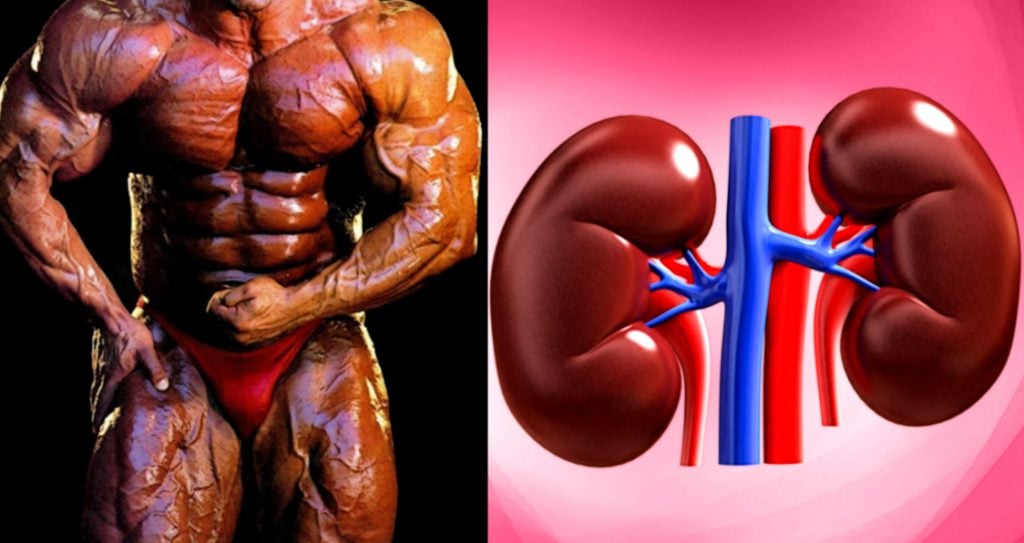
While no pain, no gain may be true, what’s also a reality is that if you aren’t recovering properly you could just as easily do some long term damage; damage that can ultimately harm your kidneys.

We just recently had a discussion with Milos Sarcev about some of the truths and myths about protein consumption and kidney damage – but in this article we are going to talk about a different kidney ailment.

Rhabdomyolysis, or rhabdo for short, is a pretty obscure kidney disorder that seems to be afflicting more and more active lifters these days. Symptoms include consistent pain throughout the body as well as severe swelling around the area that has been trained.

In a story written by Victoria Albert of The Daily Beast, 17 year-old lifting enthusiast Jared Shamburger and personal trainer Alex Feszko both were afflicted by this rare kidney disorder, their common link: overtraining. Where Shamburger suffered severe pain throughout his body, Feszko recalls performing a bicep and tricep routine that wasn’t all that heavy, yet experienced extremely adverse effects.

Feszko said, “Within 24 hours, I was in agonizing pain… my biceps and triceps had swollen astronomically, like tripled, quadrupled in size. It felt like my bones were going to break and my muscles were going to explode.”

So what exactly is rhabdo anyway? Orthopedist David Geier expounded on the subject.

“The breakdown products of muscle get into the bloodstream,” said Geier. “And little amounts of that would be OK. But a lot, that’s when you get organ damage—and it’s usually kidney damage.”

Dr. Geier described Shamburger and Feszko’s specific cases as exertional rhabdo, which essentially means rhabdo caused through exercise.

So why the increase in cases? It seems that the culture of fitness and bodybuilding have made these cases even more common than ever before. There’s a notion that everyone these days should look like a superhero, but that comes with severe drawbacks, especially when you don’t know when to listen to your body and drop the weight rather than push through the pain in order to get more gains.

Joe Cannon, renown exercise scientist and personal trainer explains that pushing yourself too hard too fast is a surefire way to suffer from rhabdo. With first time personal training sessions being 30 minutes in length on average, Cannon notes that many personal trainers could push their clients too fast resulting in the devastating kidney injury.

“They’re squeezing a lot of intensity in a short time period,” he said. “And that’s really the thing with rhabdo. It’s when you do a lot of stuff you’re not used to doing.”

Kidney injury is no joke, but what is really concerning is the common bodybuilding mindset of no pain, no gain. When do you know you’ve pushed your body past it’s limit? How do you know if your muscles are abnormally swollen or if you’ve just got a good pump? It truly can be a concerning problem to deal with. The best bet is to always start slowly, warm up properly and really listen to your body above all else.

For more news and updates, follow Generation Iron on Facebook, Twitter, and Instagram.

Jon Salmon Managing Editor Generation Iron

About Jonathan Salmon

Managing editor of Generation Iron, Jonathan Salmon is a writer, martial arts instructor, and geek culture enthusiast. He has been writing about bodybuilding, combat sports, and strength sports for over 8 years. Check out his YouTube, Instagram, Twitter, Facebook, and Sound Cloud for in-depth MMA analysis.

View All Articles

Primary Sidebar

Get the Latest

Stay informed with the latest news, product reviews, & expert advice.

Popular Reviews

  • best protein powders

    The Best Protein Powder Supplements of 2026 (Expert Vetted)

  • Creatine group shot

    Best Creatine Supplements For Muscle Growth in 2026 (Personally Tested)

  • top x pre workout

    The 14 Best Pre-Workout Supplements of 2026 (MD Reviewed)

  • nac supplements

    The Best NAC Supplements for Health, Recovery, and Daily Wellness (2026 Guide)

Trending Articles

  • female fitness models

    18 Best Butts On The Internet (Updated 2026)

  • Chris bumstead's 2024 workout and diet plan

    Chris Bumstead’s 2025 Complete Bodybuilding Workout & Diet Plan

  • The Ultimate Mike Mentzer Workout and Diet

  • natural olympia

    A Complete List Of Natural Olympia Winners Throughout The Years

Popular Now

  • best protein powders

    The Best Protein Powder Supplements of 2026 (Expert Vetted)

  • Creatine group shot

    Best Creatine Supplements For Muscle Growth in 2026 (Personally Tested)

  • top x pre workout

    The 14 Best Pre-Workout Supplements of 2026 (MD Reviewed)

  • female fitness models

    18 Best Butts On The Internet (Updated 2026)

  • best citrulline supplements

    The Best Citrulline Malate Supplements for Performance and Pump

  • nac supplements

    The Best NAC Supplements for Health, Recovery, and Daily Wellness (2026 Guide)

Generation Iron

Generation Iron is the first and only digital network delivering health, fitness, bodybuilding, and strength sports content. We deliver premium content with the biggest names in fitness and provide expert coverage, reviews on top brands, workout tips and trends in the worlds of fitness, health and strength sports.

Strongman Corporation
Vladar

Sections

  • Trending News
  • Original Movies
  • Original Content
  • Supplement Reviews
  • Equipment Reviews
  • Exercise Guides
  • Nutrition Guides
  • Athlete Profiles

More

  • About Us
  • Our Team
  • Our Experts
  • Advertise
  • Franchise With Us
  • Podcasts
  • Power 30
  • Shop

CONTACT

Generation Iron Brands LLC
134 West 29th Street Suite 902
New York, NY 10001
Email: info@generationiron.com

Follow

  • Facebook
  • Instagram
  • X / Twitter
  • YouTube

© 2026 · Generation Iron · Disclaimers · Privacy Policy · Accessibility