Make sure you don’t turn to mush
One of the most common fitness myths is that muscle mass turns into fat when you stop lifting weights. You’ve probably heard it at the gym, on social media, or even from friends: “If you build too much muscle mass and then stop training, it’ll all just turn into fat.”
The truth? Muscle cannot turn into fat. They are two completely different tissues, and one cannot magically transform into the other. But there’s a reason why people believe this myth—because when someone quits lifting, they often lose muscle mass and gain body fat, creating the illusion that muscle has “converted” into fat.
In this article, our team at Generation Iron is going to explain exactly what happens to your body when you stop lifting, why your physique changes, and how you can minimize muscle loss and fat gain.
Muscle vs. Fat: Two Different Tissues

- Muscle tissue is made of fibers that contract to produce movement and strength. It’s metabolically active, meaning it burns calories even when you’re resting.
- Fat tissue (adipose tissue) is your body’s way of storing energy for later use. It doesn’t contract, and it burns far fewer calories than muscle.
Because they serve different purposes and are made of completely different structures, muscle cannot “turn into” fat and fat cannot “turn into” muscle.
What Actually Happens When You Stop Lifting
When you quit strength training—or significantly reduce your workouts—several changes occur:
1. Muscle Atrophy (Shrinking Muscles)
Without regular resistance training, your body no longer needs to maintain large, strong muscles. Over weeks and months, the fibers shrink, leading to smaller, less defined muscles.
2. Slower Metabolism
Since muscle burns more calories than fat, losing muscle means your resting metabolic rate drops. That makes it easier to gain weight, even if your diet stays the same.
3. Fat Gain
If you continue eating the same amount of calories while burning less, your body stores the excess as fat. Over time, this adds softness around the midsection, arms, and legs.
4. Loss of Strength and Performance
Along with muscle size, your strength declines. Everyday tasks that once felt easy may start to feel more challenging.
Why People Think Muscle Turns Into Fat
The myth comes from appearances. A once-muscular athlete who stops training may look “puffy” or “soft” months later. But what really happened was muscle loss combined with fat gain—not one tissue morphing into another.
How Long Does It Take to Lose Muscle?
- After 2–3 weeks of inactivity, strength begins to decline.
- Noticeable muscle size reduction often shows after 4–6 weeks of no training.
- The longer you’re inactive, the more pronounced the changes become.
The good news is muscle memory is real—you can regain lost muscle faster than it took to build it initially.
Can You Prevent Muscle Loss and Fat Gain?
Yes—and here’s how:
- Keep lifting, even minimally. Just 1–2 resistance training sessions per week can help maintain size and strength.
- Eat enough protein. Protein supports muscle maintenance and prevents excessive breakdown.
- Adjust calories. If you’re less active, reduce calories to avoid fat gain.
- Stay active in other ways. Walking, cardio, or sports can help offset reduced gym time.
Supplements to Help Maintain Muscle and Stay Lean
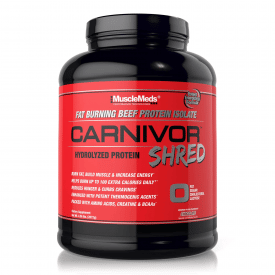
CARNIVOR SHRED helps activate brown adipose tissue (BAT) and boosts your metabolism to get you ripped. Reduce hunger, boost your energy levels, and build lean muscle tissue with this one of a kind product.
When it comes to preserving muscle and staying lean, nutrition is key. While whole foods should be the foundation of your diet, supplements can give you a major advantage.
One of the best options is MuscleMeds Carnivor Shred—a unique beef protein isolate formula designed to build lean muscle, boost metabolism, and support fat loss. Unlike traditional whey protein, Carnivor Shred packs high-quality beef protein with added fat-burning compounds to help you:
- Fuel muscle recovery after workouts
- Preserve lean mass when calories are lower
- Boost thermogenesis to burn more fat
- Stay leaner while building muscle
This makes it an ideal supplement for anyone worried about losing muscle and gaining fat if their training schedule slows down.
The Bottom Line
Muscle does not turn into fat when you stop lifting. Instead, your muscles shrink due to inactivity, your metabolism slows, and fat gain can occur if you don’t adjust your nutrition and activity level.
The solution? Keep training when you can, eat a protein-rich diet, and consider supplements like MuscleMeds Carnivor Shred to maintain muscle mass and stay lean.
So the next time someone tells you muscle turns into fat, you’ll know the truth: your body is changing because of training and diet—not because muscle magically transforms into fat.
Follow us on Instagram, Facebook, and Twitter, and let us know what you think of the supplement in the comments section on social media.