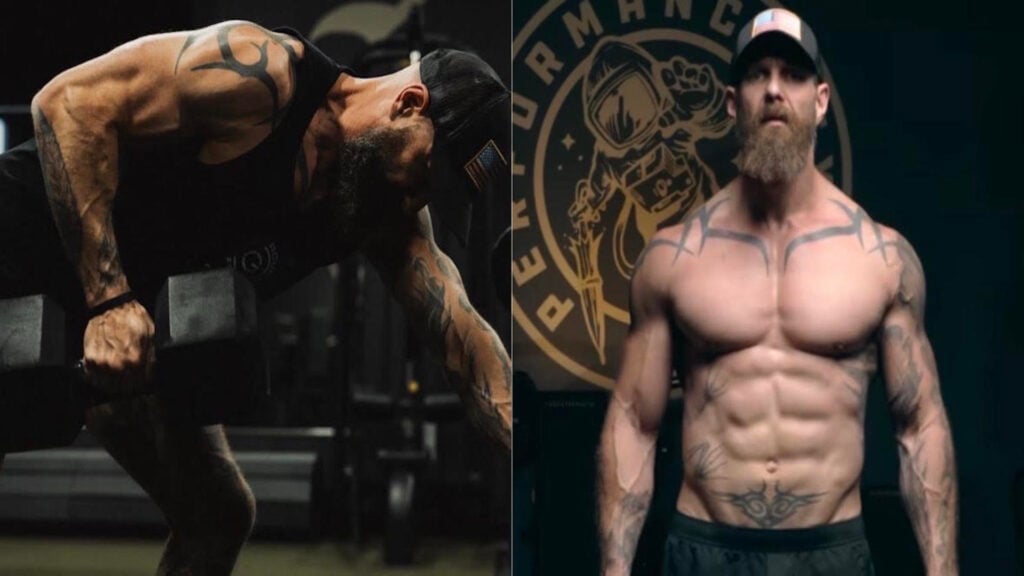
DJ Shipley and coach Vernon Griffith broke down what do avoid when building muscle.
It is important to know the training mistakes and methods to avoid when you hit a certain age — and it is not just physical. There are many mental hurdles to get over as well to get yourself in the gym and continue to prioritize your health. Former Navy SEAL DJ Shipley served for 17 years and dealt with plenty of injuries during this time. He has been able to remain active in the gym despite it being difficult at times. He has worked with coach Vernon Griffith and together, the duo shared some training mistakes to avoid in your 50s.
The duo spoke with Men’s Health and shared a list of 10 mistakes to avoid when looking to build muscle.
Training Mistakes To Avoid
These are the 10 training methods to avoid:

- Chasing Fads
- Training in the ‘Yellow’
- Under-Recovering
- Avoiding Movements After Injury
- Not Training for Your Age
- Lifestyle Mistakes
- The ‘I’ll do it Later’ Trap
- Inconsistency
- Neglecting Power Training
- Getting in Your Own Way
Chasing Fads
It is important to know what your body can handle and do it with a well-thought-out plan rather than different fads.
“Everybody hits these diets and these fads. They’ll start CrossFit or they want to run a marathon, and you see this huge fall from grace.”
Training in the ‘Yellow’
Griffith explained that he looks at training in the green or red. In the green, it is mobility work, including walking and aerobic work. The red includes heavy lifting, pushing or carrying. When training is done in the yellow, it is not enough.
“They’re not doing enough to stress the nervous system but they’re doing too much to allow their body to recover. So it’s either we are green or we are red.”
Under-Recovering
Recovering is another aspect of training that can be done the wrong way.
“Are we skipping over the important things like staying hydrated, eating a good diet, and sleeping well, or are we using massage guns and stuff like that?”
Avoiding Moments After Injury
When dealing with injuries, it is important to focus on rehab while also avoiding movements that still cause discomfort. Shipley notes that it important to “establish confidence” when getting the green light to return to the gym.
“It’s not what you can’t do, it’s what you can do.”
Not Training for Your Age
This is one of the biggest mistakes that Griffith highlighted. He explained how lifters might “not realize they’re in their 40s or 50s.” A proper warmup consists of pushups to warm up the shoulders, spine, and everything else.
“If you’re in your 40s, your first set of bench press, if you can bench 225 pounds, should not be 135 pounds. You should be warming up with pushups. You should be taking your time getting through things.’
Lifestyle Mistakes
This can go for any age but the lifestyle is extremely important for men over 50, Griffith says. He believes that it is important to take measures such as skipping alcohol the night before a workout and getting the right amount of sleep.
“It’s realizing your age is real, you’re not invincible. You are not what you were when you were 20.”
The ‘I’ll do it Later’ Trap
Both men believe that working out in the morning can be extremely helpful to avoid falling in the trap. Griffith says he believes “this is a huge thing” because many clients in the past will push workouts to later in the day only to never complete them. It is important to work out early to make sure it gets done.
“To me, that is really the best one. Get it done first thing in the morning and make it repeatable Monday through Friday.”
Inconsistency
Whatever your fitness goals may be, it is important to remain consistent with your weekly habits.
“Even if there are recovery-focused or just mobility, it’s that active movement every single day that makes it part of your routine.”
Neglecting Power Training
Power training is important for bone density and muscle heath. Many will find it easy to skip the plyometric workouts but it can be movements that are not complicated, uch as plyo pushups.
“You’re still doing the same pattern, but now it’s a different stress on the body. It’s different stress on the nervous system and it doesn’t take any extra equipment. It’s free, it’s normally bodyweight focused.”
Getting in Your Own Way
Griffith was asked about what holds most lifters at this age back and his answer was clear — themselves. He used himself as an example as well in this aspect.
“I can say from someone that’s 39, it is myself. I can talk myself out of it, ‘I don’t need to’ or ‘I worked out really hard yesterday’ or ‘I don’t really have the time.'”
For more news and updates, follow Generation Iron on Facebook, Twitter, and Instagram.