Get the Six-Pack You Want
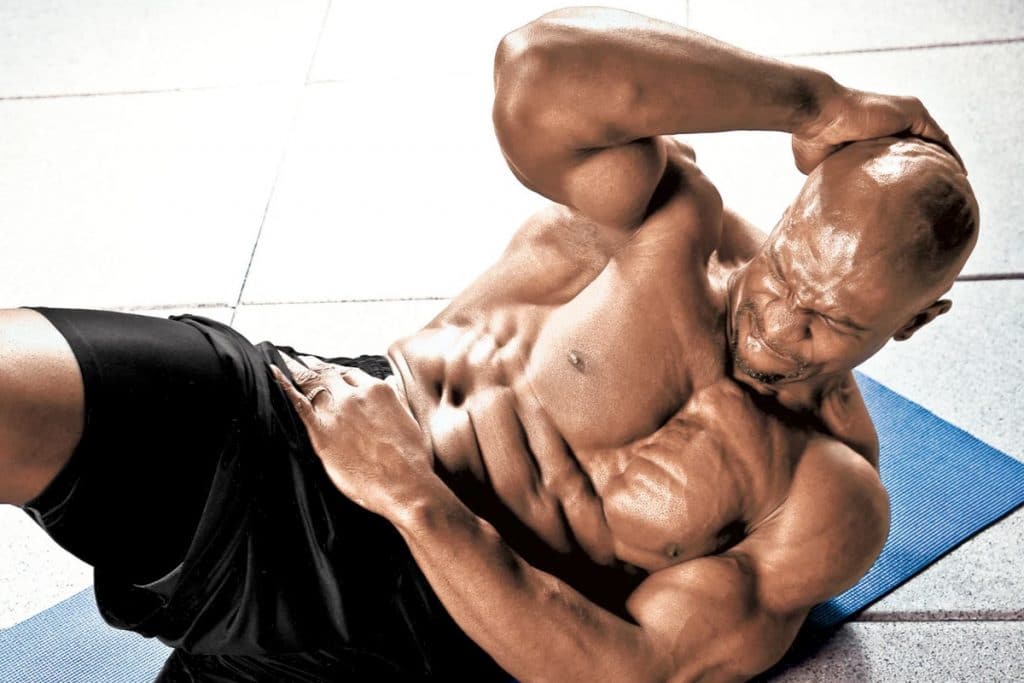
A defined six-pack doesn’t happen by accident. Building impressive abs requires consistent resistance training, proper nutrition, and a commitment to progressively challenging your core. While reducing body fat is an important part of revealing your abdominal muscles, the right ab exercises can help build the size, strength, and definition needed for a standout midsection.
If you’re looking to strengthen your core and develop more defined abs, these seven best ab exercises are a great place to start. Add them to your workout routine and focus on controlled repetitions rather than simply trying to complete as many reps as possible.
Our team at Generation Iron is going to break it down.
1. Crunches

The classic crunch remains one of the most popular ab exercises for building six-pack abs, and there’s a good reason: when performed correctly, it effectively trains the rectus abdominis.
Lie flat on your back with your knees bent and your feet planted on the floor. Cross your arms over your chest or place your hands lightly behind your head. Contract your abs and lift your shoulders and upper back off the floor.
Pause briefly at the top before slowly lowering yourself back down.
The key to effective crunches is control. Don’t use momentum to throw your upper body toward your knees. Instead, concentrate on contracting your abs throughout each repetition.
Muscles worked: Rectus abdominis
2. Sit-Ups

Sit-ups take the traditional crunch and increase the range of motion. While crunches involve lifting your upper back from the floor, sit-ups require you to raise your torso much farther.
Start lying on your back with your knees bent and your feet secured to the floor. Keep your arms crossed over your chest or position your hands behind your head. Brace your core and raise your torso until you’re nearly sitting upright.
Slowly lower yourself back to the starting position.
Sit-ups can be a challenging addition to an abs workout, particularly when performed with controlled movement. Avoid pulling on your neck or using excessive momentum to complete repetitions.
Muscles worked: Rectus abdominis, hip flexors
3. Vertical Leg Crunches
Want to make traditional crunches more challenging? Try performing them with your legs elevated.
Lie on your back and raise your legs toward the ceiling. You can keep your legs straight or slightly bend your knees if necessary. With your legs suspended, contract your abs and lift your shoulders and upper back toward your legs.
Lower yourself under control and repeat.
Elevating your legs changes the difficulty of the movement and forces you to maintain tension throughout your core. Keep your lower back controlled against the floor and avoid swinging your body.
Muscles worked: Rectus abdominis, obliques
4. Bicycle Crunches

Bicycle crunches combine abdominal flexion and rotation, making them a popular choice for anyone looking to train multiple areas of their core.
Lie on your back with your knees bent and your hands lightly behind your head. Bring one knee toward your chest while rotating your torso so the opposite elbow moves toward that knee. At the same time, extend your other leg.
Reverse the movement and repeat on the opposite side.
Continue alternating sides in a controlled cycling motion.
Don’t rush through bicycle crunches. Slow, deliberate repetitions can help you maintain tension and properly rotate through your torso instead of relying on momentum.
Muscles worked: Rectus abdominis, internal and external obliques
5. V-Ups
V-ups are an advanced bodyweight ab exercise that challenges the entire core while requiring significant control and coordination.
Start by lying flat on your back with your legs extended and your arms reaching overhead. Simultaneously raise your legs and upper body off the floor, bringing your hands toward your feet.
Try to create a “V” shape with your body at the top of the movement.
Slowly lower your arms and legs back toward the floor. For additional difficulty, avoid allowing your feet to touch the ground before starting the next repetition.
If traditional V-ups are too difficult, you can modify the exercise by bending your knees or reducing the range of motion.
Muscles worked: Rectus abdominis, hip flexors, obliques
6. Knee-Ins
Knee-ins are a simple but effective way to place additional emphasis on the lower portion of the abdominal region.
Sit on the floor with your hands positioned beside your body for support. You can also perform the movement on a bench or sturdy chair. Extend your legs in front of you, then pull your knees toward your chest while contracting your abs.
After bringing your knees in, slowly extend your legs back out.
Focus on keeping your core engaged throughout the entire movement. Avoid simply swinging your legs back and forth.
Although the term “lower abs” is commonly used, it’s important to remember that the rectus abdominis is one continuous muscle. Exercises such as knee-ins can emphasize the lower portion of the movement without isolating a completely separate lower-ab muscle.
Muscles worked: Rectus abdominis, hip flexors
7. Leg Lifts
Leg lifts are another excellent bodyweight exercise for developing core strength and control.
Lie flat on your back with your arms resting at your sides. Keeping your legs together, slowly raise them toward the ceiling until they reach roughly a 90-degree angle with your torso.
Pause briefly before lowering your legs under control.
For an added challenge, don’t allow your feet to touch the floor between repetitions. Instead, stop just above the ground before beginning the next rep.
If you struggle to keep your lower back pressed against the floor, reduce your range of motion or bend your knees slightly.
Muscles worked: Rectus abdominis, hip flexors
How to Build Six-Pack Abs
Adding ab exercises to your workout routine is only one part of developing visible six-pack abs.
Your abdominal muscles are built through resistance training, but their visibility is heavily influenced by your overall body-fat level. You can have strong, developed abs without seeing a pronounced six-pack if they’re covered by a layer of body fat.
That’s why building your abs should involve both core training and proper nutrition.
Focus on consuming enough protein, eating an appropriate number of calories for your goal, getting adequate sleep, and maintaining a consistent strength-training program.
You also don’t need to perform hundreds of abdominal repetitions every day. Treat your abs like any other muscle group and give them adequate recovery between challenging workouts.
How Often Should You Train Abs?
For most people, training the abs two to three times per week is enough to make progress. Your exact frequency should depend on your overall workout routine, training experience, and recovery.
A simple ab workout could include:
- Crunches: 3 sets of 10-15 reps
- Bicycle crunches: 3 sets of 10-15 reps per side
- Leg lifts: 3 sets of 8-15 reps
- V-ups: 2-3 sets of 8-12 reps
You don’t need to perform all seven exercises in every workout. Instead, rotate exercises and use different movements to challenge your core through flexion, rotation, and stabilization.
The Best Ab Exercises for a Stronger Core
Whether your goal is a defined six-pack, improved athletic performance, or a stronger midsection, these exercises can provide a solid foundation for your core workout.
Crunches and sit-ups can train abdominal flexion, bicycle crunches add rotation, while V-ups, knee-ins, and leg lifts challenge your ability to control your lower body through space.
The most important factor is consistency.
Train your abs with proper technique, progressively make your workouts more challenging, support your training with proper nutrition, and give your body enough time to recover. With enough dedication, you can build a stronger and more muscular midsection while working toward the defined abs you’ve always wanted.
Let us know what you think in the comments below. Also, be sure to follow Generation Iron on Facebook, Twitter, and Instagram.