Don’t believe everything you see with Peptides
Health headlines are designed to grab attention, but attention and accuracy are not always the same thing. A cautious finding in a scientific paper can become an absolute claim by the time it reaches a social media feed, blog post, or news headline.
Learning how to evaluate health claims and scientific studies can help you separate evidence from exaggeration. Before accepting a health headline at face value, use these five simple checks to determine whether the claim actually matches the underlying research.
Our team at Generation Iron is going to break down how to review, evaluate and consider health claims and studies to verify claims with peptides.
1. Track Down the Original Health Study

One of the best ways to evaluate a health headline is to find the original scientific source behind the claim. A credible article should ideally identify the research paper, clinical trial, study record, government report, or agency guidance it is based on.
Don’t stop at the headline or summary. Open the original source and look beyond the abstract. The abstract can provide a useful overview, but the methods, results, and limitations offer important context about what researchers actually found.
If you cannot determine where a health claim originated, that’s a reason to be cautious.
2. Understand the Research Setting For Peptides
Not all scientific research answers the same questions. Understanding where and how a study was conducted is essential when evaluating its conclusions.
Laboratory research may examine chemistry, cellular activity, or biological mechanisms under controlled conditions. Preclinical research can investigate questions using experimental models. Clinical research examines specific questions in human participants under defined protocols.
A promising laboratory finding does not automatically establish the same outcome in people. Likewise, an early-stage finding should not be presented as though it represents a proven health outcome.
The research setting provides critical context for understanding what a study can—and cannot—tell us.
3. Look at the Sample Before the Percentage on Peptides
Percentages can make research findings sound dramatic, but they don’t tell the entire story.
When evaluating a health study or scientific claim, look at the sample size and population before focusing on the percentage reported in the headline. A large percentage change can sometimes come from a relatively small number of observations.
Ask:
- Who or what was studied?
- How many participants or observations were included?
- Were there comparison or control groups?
- Were the groups similar at the beginning?
- How long was the study conducted?
- Were all participants or observations included in the final analysis?
These details can dramatically change how you interpret a research finding.
4. Make Sure the Claim Matches the Measurement for Peptides

Another important step in evaluating health information is determining whether the headline actually matches what researchers measured.
A change in a laboratory marker is evidence of a change in that specific marker. A questionnaire measures reported experiences or responses. A performance test measures performance under particular conditions.
Each type of measurement can provide valuable information, but they should not automatically be treated as interchangeable.
For example, a study measuring a biological marker does not necessarily establish a broader real-world health outcome. Understanding exactly what researchers measured can help prevent a narrow finding from being turned into a much larger claim.
5. Read the Study’s Limitations on Peptides
If you want to understand how strong a scientific finding really is, don’t skip the section that discusses study limitations.
Researchers may identify limitations involving a small sample, short follow-up period, narrow research conditions, missing data, study design, or the need for additional research and replication.
These details can provide some of the most important context in the entire study.
A health headline may focus on the most attention-grabbing result, while the limitations explain why researchers may be more cautious about interpreting that result. Reading both sides of the study gives you a more complete picture of the evidence.
Why Evaluating Health Headlines Matters for Peptides
Health information can spread quickly, especially when a headline promises a dramatic result. But scientific research is often more nuanced than the headline suggests.
By tracing claims back to their sources, identifying the research setting, examining the sample, understanding what was measured, and reading the limitations, you can develop a more informed approach to evaluating health information and scientific claims.
The goal isn’t to dismiss new research. It’s to understand what the evidence actually supports.
NewBioRx: Putting Traceability First on Peptides
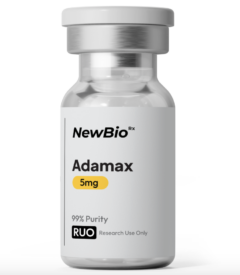
NewBioRx™ focuses on delivering ultra-pure peptides, proteins, and amino acid derivatives for research and development purposes.
For NewBioRx, traceability is the standard. Health and scientific claims should be connected to the underlying research so readers can understand where the information comes from and what the evidence actually shows.
If a claim cannot lead you back to the underlying work, keep your confidence low and look for the original source before accepting it as fact.
Read more from NewBioRx for additional educational content focused on research, science, and evidence-based information.
Source for Editorial Review
FDA: The Drug Development Process
This resource provides additional background on the stages involved in developing and evaluating drugs and helps illustrate why scientific findings need to be understood within the context of the research and development process.
Important Disclaimer
Educational content only. This content is not medical advice and does not describe an intended use of any NewBioRx material. NewBioRx materials are intended strictly for research and development use only—not for human or veterinary use.
Let us know what you think in the comments below. Also, be sure to follow Generation Iron on Facebook, Twitter, and Instagram.
References
- National Institutes of Health (NIH). How To Evaluate Health Information on the Internet: Questions and Answers. — Supports checking the original source of a health claim, identifying supporting evidence, and distinguishing evidence-based information from opinion.
- National Center for Complementary and Integrative Health (NCCIH). Know the Science: How to Make Sense of a Scientific Journal Article. — Covers how to examine research methods, participants, measurements, study design, potential bias, clinical trials, and systematic reviews when evaluating scientific claims.
- U.S. Food and Drug Administration (FDA). The Drug Development Process. — Explains the progression from laboratory discovery and preclinical research to human clinical research, FDA review, and post-market monitoring, supporting the article’s discussion of why early research should not automatically be treated as established human health outcomes.