Why Peptide Research Is Transforming Sports Science
Peptides have become one of the most talked-about areas of modern sports science, longevity research, and biomedical research. From compounds being investigated for metabolic health and tissue biology to peptides involved in hormone signaling, researchers are exploring an enormous range of potential applications.
But what exactly are peptides, and why are they attracting so much attention?
At their most basic level, peptides are short chains of amino acids. Their relatively small size allows them to interact with specific receptors and biological pathways, giving researchers the ability to investigate highly targeted mechanisms in the body.
Research into peptide-based therapeutics has already produced numerous clinically relevant drugs, while hundreds of additional peptide candidates continue to be investigated.
For athletes and fitness enthusiasts, the growing interest in peptides is particularly significant. However, it’s important to separate legitimate scientific research from the often exaggerated claims found throughout the fitness industry.
Our team at Generation Iron is going to break it down.
What Are Peptides?

Peptides are molecules made from amino acids connected by peptide bonds.
Proteins are also composed of amino acids, but peptides are generally shorter chains. Their structures can allow them to act as signaling molecules, hormones, or other biologically active compounds.
One of the most interesting characteristics of peptides is their specificity.
Certain peptides can interact with particular receptors or biological pathways, allowing scientists to study highly specific biological processes. This specificity is one reason peptide-based therapeutics have become such an important area of pharmaceutical research.
In other words, peptides aren’t simply another category of supplement. They’re an area of molecular biology with applications ranging from basic laboratory research to pharmaceutical development.
What Are the Potential Benefits of Peptides?
The potential benefits of peptides depend heavily on the specific peptide being studied.
There isn’t one universal “peptide effect.” Different peptide sequences can interact with completely different biological pathways.
Researchers are investigating peptides in areas including:
- Metabolic regulation
- Hormone signaling
- Tissue biology
- Cellular signaling
- Inflammation
- Recovery-related pathways
- Muscle physiology
- Neurological research
- Skin and connective-tissue biology
- Drug development
This breadth is one of the reasons peptides have become such an important research category.
1. Targeted Biological Activity
One of the biggest advantages of peptide research is the ability to investigate highly specific biological pathways.
Peptides can interact with receptors and signaling systems with considerable specificity. This gives researchers a way to study how individual biological pathways influence physiological processes.
Compared with compounds that affect numerous targets simultaneously, peptide-based approaches can sometimes offer a more targeted mechanism of action.
2. Hormone and Metabolic Research
A significant portion of peptide research involves hormone and metabolic signaling. For example, researchers study peptides that interact with pathways involved in growth hormone signaling, glucose regulation, appetite, and energy metabolism.
This has already translated into approved peptide-based medicines. GLP-1 receptor agonists are one prominent example of peptide-based therapeutics that have been developed for metabolic disease.
Other peptides remain experimental and require substantially more research before their potential applications can be determined.
3. Muscle and Performance Research
The fitness community has taken a particular interest in peptides because researchers are investigating compounds associated with growth hormone signaling, muscle physiology, tissue biology, and metabolic pathways.
Peptides such as CJC-1295, ipamorelin, sermorelin, and other compounds are frequently discussed in bodybuilding circles.
However, interest does not equal proof.
The fact that a peptide is being studied for a particular mechanism doesn’t mean it has been demonstrated to safely improve athletic performance in humans.
That’s an important distinction when discussing peptides in bodybuilding.
4. Recovery and Tissue Research
Another major area of interest involves peptides associated with tissue and cellular research.
BPC-157 and TB-500, for example, are frequently discussed in sports and fitness communities because of research interest surrounding tissue biology and repair-related mechanisms.
However, much of the enthusiasm surrounding these compounds extends beyond what has been conclusively demonstrated in controlled human research.
Researchers are still working to determine how findings from laboratory models translate to real-world human applications.
5. Skin and Cosmetic Research
Peptide research isn’t limited to bodybuilding.
Copper peptides such as GHK-Cu have attracted significant interest in skin and cosmetic research because of their interactions with biological processes associated with skin biology.
NewBioRx™, for example, offers GHK-Cu as a research chemical and provides lot-level analytical documentation for its research products.
This illustrates how broad the peptide field has become.
Why Peptide Purity Matters
When researchers are working with biologically active compounds, purity is critical.
An impure research material can introduce unwanted variables into an experiment. Contaminants, synthesis byproducts, truncated sequences, or incorrect molecular compositions can potentially affect experimental outcomes.
That’s why analytical testing is such an important part of peptide research.
High-Performance Liquid Chromatography (HPLC) can be used to assess purity, while Mass Spectrometry (MS) can help confirm molecular identity and composition.
NewBioRx™ states that its peptide production process incorporates both HPLC and mass spectrometry testing to verify purity, identity, and sequence. The company says its peptides and proteins can exceed 99% purity depending on the product.
Why Researchers Are Turning to NewBioRx™
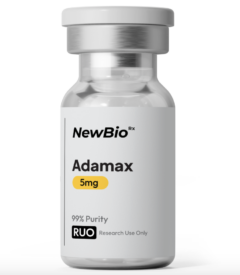
NewBioRx™ focuses on delivering ultra-pure peptides, proteins, and amino acid derivatives for research and development purposes.
For researchers exploring peptide biology, sourcing matters just as much as the experimental design.
NewBioRx™ focuses specifically on research peptides, proteins, and amino acid derivatives. According to the company, it uses both automated and manual peptide synthesizers along with solution-phase and solid-phase synthesis techniques.
The company also says its manufacturing and quality-control process includes analytical testing throughout synthesis, packaging, and shipping.
That focus on documentation and analytical verification is particularly important for researchers who need reproducible materials.
NewBioRx™ states that it works with WHO/GMP and ISO 9001:2015-certified manufacturers and provides lot-level Certificates of Analysis and HPLC verification for its research materials.
NewBioRx™ and the Growing Peptide Market
NewBioRx™ offers a broad research peptide catalog that includes compounds such as BPC-157, TB-500, GHK-Cu, CJC-1295, ipamorelin, sermorelin, MOTS-C, tesamorelin, and numerous other research compounds.
That range allows researchers to explore different biological pathways without limiting their work to one specific class of peptides.
The company also highlights research documentation, Certificates of Analysis, analytical data, and secure fulfillment as part of its research-focused platform.
Are Peptides Safe?

This is where the conversation becomes more complicated. “Peptide” describes a class of molecules, not a safety profile.
Some peptides have been developed into approved medicines and have undergone extensive clinical testing. Others remain experimental compounds with limited human data.
Peptide therapeutics also face challenges including enzymatic degradation, limited bioavailability, and delivery difficulties.
Therefore, it isn’t scientifically responsible to claim that peptides as a category are universally safe or effective.
The safety profile of any particular peptide depends on its identity, dose, route of administration, purity, interactions, and the available clinical evidence.
Research Peptides vs. Approved Medicines
This distinction is particularly important when purchasing peptides online.
NewBioRx™ explicitly states that its research chemicals are intended for in-vitro testing and laboratory experimentation only and are not intended for human or animal administration.
That means research peptides should not be treated as equivalent to prescription medications or dietary supplements.
Researchers should use appropriate laboratory procedures, follow applicable regulations, and consult qualified professionals when conducting work involving biologically active compounds.
The Future of Peptide Research
The potential of peptide science is enormous. Researchers are continuing to explore ways to make peptides more stable, improve their delivery, increase their specificity, and translate promising laboratory findings into clinically useful therapies.
For sports science, peptides could provide researchers with valuable tools for investigating muscle physiology, metabolism, recovery, hormone signaling, and other areas relevant to athletic performance.
But the most exciting developments may ultimately occur outside of bodybuilding.
Peptide-based therapies are already an established area of pharmaceutical development, and researchers continue to investigate new candidates across a wide range of diseases and biological processes.
Why NewBioRx™ Is Worth Looking Into
As peptide research continues expanding, purity, analytical verification, and reproducibility will become increasingly important.
NewBioRx™ has positioned itself around those priorities, offering research peptides with stated purity specifications, lot-level documentation, HPLC analysis, and mass spectrometry-based identity confirmation.
For laboratories and researchers investigating peptide biology, having access to properly documented research materials is an important part of producing meaningful experimental results.
The Bottom Line
Peptides represent one of the most fascinating areas of modern biomedical and sports science research.
Their ability to interact with specific biological pathways has created opportunities to study everything from hormone signaling and metabolism to tissue biology and pharmaceutical development.
For fitness enthusiasts, the potential applications are understandably exciting. But the science needs to remain the priority. Not every peptide has the same evidence, and experimental compounds should not be confused with approved treatments.
For researchers looking for high-purity research materials, NewBioRx™ offers a broad catalog of research peptides backed by analytical testing and documentation, including HPLC verification and mass spectrometry-based identity confirmation.
As peptide science continues evolving, the next generation of discoveries could fundamentally change how researchers understand—and eventually influence—human biology.
Let us know what you think in the comments below. Also, be sure to follow Generation Iron on Facebook, Twitter, and Instagram.
Disclaimer: This article is for educational purposes only and is not medical advice. Research peptides are not necessarily approved for human use. NewBioRx™ states that its research chemicals are intended for laboratory research and in-vitro experimentation only. Readers should not use research chemicals in humans or animals outside applicable regulatory and professional frameworks.