Legendary bodybuilding coach Hany Rambod explains why rear delts are essential for building bigger shoulders and improving your overall physique
When it comes to building massive shoulders, many lifters focus on the front and side delts while overlooking one important muscle group. Legendary bodybuilding coach Hany Rambod says that is a mistake that can hurt both your physique and your performance in the gym.
In a recent YouTube Short, Rambod identified the rear deltoids as one of the most neglected muscle groups in bodybuilding. The renowned coach explained why developing the back of your shoulders is essential for achieving a complete, balanced physique.
“One of the most neglected muscle groups,” Rambod said, before adding that calves also deserve a spot on that list.

“Rear delts is something that’s super important because that’s what’s going to create your width when you turn to the side. You need to be able to equal the front delt.”
Hany Rambod Explains Why Rear Delts Are So Important
Rambod has spent decades helping elite bodybuilders develop championship-winning physiques. His experience coaching some of the biggest names in the sport has made him one of bodybuilding’s most respected voices on training and muscle development.
According to Rambod, rear delts play a critical role in creating the rounded, three-dimensional shoulder appearance that bodybuilders strive for onstage.
“That rear delt, that posterior, makes a huge difference,” Rambod explained.
He also warned that underdeveloped rear delts can affect more than just appearance.
“If you don’t work on it, you’re going to also end up weakening a lot of the lifts if you have really underdeveloped rear delts on a lot of your back work.”
While rear delts are involved in several pulling movements, direct training can help address weaknesses that might otherwise go unnoticed.
For competitive bodybuilders, the difference becomes especially apparent during side poses.
“If you have small rear delts, you end up having that really big drop-off, and you don’t want that on stage.”
4 Best Exercises for Building Bigger Rear Delts
Fortunately, bringing up lagging rear delts doesn’t require an entirely new training program. Several exercises can target the posterior deltoids and help develop fuller shoulders.
Here are four movements worth incorporating into your routine.
1. Reverse Pec Deck Fly
The reverse pec deck is an effective isolation exercise for targeting the rear deltoids. The machine provides a stable movement pattern, allowing lifters to focus on contracting the back of the shoulders without relying heavily on momentum.
- Keep your chest against the pad.
- Maintain a slight bend in your elbows.
- Pull your arms outward in a controlled motion.
- Avoid shrugging or excessively squeezing your shoulder blades together.
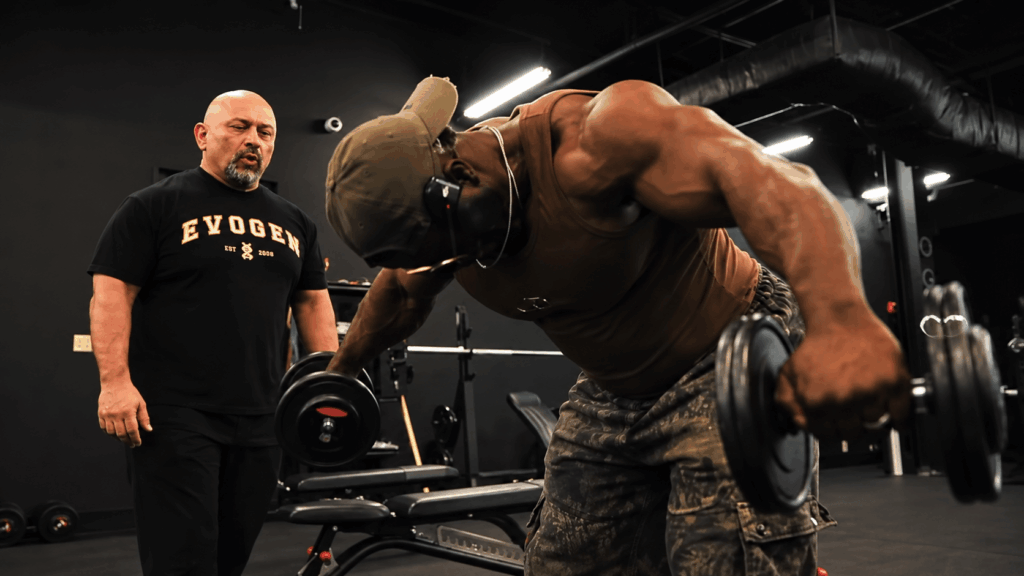
2. Bent-Over Dumbbell Reverse Fly
This classic rear delt movement can be performed with relatively light dumbbells and emphasizes controlled shoulder movement.
- Hinge forward at the hips while maintaining a neutral spine.
- Hold the dumbbells beneath your chest.
- Raise your arms outward with slightly bent elbows.
- Lower the weights slowly and avoid swinging.
3. Cable Rear Delt Fly
Cable flyes provide consistent resistance throughout much of the movement and allow lifters to train each shoulder independently or both together.
- Position the cables around shoulder height.
- Pull your arms outward and slightly backward.
- Keep your torso stable.
- Use a manageable weight to maintain tension on the rear delts.
4. Face Pulls
Face pulls target the rear delts along with several muscles of the upper back. They can be a useful addition to a balanced shoulder-training routine.
- Attach a rope to a cable pulley at upper-chest or face height.
- Pull the rope toward your face while separating your hands.
- Keep your elbows elevated without forcing an uncomfortable position.
- Return slowly to the starting position.
Don’t Let Your Rear Delts Fall Behind
Rambod’s message is particularly relevant for lifters who spend plenty of time performing presses and lateral raises but devote little attention to the back of their shoulders.
Building impressive shoulders requires more than developing the muscles visible from the front. The rear delts contribute to overall shoulder thickness, balance, and the complete appearance of the upper body.
For competitive bodybuilders, that development can make a noticeable difference during side poses. For recreational lifters, stronger rear delts can also complement pulling exercises and contribute to balanced upper-body training.
As Rambod emphasizes, neglecting this relatively small muscle group could be holding back your shoulder development.
Featured image embed via Instagram @thedisciplinedphysique