A Guide to Finding Your Daily Calorie Needs
If you’ve ever wondered how many calories you should eat in a day, you’re not alone. Whether your goal is to lose body fat, build muscle mass, improve athletic performance, or maintain your current physique, understanding your daily calorie needs is one of the most important parts of nutrition.
But there isn’t one magic calorie number that works for everyone.
Your ideal daily calorie intake depends on several factors, including your age, sex, height, body weight, activity level, metabolism, and fitness goals. Someone who spends most of the day sitting at a desk will generally need fewer calories than someone who lifts weights five days per week, runs regularly, or has a physically demanding job.
The good news is that you can estimate your calorie needs, adjust your intake based on your goals, and use your progress to determine whether your nutrition plan is working.
Our team at Generation Iron is going to break down how to figure out how many calories you should eat each day.
How Many Calories Should You Eat Per Day?

General calorie recommendations provide a useful starting point, but individual needs can vary significantly.
According to estimates in the Dietary Guidelines for Americans, adult women generally need approximately 1,600 to 2,400 calories per day, while adult men generally need approximately 2,000 to 3,000 calories per day to maintain energy balance.
These ranges depend on age and activity level. Younger, more active individuals typically require more calories, while older or less active adults may need fewer.
For example, the National Heart, Lung, and Blood Institute provides the following general estimates:
- Women ages 19–30: Approximately 2,000 calories if sedentary, 2,000–2,200 if moderately active, and 2,400 if active.
- Men ages 19–30: Approximately 2,400 calories if sedentary, 2,600–2,800 if moderately active, and 3,000 if active.
- Women ages 31–50: Approximately 1,800 calories if sedentary, 2,000 if moderately active, and 2,200 if active.
- Men ages 31–50: Approximately 2,200 calories if sedentary, 2,400–2,600 if moderately active, and 2,800–3,000 if active.
These are population-level estimates, not personalized prescriptions. A larger individual who trains intensely may need considerably more energy than someone of the same age who is smaller and less active.
What Determines How Many Calories You Need?

Your daily calorie requirements are influenced by several variables. Understanding these factors can help you move beyond generic recommendations and create a nutrition plan that reflects your body and lifestyle.
1. Age
Your calorie requirements can change as you get older. Changes in body composition, activity levels, and metabolism can influence how much energy you use throughout the day.
As people age, they often lose some muscle mass and become less physically active. Both can contribute to lower daily energy requirements.
This doesn’t mean your metabolism suddenly stops working after a certain birthday. It means your calorie needs may change as your body and lifestyle change.
2. Sex
Biological sex can influence estimated calorie requirements because of average differences in body size, muscle mass, and body composition.
Men often have higher calorie requirements than women of similar age because they tend to have more lean body mass. However, individual differences matter much more than broad averages when determining a specific calorie target.
3. Height and Body Weight
Your body size affects how much energy you use.
Generally, larger bodies require more energy to maintain basic functions and perform physical activity. Your current weight is also important when establishing a calorie target for weight loss, maintenance, or muscle growth.
4. Activity Level
Physical activity can significantly increase your daily calorie requirements.
Consider the difference between someone who works at a desk and someone who spends the day moving, lifting, training, or performing physical labor.
Common activity categories include:
- Sedentary: Little intentional exercise and limited movement throughout the day.
- Lightly active: Some walking, light exercise, or recreational activity.
- Moderately active: Regular exercise several days per week.
- Very active: Frequent intense workouts, sports, or physically demanding work.
- Extremely active: High training volume combined with substantial daily physical activity.
Remember that your workout isn’t the only activity that matters. Walking, standing, household chores, and general movement all contribute to daily energy expenditure.
How to Calculate Your Daily Calorie Needs
One way to estimate your calorie requirements is to calculate your basal metabolic rate (BMR) and then account for your activity level.
BMR estimates how much energy your body uses at rest to support essential functions such as breathing, circulation, and maintaining body temperature.
One commonly used method is the Mifflin-St Jeor equation.
For men:
BMR = (10 × weight in kilograms) + (6.25 × height in centimeters) − (5 × age) + 5
For women:
BMR = (10 × weight in kilograms) + (6.25 × height in centimeters) − (5 × age) − 161
Once you estimate your BMR, multiply it by an activity factor to estimate your total daily energy expenditure (TDEE).
Common activity multipliers include:
- Sedentary: BMR × 1.2
- Lightly active: BMR × 1.375
- Moderately active: BMR × 1.55
- Very active: BMR × 1.725
- Extremely active: BMR × 1.9
Your TDEE is an estimate of how many calories you burn throughout an average day. It gives you a starting point for determining how much you should eat to maintain your current weight.
Keep in mind that equations and activity multipliers are estimates. Your actual energy expenditure can differ, so use your real-world progress to refine your calorie target.
How Many Calories Should You Eat to Lose Weight?

If your goal is to lose body fat, you generally need to consume fewer calories than your body burns. This is called a calorie deficit.
For example, if your estimated maintenance intake is 2,500 calories per day, eating approximately 2,000–2,250 calories would create a deficit of 250–500 calories.
A moderate deficit can help you lose weight while making it easier to maintain training performance, recover between workouts, and preserve muscle mass.
However, bigger deficits aren’t automatically better.
Cutting calories too aggressively can make it harder to meet your nutritional needs, maintain energy, and sustain your training routine. It can also increase the risk of losing lean muscle along with body fat.
For people who lift weights, maintaining adequate protein intake and continuing resistance training are particularly important during a fat-loss phase.
The goal shouldn’t simply be to weigh less. It should be to improve body composition while maintaining strength and muscle.
How Many Calories Should You Eat to Build Muscle?
Building muscle generally requires sufficient calories to support training, recovery, and new muscle tissue. For many people, this means eating in a modest calorie surplus.
A calorie surplus occurs when you consume more calories than your body burns. If your estimated maintenance intake is 2,500 calories, you might start by eating approximately 2,650–2,750 calories per day.
The exact amount depends on your training experience, body composition, activity level, and how quickly you want to gain weight.
Eating more calories without a structured resistance-training program won’t automatically produce more muscle. Your body needs an appropriate training stimulus, adequate protein, and sufficient recovery.
For a more controlled muscle-building approach:
- Start with a modest calorie surplus.
- Prioritize protein at each meal.
- Eat enough carbohydrates to support demanding workouts.
- Include healthy dietary fats.
- Follow a progressive resistance-training program.
- Monitor changes in body weight, strength, and measurements.
If your weight isn’t increasing over time, you may need to adjust your calorie intake. If you’re gaining weight much faster than intended, your surplus may be larger than necessary.
How Many Calories Should You Eat to Maintain Your Weight?
If you’re happy with your current body weight and want to maintain it, your goal is to consume approximately the same number of calories you burn. This is known as energy balance.
If your estimated TDEE is 2,500 calories, eating around that amount should provide a reasonable starting point for maintaining your weight.
However, daily body weight naturally fluctuates because of hydration, sodium intake, digestion, carbohydrate storage, and other factors.
Instead of reacting to a single weigh-in, monitor your average weight over several weeks. If your average remains relatively stable, your calorie intake is likely close to your maintenance needs.
Calories Matter, But Food Quality Matters Too
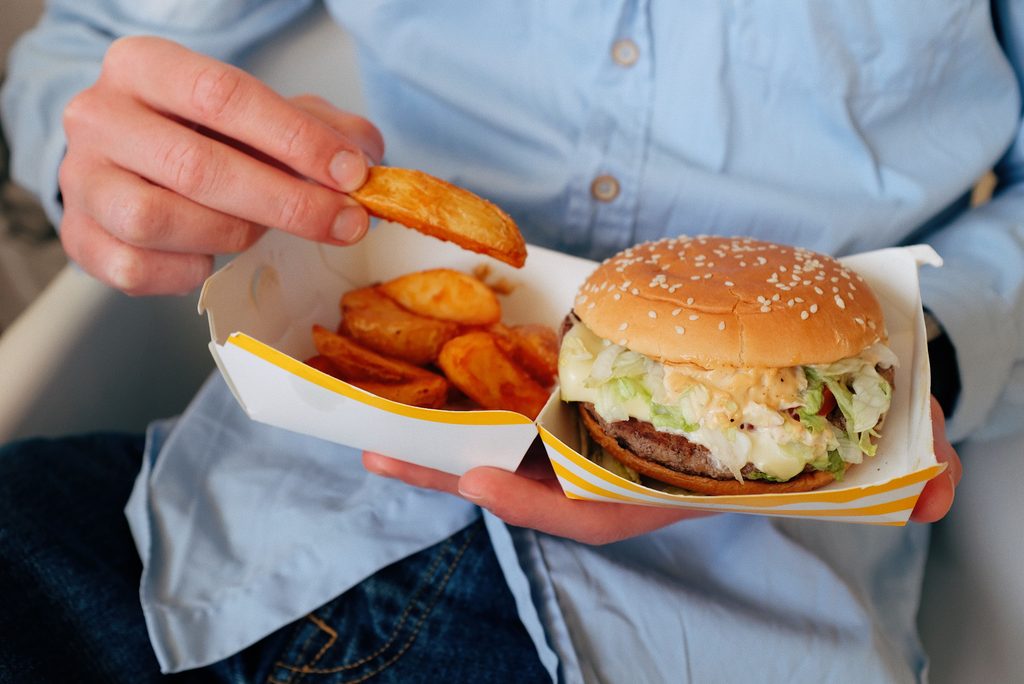
It’s possible to hit a calorie target while eating a diet that doesn’t provide enough essential nutrients.
For example, 2,000 calories from highly processed foods and sugary drinks will not provide the same nutritional value as 2,000 calories built around lean protein, fruits, vegetables, whole grains, and healthy fats.
If you’re serious about fitness, pay attention to both calorie intake and macronutrients.
Protein
Protein supplies the amino acids your body needs to repair and build muscle tissue.
Good protein sources include:
- Chicken and turkey
- Lean beef
- Fish and seafood
- Eggs
- Greek yogurt
- Cottage cheese
- Whey protein
- Soy and other plant-based protein sources
People who regularly exercise and resistance train generally benefit from higher protein intake than sedentary individuals.
Carbohydrates
Carbohydrates are an important energy source, particularly for people who perform high-intensity exercise and resistance training.
Sources include:
- Oats
- Rice
- Potatoes
- Whole grains
- Fruits
- Vegetables
- Beans and legumes
Cutting carbohydrates isn’t automatically necessary for fat loss. Your overall calorie balance matters, and carbohydrates can help fuel productive workouts.
Dietary Fats
Dietary fats support important functions throughout the body, including hormone production and the absorption of fat-soluble vitamins.
Include sources such as:
- Avocados
- Olive oil
- Nuts and seeds
- Fatty fish
- Whole eggs
The goal is to build a balanced diet that supports your calorie target without sacrificing nutritional quality.
How to Know If You’re Eating the Right Number of Calories
A calorie calculator can give you a starting estimate, but your progress provides valuable feedback.
Consider tracking the following:
Body weight: Monitor your average weight over multiple weeks instead of focusing on daily fluctuations.
Strength: If you’re trying to build muscle, monitor your performance in the gym. Consistent progress can help indicate whether your training and recovery are on track.
Energy levels: Consistently feeling exhausted, struggling through workouts, or experiencing persistent hunger may indicate that your calorie intake or overall nutrition needs attention.
Body composition: Changes in waist measurements, progress photos, and how your clothes fit can provide additional context beyond the scale.
Recovery: Your ability to recover between workouts is another important consideration. Poor recovery can have several causes, including inadequate calories, insufficient protein, poor sleep, and excessive training volume.
If your progress has stalled for several weeks, reassess your calorie intake, activity level, and consistency before making significant changes.
Common Calorie-Counting Mistakes to Avoid
Even when you know your estimated calorie needs, it’s easy to make mistakes that interfere with your progress.
Watch out for these common issues:
- Ignoring liquid calories: Coffee drinks, juices, sodas, and other beverages can contribute significant calories.
- Forgetting cooking oils and condiments: Small additions can add up throughout the day.
- Overestimating exercise calories: Fitness trackers and exercise machines provide estimates, not exact measurements.
- Changing calorie targets too frequently: Your body weight naturally fluctuates, so give your nutrition plan enough time to evaluate.
- Focusing only on calories: Protein, carbohydrates, fats, fiber, vitamins, and minerals all contribute to a well-rounded diet.
- Cutting calories too aggressively: Extreme restriction can make training, recovery, and long-term consistency more difficult.
Consistency is usually more valuable than trying to achieve a perfect calorie number every day.
Frequently Asked Questions About Daily Calorie Intake
Is 2,000 calories a day enough?
It depends on the individual. For some people, 2,000 calories may support weight maintenance. For others, it may create a calorie deficit or be insufficient to support their activity level. Your age, sex, height, weight, and daily movement all matter.
How many calories should I eat if I work out every day?
People who exercise daily may need more calories than those who are sedentary, but the amount depends on workout intensity, duration, body size, and activity outside the gym. Someone performing intense resistance training and cardio may have very different needs from someone doing light daily walks.
Do you burn calories even when you’re sleeping?
Yes. Your body uses energy around the clock to maintain essential functions. This energy expenditure is part of your basal metabolic rate.
Should I eat fewer calories as I get older?
Your calorie requirements may decrease with age, particularly if you become less active or lose muscle mass. However, maintaining muscle through resistance training and eating enough protein can help support healthy aging.
Can you build muscle while eating fewer calories?
Yes, in certain situations. Beginners, people returning to training, and individuals with higher body-fat levels may be able to build muscle while losing fat. This is often called body recomposition. It requires consistent resistance training, adequate protein, and an appropriate nutrition strategy.
How often should I adjust my calorie intake?
Avoid making changes based on one day of progress. Monitor your average weight, training performance, energy, and other indicators over several weeks. Adjust gradually if your results consistently differ from your goal.
Final Thoughts: Find the Calorie Intake That Supports Your Goals
So, how many calories should you eat in a day?
The answer depends on your body, activity level, and what you’re trying to accomplish. General recommendations can provide a starting point, but calculating your estimated TDEE and monitoring your progress will help you develop a more individualized approach.
Whether you’re trying to lose body fat, build muscle, or maintain your current physique, remember that calories are only one part of the equation. Quality nutrition, adequate protein, consistent training, and recovery all play important roles.
Stop chasing an arbitrary calorie number. Find an intake that supports your goals, fuels your workouts, and helps you make sustainable progress.
Let us know what you think in the comments below. Also, be sure to follow Generation Iron on Facebook, Twitter, and Instagram.
References
1. Mifflin MD, St Jeor ST, Hill LA, et al. (1990). A New Predictive Equation for Resting Energy Expenditure in Healthy Individuals. The American Journal of Clinical Nutrition, 51(2), 241–247. PubMed
2. U.S. Department of Agriculture and U.S. Department of Health and Human Services. (2020). Dietary Guidelines for Americans, 2020–2025. Appendix 2: Estimated Calorie Needs per Day by Age, Sex, and Physical Activity Level. Official Guidelines (PDF)
3. National Institute of Diabetes and Digestive and Kidney Diseases (NIDDK). Eating & Physical Activity to Lose or Maintain Weight. NIDDK