Lance Dreher says his refusal to move to California and cooperate with bodybuilding’s power brokers cost him dearly at the 1982 and 1983 Mr. Olympia competitions.
Legendary bodybuilder Lance Dreher is opening up about one of the biggest controversies of his career, claiming that politics within the IFBB were responsible for his last-place finishes at the Mr. Olympia.
Dreher, who built one of the most impressive physiques of bodybuilding’s golden era, competed at the 1982 and 1983 Mr. Olympia competitions but finished at the bottom of the standings both times. Decades later, he maintains that those results had little to do with his physique and everything to do with his refusal to follow the wishes of bodybuilding’s most powerful figures.
In a recent Instagram video, Dreher detailed his disagreements with Joe and Ben Weider, claiming his decision not to relocate to California ultimately ended his chances of succeeding in the IFBB.

Lance Dreher Claims IFBB Politics Led to Last-Place Mr. Olympia Finishes
Dreher believes his troubles began after winning the Mr. Universe competition in Egypt, when Joe Weider approached him about moving to California to further his bodybuilding career.
At the time, California was the center of professional bodybuilding, with many of the sport’s biggest names training and building their careers under the Weider organization.
However, Dreher had financial responsibilities that made relocating difficult. He also feared ending up in financial trouble after hearing stories about other bodybuilders who had struggled following similar moves.
“Yeah, I didn’t wanna play the political game, so after I won Mr. Universe in Egypt, Joe Weider approached me and wanted me to come to California. I said I don’t wanna do that.”
Dreher explained that he had a mortgage, car payments, and other expenses that prevented him from taking the risk.
According to Dreher, the pressure intensified following a guest-posing appearance at the 1982 Mr. San Jose competition, where he shared the bill with bodybuilding stars Tom Platz and Robby Robinson.
He claims his physique impressed those in attendance, prompting additional efforts to convince him to relocate.
Dreher recalled receiving calls from several prominent bodybuilding figures, including Mike Mentzer and Boyer Coe, as well as Joe and Ben Weider themselves.
Despite the repeated requests, he refused.
“He wanted to pay me 200 bucks a week and to move to California and let me run ads for my products in his magazine. Well, I didn’t have any products. And 200 bucks a week wasn’t gonna pay my bills in California.”
Dreher alleges that his refusal eventually led to a warning from Coe about the consequences of rejecting Ben Weider, who headed the IFBB.
“And so when I said no to Ben Weider, Boyer calls me up and just tells me, ‘No one says no to Ben, Lance. You’re done in the IFBB.’”
Dreher believes that warning proved accurate when he entered the Mr. Olympia.
“He was right. I went and competed in the Mr. Olympia, placed me last, okay, two years in a row. He was right.”
His account raises questions about the influence of bodybuilding politics during an era when the Weider brothers held enormous power over the professional side of the sport.
However, Dreher’s allegations reflect his personal account of those events. Mr. Olympia has been purchased and sold several times since that era and Joe Weider passed away in 2013.
Who Is Legendary Bodybuilder Lance Dreher?
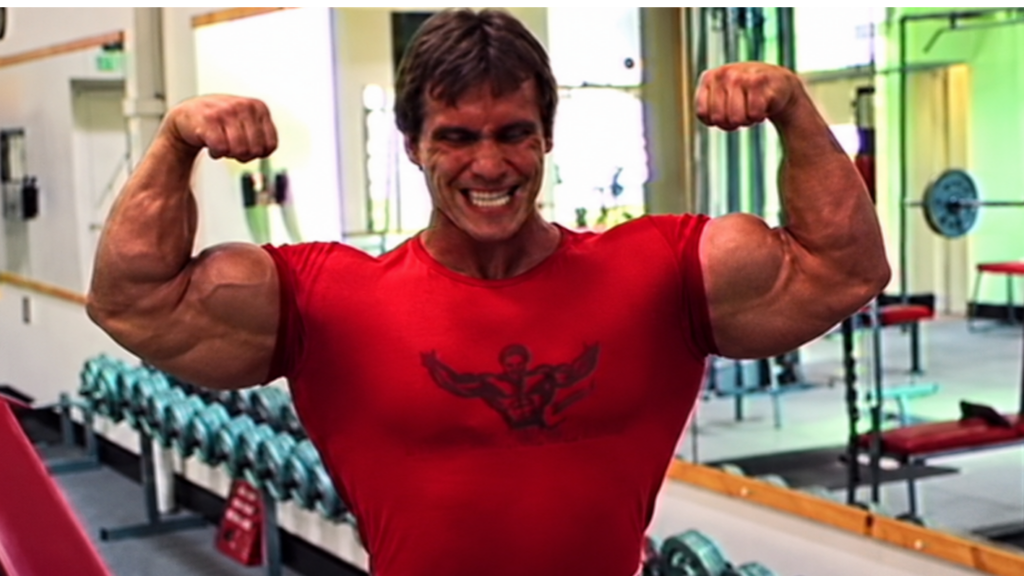
Lance Dreher emerged as a prominent bodybuilder during the late 1970s and early 1980s, developing a reputation for his massive arms, muscularity, and impressive overall physique.
He captured major amateur bodybuilding titles, including Mr. America and Mr. Universe honors, before moving into professional competition.
Despite his physical development, Dreher’s professional Olympia career consisted of just two appearances, in 1982 and 1983. Both ended in last-place finishes, results that have continued to generate discussion among longtime bodybuilding fans.
Dreher eventually moved away from IFBB competition and continued building his reputation in bodybuilding and fitness. His arms, reportedly measuring as much as 23.5 inches during his prime, became one of his most recognizable physical attributes.
His career remains an interesting chapter in bodybuilding history, particularly given the contrast between his amateur success and his disappointing Olympia results.
Dreher Reflects on Walking Away From the IFBB
Following his experiences at the Olympia, Dreher decided that continuing his professional career under the same circumstances was no longer worthwhile.
His story also highlights the financial realities facing professional bodybuilders during the early 1980s, when athletes often had to balance competitive ambitions with jobs, mortgages, and other obligations.
While relocating to California offered opportunities for exposure and sponsorship, Dreher maintains that the financial risk was simply too great.
More than four decades after his final Olympia appearance, Dreher continues to stand by his belief that refusing to cooperate with bodybuilding’s leadership cost him the opportunity to receive a fair evaluation onstage.
Whether fans agree with his assessment or not, his comments offer a revealing look at the tensions between athletes and bodybuilding’s leadership during one of the sport’s most celebrated eras.
Image embed via Instagram @lance_dreher