Are Your Glutes Too Big or Small?
When it comes to physique development, measurements are everywhere. Bodybuilders track their arms, chest, waist, thighs, and calves, but glute development has become an increasingly important part of building a balanced physique.
But what is the average butt size for men and women?
There isn’t an official medical measurement called “butt size.” However, researchers commonly measure hip circumference, which provides one of the best standardized ways to estimate the circumference around the hips and buttocks.
According to the latest nationally representative U.S. anthropometric data, the average hip circumference for adults age 20 and older is:
- Men: 105.6 cm, or approximately 41.6 inches
- Women: 109.8 cm, or approximately 43.2 inches
These figures come from the National Health and Nutrition Examination Survey (NHANES) conducted from August 2021 through August 2023.
However, circumference alone doesn’t tell the whole story. Muscle mass, skeletal structure, body fat, age, body weight, genetics, and training can dramatically affect the size and appearance of the glutes.
Our team at Generation Iron is going to break it down.
What Is the Average Butt Size for Men?
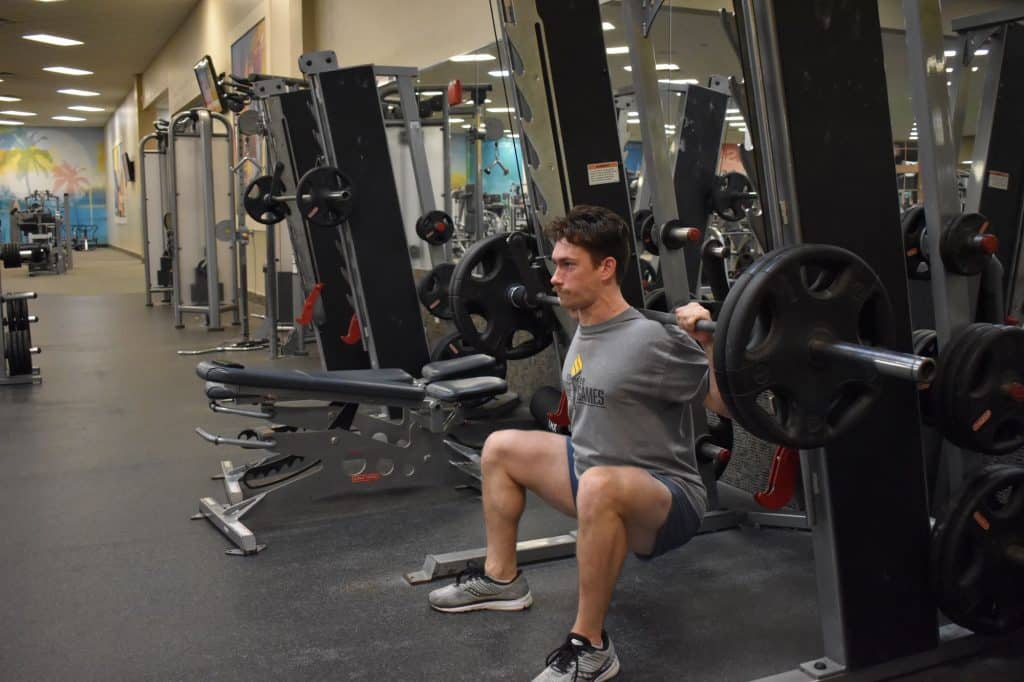
The latest NHANES data reports an average male hip circumference of 105.6 centimeters, which converts to approximately 41.6 inches, among U.S. men age 20 and older.
The median — the point at which half the measured population falls below and half above — was slightly lower at 103.6 cm, or approximately 40.8 inches.
The data also demonstrates just how much hip circumference varies throughout the male population:
- 25th percentile: 97.7 cm, or about 38.5 inches
- 50th percentile: 103.6 cm, or about 40.8 inches
- 75th percentile: 110.8 cm, or about 43.6 inches
- 90th percentile: 120.7 cm, or about 47.5 inches
- 95th percentile: 129.1 cm, or about 50.8 inches
That means calling 41 or 42 inches the “normal” male butt size would be misleading. It’s simply close to the population average, and there is considerable variation among adult men.
What Is the Average Butt Size for Women?
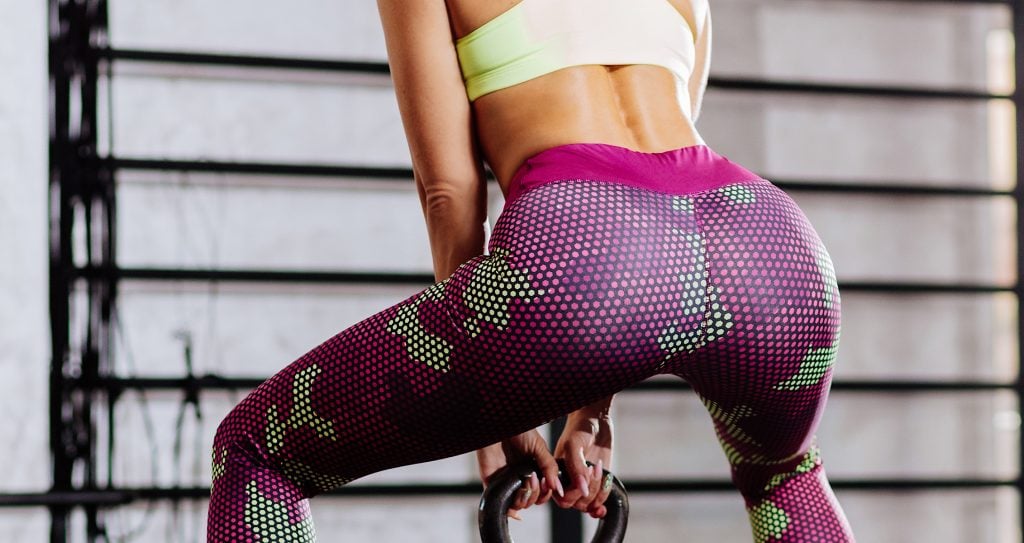
Women have a somewhat larger average hip circumference. According to the same NHANES data, U.S. women age 20 and older have an average hip circumference of 109.8 cm, equivalent to approximately 43.2 inches.
The female median is 106.8 cm, or approximately 42.0 inches.
The female percentile distribution is:
- 25th percentile: 98.6 cm, or about 38.8 inches
- 50th percentile: 106.8 cm, or about 42.0 inches
- 75th percentile: 118.1 cm, or about 46.5 inches
- 90th percentile: 131.5 cm, or about 51.8 inches
- 95th percentile: 138.4 cm, or about 54.5 inches
Therefore, based on current U.S. population measurements, the average woman’s hip circumference is approximately 1.7 inches greater than the average man’s.
Average Butt Size by Age
Hip circumference doesn’t remain exactly the same throughout adulthood.
Average Male Hip Circumference by Age
According to NHANES:
- Ages 20–29: 104.5 cm (41.1 inches)
- Ages 30–39: 106.3 cm (41.9 inches)
- Ages 40–49: 107.4 cm (42.3 inches)
- Ages 50–59: 106.2 cm (41.8 inches)
- Ages 60–69: 104.2 cm (41.0 inches)
- Ages 70–79: 105.0 cm (41.3 inches)
- Age 80+: 102.5 cm (40.4 inches)
Average Female Hip Circumference by Age
For women:
- Ages 20–29: 107.0 cm (42.1 inches)
- Ages 30–39: 111.6 cm (43.9 inches)
- Ages 40–49: 111.1 cm (43.7 inches)
- Ages 50–59: 111.5 cm (43.9 inches)
- Ages 60–69: 110.1 cm (43.3 inches)
- Ages 70–79: 108.6 cm (42.8 inches)
- Age 80+: 104.7 cm (41.2 inches)
These figures demonstrate why a single “average butt size” doesn’t describe everyone. Age alone is associated with meaningful differences in population measurements.
How Is Butt Size Actually Measured?
If you want to compare yourself with population data, you need to use the same general type of measurement.
Hip circumference is different from measuring only the glute muscles. It captures the circumference around the hip and buttock region, meaning the resulting number reflects several anatomical components rather than muscle alone.
For a practical measurement at home:
- Stand upright with your feet together.
- Wrap a flexible measuring tape horizontally around the widest portion of your hips and buttocks.
- Keep the tape level around your body.
- Keep it snug without compressing the skin.
- Record the circumference.
For consistent progress tracking, measure under similar conditions each time.
A home measurement will not necessarily be identical to a professionally collected NHANES measurement, but consistency can make it useful for tracking your own physique.
Hip Circumference Is Not the Same as Glute Muscle Size
This distinction is especially important for bodybuilders.
A 44-inch hip measurement does not mean two people have the same amount of glute muscle.
Hip circumference can be affected by:
- Gluteal muscle mass
- Subcutaneous body fat
- Pelvic structure
- Overall body size
- Body-fat distribution
- Age
- Genetics
- Training history
Research using MRI provides a good example of this distinction.
A 2023 study comparing recreationally active men and women found that the men had larger absolute gluteal muscles, while women had more gluteal subcutaneous adipose tissue. When researchers normalized glute muscle volume for body weight, however, the sex differences were no longer significant.
More recently, a large MRI analysis involving 27,805 participants in the German National Cohort found higher absolute total gluteus muscle volume in men than women. The researchers reported approximately 3.384 liters in men versus 2.386 liters in women in that study population.
This helps explain an important point: a larger external hip or butt measurement doesn’t automatically mean larger glute muscles.
Why Do Women Tend to Have Larger Hip Measurements?

Body-fat distribution is one of the major factors.
Men and women can differ in where fat tends to accumulate, and women commonly carry proportionally more subcutaneous fat around the hips and gluteal region.
Skeletal structure can also influence circumference and overall appearance.
Meanwhile, men generally possess greater absolute skeletal muscle mass. This means a trained man’s glutes could contain considerably more muscle tissue even when his total hip circumference isn’t dramatically larger.
Older anthropometric research involving 16,400 adults also found differences in gluteal circumference across age and sex, with researchers noting greater hip circumference among women in later adult age groups and pointing toward differences in subcutaneous fat accumulation as a contributor.
What Is Considered a Big Butt for a Man?
There isn’t a medically established cutoff for a “big” butt.
However, NHANES percentiles can provide useful context.
For U.S. adult men:
- Average: 41.6 inches
- 75th percentile: 43.6 inches
- 90th percentile: 47.5 inches
- 95th percentile: 50.8 inches
Therefore, a hip circumference approaching 47.5 inches would place a man around the 90th percentile in the current U.S. data.
That still doesn’t tell us whether the size comes predominantly from muscle, fat, skeletal structure, or a combination of all three.
What Is Considered a Big Butt for a Woman?
The same limitation applies to women, but population percentiles provide some perspective.
For U.S. adult women:
- Average: 43.2 inches
- 75th percentile: 46.5 inches
- 90th percentile: 51.8 inches
- 95th percentile: 54.5 inches
A hip circumference of approximately 51.8 inches corresponds to the 90th percentile among adult women in the latest NHANES measurements.
Again, percentile rankings shouldn’t be confused with physique or fitness standards. They simply show how a measurement compares with the U.S. population.
What Is a Good Butt Size for Bodybuilding?
Bodybuilding changes the question completely.
There is no ideal glute circumference that guarantees a better physique. Competitive bodybuilding is based heavily on proportion, muscularity, conditioning, symmetry, and presentation, rather than hitting a specific hip measurement.
A bodybuilder with a 42-inch hip circumference and extremely developed, lean glutes could visually appear much more muscular than someone with a significantly larger measurement caused primarily by body fat.
For male bodybuilders, well-developed glutes contribute to the transition between the lower back, hips, hamstrings, and legs. For female bodybuilding and physique competitors, glute development can play an even more visually prominent role depending on the division.
In either case, chasing a circumference number isn’t necessarily the best approach.
Can You Increase Your Butt Size With Exercise?
Yes, resistance training can increase gluteal muscle size through muscular hypertrophy.
The gluteal region consists primarily of three muscles:
- Gluteus maximus
- Gluteus medius
- Gluteus minimus
The gluteus maximus is the largest of the three and contributes heavily to the overall size and shape of the buttocks.
Exercises commonly used to develop the glutes include:
- Barbell hip thrusts
- Squats
- Romanian deadlifts
- Bulgarian split squats
- Walking lunges
- Reverse lunges
- Step-ups
- Cable hip abductions
- Glute bridges
For hypertrophy, the goal should be progressively challenging the muscles rather than simply performing endless repetitions.
Increasing load, repetitions, range of motion, exercise quality, or total productive training volume over time can help provide the stimulus required for muscular growth.
Body Fat Can Change Butt Size Too
An increasing hip circumference doesn’t automatically mean your glutes have grown.
If someone gains body fat, some of that additional tissue may accumulate around the hips and buttocks. Conversely, a fat-loss phase could cause hip circumference to decrease even if glute muscle has been maintained.
This becomes particularly relevant for bodybuilders moving between bulking and cutting phases.
A lifter could theoretically:
- Gain glute muscle while gaining some fat
- Gain muscle while keeping circumference relatively stable
- Lose inches from the hips while maintaining most glute muscle
- Become visually more muscular despite having a smaller circumference
That is why measurements should ideally be evaluated alongside body weight, body composition, progress photos, training performance, and other indicators.
Waist-to-Hip Proportion Matters
For aesthetics, looking exclusively at hip circumference also ignores the waist.
The latest NHANES report found average waist circumferences of 103.0 cm for adult men and 97.9 cm for adult women, while average hip measurements were 105.6 cm and 109.8 cm, respectively.
Two people could therefore have identical hip measurements but look completely different depending on waist circumference, muscularity, height, shoulder width, and body composition.
For bodybuilding, proportions often matter more visually than any isolated measurement.
Are Bigger Glutes Necessarily Stronger?
Not necessarily. Muscle cross-sectional area can contribute to strength potential, but glute strength depends on much more than the circumference of someone’s backside.
Training experience, technique, neuromuscular efficiency, exercise selection, muscle architecture, leverage, and overall body size can all influence strength.
A larger butt measurement could also simply reflect higher levels of subcutaneous fat rather than greater contractile muscle tissue.
This is another reason hip circumference shouldn’t be treated as a direct measure of glute strength.
Average Butt Size: The Bottom Line
Based on the latest nationally representative U.S. measurements, the average hip circumference is approximately 41.6 inches for men and 43.2 inches for women age 20 and older. The median measurements are approximately 40.8 inches for men and 42.0 inches for women.
Those numbers provide a useful answer to the question of average butt size, but they need context.
Hip circumference measures more than the glute muscles. Body fat, skeletal structure, age, genetics, body weight, and muscular development all contribute to the final measurement.
For bodybuilders and recreational lifters, the better question may not be whether your butt is larger or smaller than average. Instead, focus on whether your glutes are developing in proportion to the rest of your physique — and whether your training, nutrition, and recovery are moving you toward your individual goals.
Let us know what you think in the comments below and be sure to follow us on Facebook and Twitter.
References
Fryar CD, Gu Q, Afful J, Carroll MD, Ogden CL. Anthropometric Reference Data for Children and Adults: United States, August 2021–August 2023. Vital and Health Statistics, Series 3, No. 50. National Center for Health Statistics. 2025. DOI: 10.15620/cdc/174595. The report analyzed measurements from 8,545 NHANES participants and provides the primary hip-circumference data used in this article.
National Center for Health Statistics. NHANES Anthropometric Reference Data, Table 14: Hip Circumference in Adults Age 20 and Older. August 2021–August 2023.
Nuzzo JL, et al. Gender similarities and differences in skeletal muscle and body composition: an MRI study of recreational cyclists. 2023. MRI analysis found greater absolute gluteal muscle volume in men and greater gluteal subcutaneous adipose tissue in women, while body-weight-normalized muscle volume showed no significant sex differences.
German National Cohort MRI Study. Age- and BMI-Dependent Psoas and Gluteus Muscle Mass in 27,805 Participants of the Population-Based German National Cohort. MRI analysis quantified gluteal muscle volume and examined differences associated with sex, age, and BMI.
Bláha P, et al. Development of abdominal and gluteal circumference (waist and hips) in adults. Study of 16,400 adults examining age- and sex-related differences in waist and gluteal circumference.