Supporting Strength, Endurance and High-Intensity Performance
When it comes to pre-workout supplements, ingredients like caffeine, creatine, and citrulline often get most of the attention. But if you are looking for a formula designed to support high-intensity training, muscular endurance, and performance, beta-alanine deserves a closer look.
Beta-alanine is one of the most widely researched ingredients found in pre-workout supplements. Rather than functioning primarily as an immediate energy stimulant, beta-alanine works through a longer-term mechanism involving muscle carnosine. With consistent supplementation, beta-alanine can increase muscle carnosine levels, helping muscles better buffer the hydrogen ions that accumulate during intense exercise.
That makes beta-alanine particularly interesting for athletes who regularly push through hard sets, repeated efforts, circuits, intervals, and other forms of demanding training.
Our team at Generation Iron is breaking it down.
What Is Beta-Alanine?

Beta-alanine is a nonessential amino acid that serves as a precursor to carnosine, a compound stored in skeletal muscle.
Carnosine plays an important role in buffering changes in muscle acidity during high-intensity exercise. When exercise intensity rises, hydrogen ions accumulate as part of the metabolic processes associated with energy production. As acidity increases, maintaining muscular performance can become more difficult.
Supplementing with beta-alanine increases the availability of beta-alanine for carnosine synthesis. Research indicates that consistent beta-alanine supplementation can substantially increase muscle carnosine concentrations, which is one of the primary reasons the ingredient is included in performance-focused pre-workout formulas.
How Does Beta-Alanine Work in Pre-Workout?
One of the biggest misconceptions about beta-alanine is that it needs to work immediately after you drink your pre-workout.
That’s not exactly how it works.
Unlike caffeine, which can provide an acute stimulant effect, beta-alanine’s primary performance mechanism depends on consistent supplementation over time. Research summarized by the International Society of Sports Nutrition indicates that approximately 4–6 grams of beta-alanine per day for at least 2–4 weeks can increase muscle carnosine and potentially improve performance, particularly during high-intensity efforts.
This means beta-alanine can be included in a pre-workout for convenience, but its benefits aren’t dependent on taking it immediately before training.
Think of it as a performance-support ingredient that builds up over time rather than a traditional stimulant that you “feel” working within minutes.
Beta-Alanine and High-Intensity Exercise
Where beta-alanine becomes especially interesting is during exercise that places a significant demand on the body’s ability to manage fatigue.
Research has found the most consistent benefits during intense exercise lasting roughly 1–4 minutes, although research also indicates potential benefits across other high-intensity exercise durations. A 2024 systematic review and meta-analysis involving trained young men found that beta-alanine supplementation was associated with improved maximal-intensity exercise performance, with notable effects after approximately four weeks of supplementation.
That can have implications for more than traditional cardio.
High-rep resistance-training sets, intense supersets, circuits, intervals, sprint work, and repeated high-output efforts can all create the type of metabolic stress that makes beta-alanine an interesting addition to a performance-focused supplement routine.
Does Beta-Alanine Increase Strength?

Beta-alanine shouldn’t be confused with creatine.
Creatine has a well-established role in supporting high-intensity exercise capacity and strength adaptations, while beta-alanine’s strongest evidence is more closely associated with exercise capacity and high-intensity efforts where muscle acidity and fatigue become limiting factors.
In other words, beta-alanine isn’t necessarily an ingredient you take expecting to suddenly add pounds to your one-rep max.
Instead, its potential value may come from helping you maintain performance during demanding work. Being able to sustain high-intensity effort can be valuable when training volume, repeated sets, or conditioning demands are high.
The research is also nuanced. Meta-analyses have found overall benefits from beta-alanine supplementation, but the magnitude of the effect can depend on the type and duration of exercise being performed.
The Beta-Alanine Tingling: What Is It?
If you’ve ever taken a pre-workout containing beta-alanine, you’ve probably experienced the famous tingling sensation.
This sensation is called paresthesia.
It can feel like tingling, itching, or pins-and-needles sensations, often around the face, neck, hands, or upper body. While some people enjoy the sensation because they associate it with a pre-workout “kick,” the tingling itself isn’t the reason beta-alanine can support exercise performance.
In fact, the tingling can be reduced by dividing the daily dose into smaller servings or using sustained-release formulations.
So don’t judge a beta-alanine supplement by how intense the tingling feels. More tingling does not automatically mean a better workout or a more effective product.
How Much Beta-Alanine Should You Take?
Research on beta-alanine generally supports consistent daily supplementation, rather than relying exclusively on a single pre-workout serving.
The ISSN position stand identifies approximately 4–6 grams per day as a commonly studied range, with benefits developing after several weeks of regular use.
More recent research also supports the idea that beta-alanine’s effects are dependent on supplementation duration and exercise type. A 2024 meta-analysis found significant effects after four weeks, with particularly notable findings for maximal efforts lasting approximately 4–10 minutes.
Because individual products and serving sizes vary, athletes should follow the manufacturer’s directions and consider their overall daily beta-alanine intake when combining multiple supplements.
Why Beta-Alanine Belongs in a Complete Pre-Workout Formula
The most effective pre-workouts aren’t necessarily built around one ingredient.
Instead, they combine ingredients with different roles.
A performance-focused formula might include:
- Beta-alanine for muscle carnosine support and high-intensity exercise capacity
- Creatine for strength and high-intensity exercise performance
- Citrulline to support nitric oxide production and blood flow
- Caffeine for energy, alertness, and exercise performance
- Taurine as another ingredient commonly incorporated into performance formulas
This type of formulation allows different ingredients to address different aspects of training rather than relying entirely on stimulation.
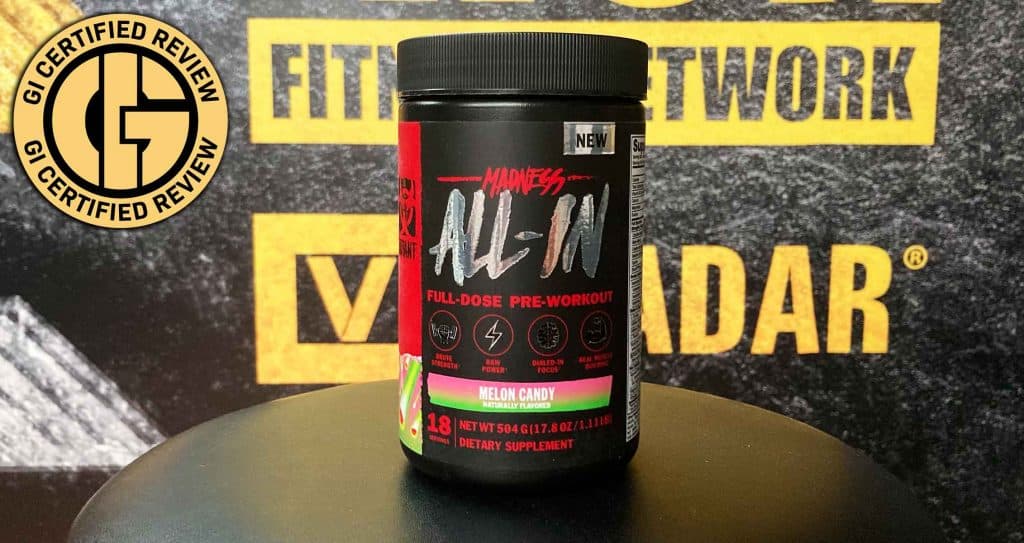
Recommended Pre-Workout: MUTANT ALL-IN
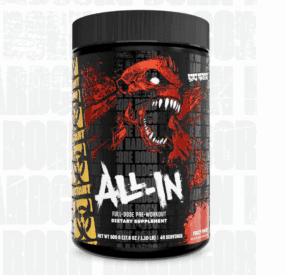
MUTANT ALL-IN IS HERE AND READY TO ROCK YOUR WORKOUTS! Pick up MUTANT ALL-IN and hit the weights like never before.
For lifters looking for a fully loaded pre-workout containing beta-alanine, creatine, citrulline, caffeine, and additional performance-focused ingredients, MUTANT ALL-IN is worth considering.
The formula delivers 20.3 grams of ingredients per serving, including 8 grams of citrulline malate, 5 grams of creatine monohydrate, 3.2 grams of beta-alanine, 1 gram of taurine, and 320 mg of caffeine anhydrous. MUTANT positions ALL-IN as a full-dose pre-workout designed to support strength, power, endurance, energy, recovery, and focus.
The 3.2 grams of beta-alanine make it particularly relevant for athletes who want to incorporate beta-alanine into their daily performance routine, while the combination of creatine and citrulline adds additional support for strength and workout performance.
One important distinction is that beta-alanine’s benefits come from consistent supplementation rather than simply feeling the ingredient kick in before a workout. The 320 mg caffeine content, meanwhile, makes ALL-IN a high-stimulant pre-workout, so athletes should account for their total daily caffeine intake and individual tolerance.
Beta-Alanine vs. Other Pre-Workout Ingredients
Understanding what each ingredient is intended to do can make choosing a pre-workout much easier.
Beta-Alanine
Beta-alanine primarily supports muscle carnosine levels and the body’s ability to buffer acidity during high-intensity exercise.
Creatine
Creatine supports the body’s phosphocreatine energy system and is one of the most extensively researched sports supplements for improving high-intensity exercise capacity, strength, and training adaptations.
Caffeine
Caffeine acts primarily as a stimulant and has strong evidence supporting its use for various aspects of exercise performance.
Citrulline
Citrulline is commonly included in pre-workout formulas to support nitric oxide production and blood flow, making it a popular ingredient for athletes looking for a better pump.
Together, these ingredients can create a more comprehensive pre-workout strategy than relying exclusively on stimulants.
Is Beta-Alanine Worth Taking Every Day?
For athletes who regularly perform high-intensity training, beta-alanine can be a worthwhile addition to a daily supplement routine.
The important thing is understanding what it can and cannot do.
Beta-alanine isn’t a shortcut to getting stronger, and it isn’t a replacement for progressive training, adequate nutrition, sleep, or recovery. Its potential benefit comes from supporting a physiological system involved in high-intensity exercise, particularly when supplementation is consistent.
Research continues to support beta-alanine as a legitimate performance ingredient, although the benefits are more pronounced for certain exercise durations and training demands than others.
The Bottom Line
Beta-alanine has earned its place in the pre-workout category for good reason.
Rather than simply providing a temporary stimulant effect, consistent beta-alanine supplementation can increase muscle carnosine levels and support the body’s ability to buffer acidity during demanding exercise. The strongest evidence appears around high-intensity efforts, particularly those lasting approximately one to several minutes.
For athletes who want a comprehensive formula, MUTANT ALL-IN combines 3.2 grams of beta-alanine with 5 grams of creatine monohydrate, 8 grams of citrulline malate, taurine, and 320 mg of caffeine in a 20.3-gram pre-workout formula.
Ultimately, the best pre-workout isn’t simply the one that makes you feel the most stimulated. It’s the formula that fits your training goals, tolerance, and overall supplementation strategy—and beta-alanine can be an important piece of that equation.
Let us know in the comments below. Also, be sure to follow Generation Iron on Facebook and Twitter.
References
- Trexler ET, et al. “International Society of Sports Nutrition Position Stand: Beta-Alanine.” Journal of the International Society of Sports Nutrition, 2015. PubMed reference
- Georgiou GD, et al. “Effect of Beta-Alanine Supplementation on Maximal Intensity Exercise in Trained Young Male Individuals: A Systematic Review and Meta-Analysis.” International Journal of Sport Nutrition and Exercise Metabolism, 2024. PubMed reference
- Hobson RM, et al. “β-Alanine Supplementation to Improve Exercise Capacity and Performance: A Systematic Review and Meta-Analysis.” Amino Acids, 2016. PubMed reference