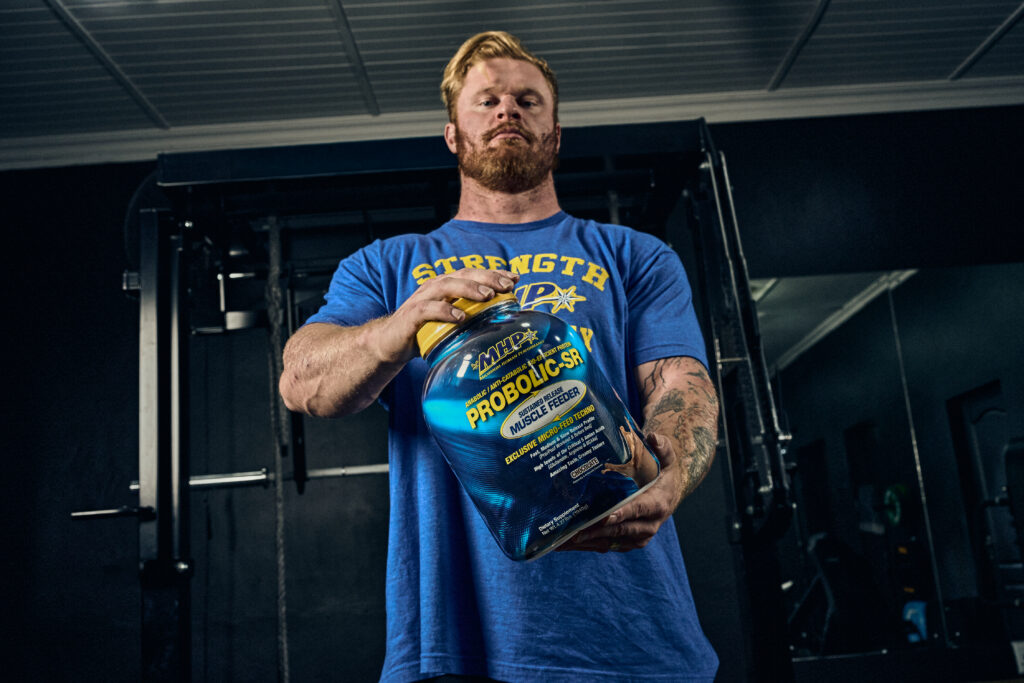
How the Powerlifting Phenom Builds Elite Strength
Colton Engelbrecht has quickly established himself as one of the strongest athletes in powerlifting. Known for his massive squat, bench press, and deadlift performances, Engelbrecht has built his success through years of consistent training, intelligent programming, and a nutrition plan designed to support extreme strength development.
Unlike traditional bodybuilding programs focused primarily on muscle mass and low body fat, Colton Engelbrecht’s training is centered around maximizing strength, improving performance, and building the physical foundation needed to move world-class weights. His approach combines heavy compound movements, strategic accessory work, and a high-calorie nutrition plan to fuel intense training sessions.
For aspiring powerlifters and strength athletes, Engelbrecht’s methods highlight the importance of consistency, recovery, and properly fueling the body. Our team at Generation Iron is breaking it down.
Colton Engelbrecht’s Strength Training Philosophy
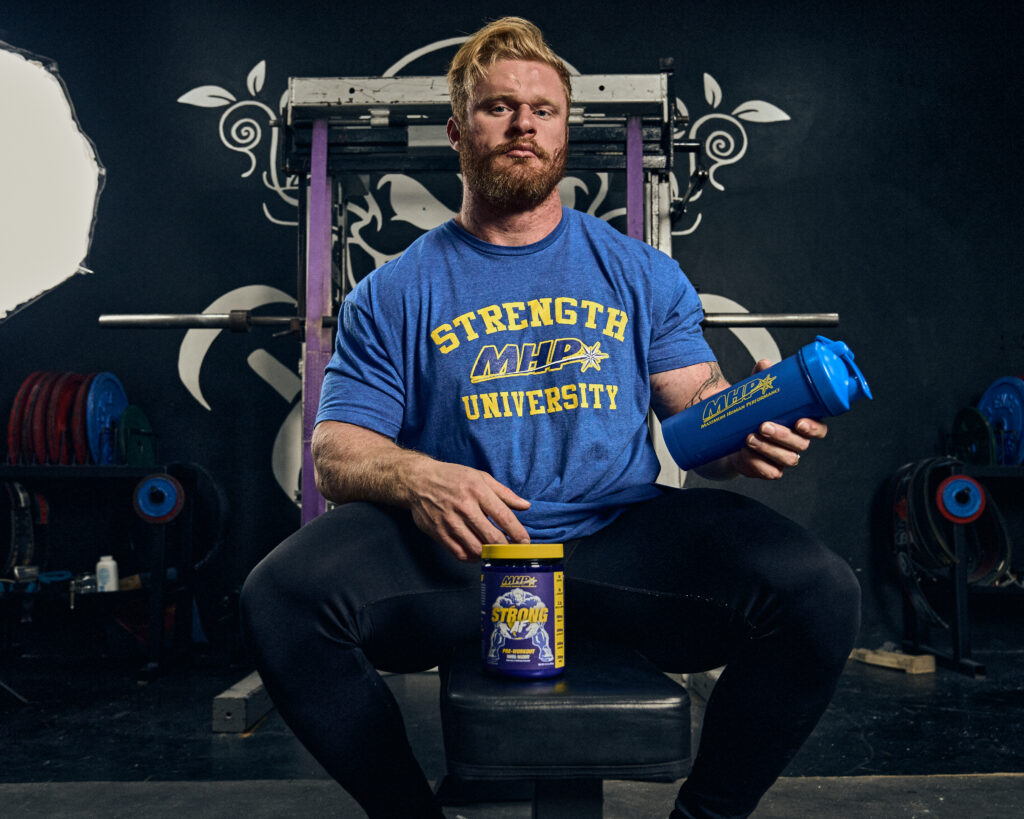
At the highest level of powerlifting, success comes down to mastering the basics: the squat, bench press, and deadlift. Colton’s training focuses heavily on these three competition lifts while incorporating accessory movements to improve weak points and build additional strength.
Key principles behind his training include:
- Progressive overload
- Heavy compound movements
- Building muscle through volume
- Improving technique under heavy loads
- Prioritizing recovery
Moving elite-level weights requires more than just strength. Powerlifters must develop efficient movement patterns, strong supporting muscles, and the ability to repeatedly perform under extreme fatigue.
Colton Engelbrecht Workout Routine
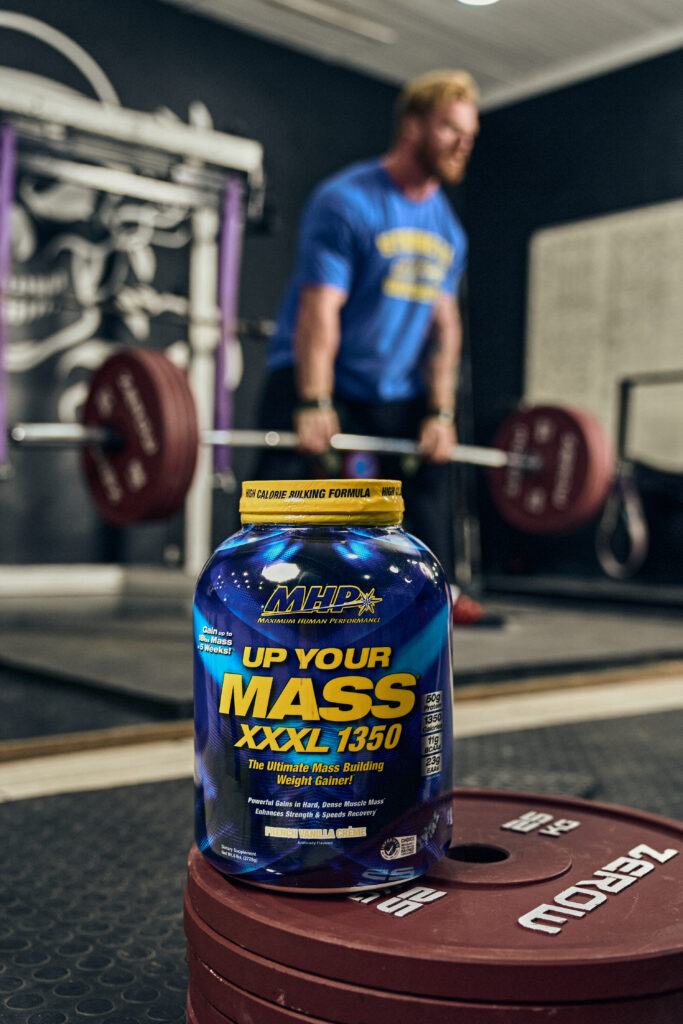
While powerlifting programs change depending on competition goals and training cycles, a routine inspired by Colton Engelbrecht’s approach would prioritize heavy strength work throughout the week.
Day 1: Heavy Squat Day
Competition Back Squat
- 5 sets x 3-5 reps
Pause Squat
- 3 sets x 3 reps
Romanian Deadlift
- 4 sets x 6-8 reps
Leg Press
- 3 sets x 10-15 reps
Hamstring Curls
- 4 sets x 10-12 reps
Core Work
- 3-4 sets
The squat is one of the biggest indicators of lower-body strength. Building a massive squat requires strong quads, glutes, hamstrings, and a powerful core capable of maintaining stability under heavy loads.
Day 2: Heavy Bench Press Day
Competition Bench Press
- 5 sets x 3-5 reps
Close-Grip Bench Press
- 4 sets x 5-8 reps
Overhead Press
- 3 sets x 6-8 reps
Barbell Rows
- 4 sets x 8-10 reps
Triceps Extensions
- 4 sets x 10-15 reps
Lat Pulldowns
- 3 sets x 10-12 reps
A strong bench press requires more than chest strength. Elite bench pressers develop powerful triceps, a strong upper back, and excellent technique to maximize force production.
Day 3: Heavy Deadlift Day
Deadlift
- 4-6 sets x 2-5 reps
Deficit Deadlift
- 3 sets x 3-5 reps
Barbell Rows
- 4 sets x 6-10 reps
Back Extensions
- 3 sets x 10-15 reps
Hamstring Curls
- 3 sets x 12 reps
Farmer’s Carries
- 3 rounds
The deadlift is one of Colton Engelbrecht’s most recognized lifts. Developing a massive pull requires years of improving posterior chain strength, grip strength, and technical efficiency.
Day 4: Strength Volume Day
Squat Variation
- 4 sets x 6-8 reps
Bench Press Variation
- 5 sets x 5-8 reps
Dumbbell Press
- 3 sets x 10-12 reps
Chest-Supported Rows
- 4 sets x 10 reps
Biceps Curls
- 3 sets x 10-15 reps
Triceps Pushdowns
- 3 sets x 12-15 reps
This type of session helps build muscle, improve endurance, and strengthen areas that support the main competition lifts.
Colton Engelbrecht Nutrition Plan
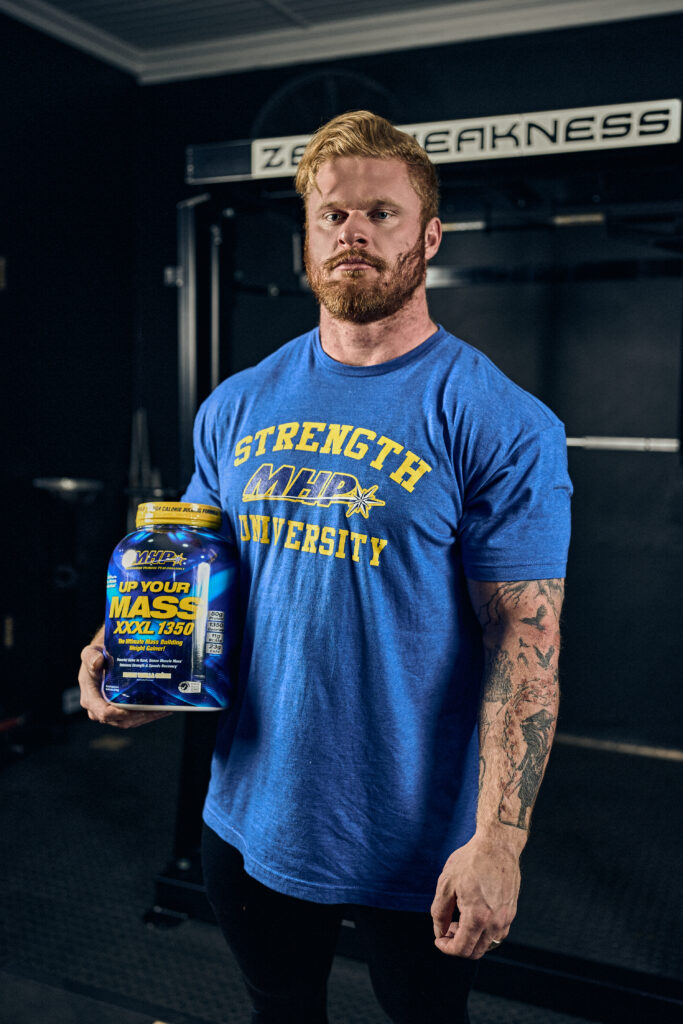
Training at Colton Engelbrecht’s level requires a nutrition strategy built around performance and recovery. Maintaining enough calories to support heavy training is a major part of his approach.
Colton focuses on consistently eating enough calories to fuel his workouts and using supplements to support recovery, strength, and overall health.
Daily Calories and Mass Building
To help maintain his calorie intake, Colton uses Up Your Mass XXXL, taking a full serving daily to help reach the high calorie demands required for elite strength training.
For strength athletes, maintaining a calorie surplus is often necessary to build muscle, recover from demanding sessions, and continue progressing.
Pre-Workout Nutrition
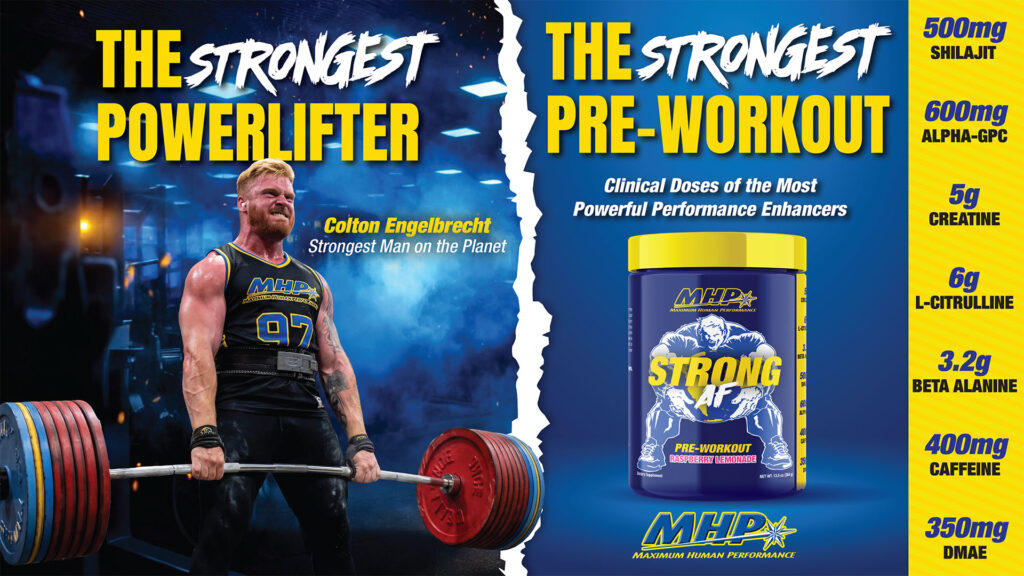
STRONG AF from MHP positions itself as a premium, research-backed formula built for lifters who want more than just a caffeine buzz.
Before training, Colton uses Strong AF to help maximize his performance during intense lifting sessions.
A quality pre-workout can help athletes improve energy, focus, and training output, especially during heavy squat, bench, and deadlift sessions.
Recovery Supplements
After his heaviest training days, including squat, bench press, and deadlift sessions, Colton uses:
- Probolic SR
- Dark Matter
Dark Matter helps put on muscle mass by increasing the protein synthesis, spiking insulin, and replenishing glycogen. Pumped with cell-voluminizing multi-phase creatine and 6 grams of essential aminos, you can't go wrong.
These supplements are used to support muscle recovery and help provide nutrients after demanding workouts.
Creatine Intake
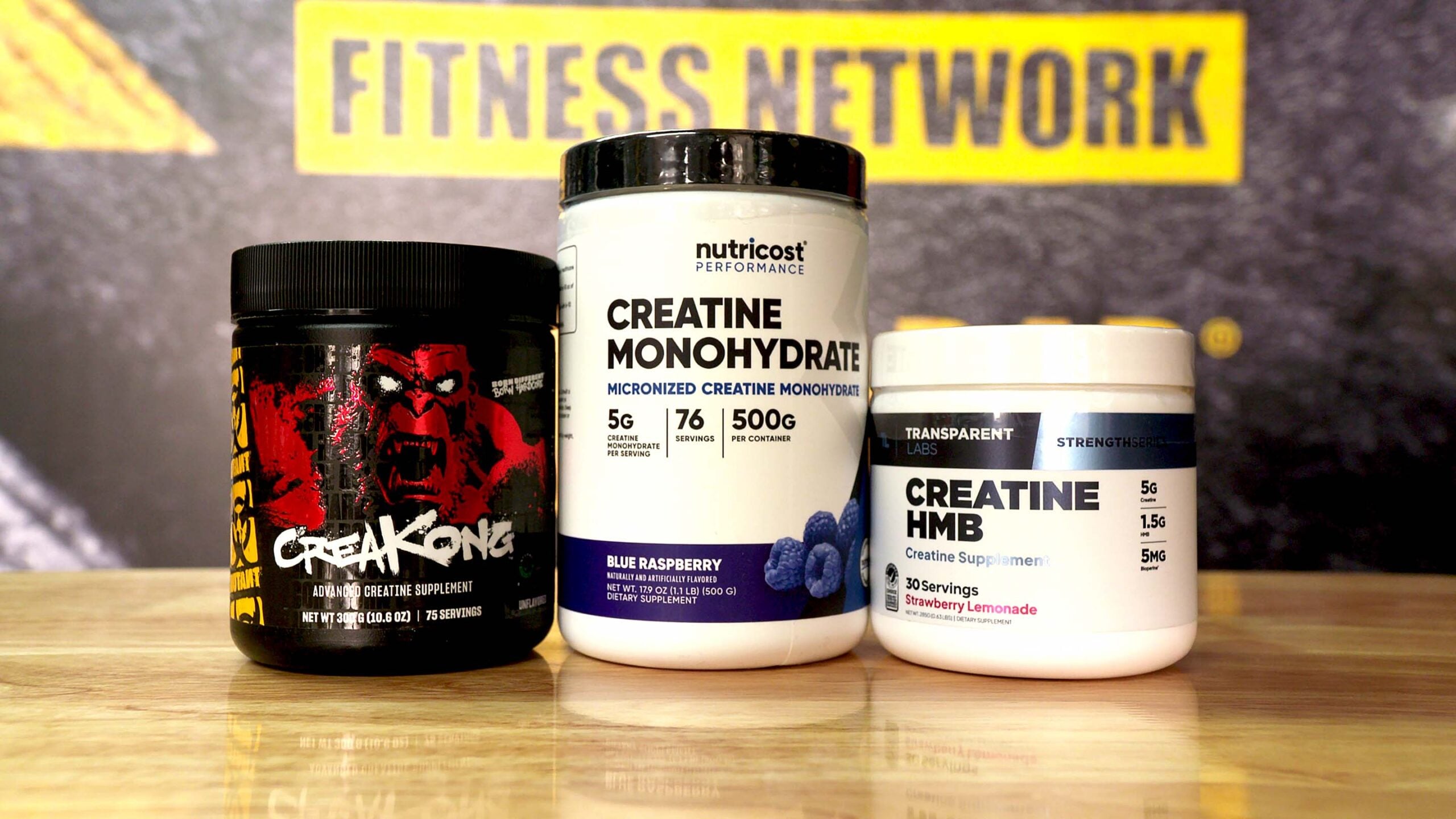
Creatine is one of the most researched strength supplements available, and Colton takes a high daily dose to support performance.
His daily creatine intake includes:
- 5g from Strong AF
- 5g from Dark Matter
- 5g from MHP Creatine Monohydrate
Total daily creatine intake: 15 grams
Creatine supplementation helps support strength output, power production, and training volume, making it a staple supplement among many elite strength athletes.
Vitamins and Health Support
Beyond performance supplements, Colton also prioritizes overall health with:
- High-dose omega-3 supplementation
- Vitamin B complex
- Magnesium
- Ashwagandha
- Vitamin C
Proper nutrition goes beyond just calories and protein. Maintaining overall health allows athletes to train harder, recover better, and stay consistent throughout demanding training cycles.
Lessons From Colton Engelbrecht’s Training
While most lifters will never move the same weights as an elite powerlifter, the principles behind Colton’s success can benefit anyone looking to get stronger.
Train the Fundamentals
The squat, bench press, and deadlift remain the foundation of strength development.
Fuel Your Performance
Hard training requires adequate calories, protein, and recovery support. Undereating can limit strength gains and slow progress.
Stay Consistent
Elite strength is built over years of showing up, progressing slowly, and continually improving technique.
Prioritize Recovery
Training is only one part of becoming stronger. Sleep, nutrition, and recovery habits determine how well your body adapts.
Final Thoughts
Colton Engelbrecht’s success in powerlifting comes from a combination of disciplined training, proper nutrition, and an unwavering commitment to getting stronger. His approach proves that elite performance requires more than just lifting heavy weights—it requires a complete system built around training, recovery, and consistency.
For athletes looking to improve their strength, Colton’s methods provide a blueprint: master the basics, train with purpose, fuel your body, and stay committed to long-term progress.
Let us know what you think in the comments below. Also, be sure to follow Generation Iron on Facebook, Twitter, and Instagram.