Does Creatine Timing Matter?
Creatine is one of the most researched and widely used supplements in strength training and bodybuilding, but one question continues to come up: should you take creatine before or after your workout?
Some lifters swear by adding creatine to their pre-workout. Others immediately reach for it alongside their post-workout shake. With so much discussion surrounding nutrient timing, it’s easy to assume that taking creatine at exactly the right moment could make a significant difference in your results.
The research isn’t quite that clear.
While there may be theoretical advantages to consuming creatine close to your workout, current evidence does not establish a definitive advantage for taking it before versus after training. What appears to matter considerably more is taking an effective dose consistently enough to maintain elevated muscle creatine stores.
Our team at Generation Iron is taking a look at what you should know about creatine timing, how creatine works, and whether taking it before or after your workout really matters.
What Is Creatine?
Creatine is a naturally occurring compound produced from amino acids and stored primarily in skeletal muscle.
Inside muscle tissue, creatine plays an important role in the phosphocreatine energy system. During short bursts of intense activity, such as heavy resistance training or sprinting, phosphocreatine helps replenish adenosine triphosphate (ATP).
ATP is essentially the immediate energy currency your muscles use to contract.
Increasing muscular creatine stores through supplementation can therefore help support repeated bouts of high-intensity exercise.
Creatine supplementation has been extensively researched for its potential to support:
- Strength
- Power output
- High-intensity exercise performance
- Resistance-training adaptations
- Lean body mass when combined with training
The important distinction is that creatine doesn’t work like a stimulant.
You don’t take five grams of creatine immediately before your workout and suddenly experience a caffeine-like surge in energy. Its primary benefits occur as muscle creatine stores increase and remain elevated through consistent supplementation.
That distinction is crucial when discussing creatine timing.
Should You Take Creatine Before a Workout?
Taking creatine before training is completely reasonable. One argument for pre-workout creatine is that exercise increases blood flow to working muscles, potentially creating favorable conditions for creatine uptake.
It’s also extremely convenient.
If you already drink a pre-workout supplement or shake before training, adding your daily creatine makes it easier to remember.
However, there isn’t convincing evidence showing that taking creatine immediately before lifting produces substantially better long-term results than taking it afterward.
A review examining creatine timing concluded that the ideal timing strategy remains uncertain, with insufficient evidence to establish a clear pre- versus post-exercise winner.
So if taking creatine before training helps you remain consistent, there’s little reason to abandon that routine.
Should You Take Creatine After a Workout?
Post-workout creatine has also received considerable attention. Researchers have proposed that consuming creatine after resistance exercise could theoretically take advantage of increased muscular blood flow and nutrient transport.
Some research has suggested a possible advantage to post-workout supplementation for certain body-composition outcomes.
However, the evidence isn’t strong enough to confidently conclude that everyone should move their creatine to their post-workout shake.
A review of creatine timing research noted that emerging evidence had suggested potential benefits from post-exercise supplementation, but methodological limitations prevented researchers from drawing firm conclusions.
Another review similarly concluded that although creatine clearly supports resistance-training adaptations, whether the exact timing of supplementation meaningfully influences those adaptations remains unclear.
In other words, taking creatine after your workout works, but current evidence doesn’t establish that it is dramatically better than taking it before your workout.
Creatine Before or After Workout: Which Is Better?
If you want the simplest answer: Either one can work.
There isn’t enough evidence to declare a universal winner between pre-workout and post-workout creatine supplementation.
Instead, the priority should be maintaining consistent creatine intake. That means your decision could simply come down to convenience.
If you already have a pre-workout routine, take your creatine then. If you prefer mixing it into your post-workout shake, do that.
If taking creatine with breakfast every morning makes it easier to remember, that’s also a practical strategy.
For most lifters, consistently taking creatine is more important than worrying about whether they consumed it 30 minutes before or 30 minutes after their final set.
Why Consistency Matters More Than Timing

Creatine supplementation works largely by increasing your muscles’ creatine stores over time. That’s fundamentally different from supplements such as caffeine, where timing can directly influence how much of the compound is circulating during your workout.
Think about creatine supplementation as keeping a reservoir filled. Once muscular creatine stores become elevated, the objective is to maintain those stores through regular supplementation.
This is why skipping creatine because you missed your ideal “window” makes little sense.
Didn’t take it before your workout? Take it afterward.
Forgot after your workout? Take it later.
Training tomorrow instead? Continue taking your normal daily serving.
Consistency wins.
Do You Need to Take Creatine on Rest Days?
Yes. If you’re supplementing with creatine, it generally makes sense to continue taking it on your non-training days.
Remember, the objective isn’t simply to have creatine in your digestive system while you’re performing a bench press. You’re trying to maintain elevated muscular creatine stores.
That process continues whether it’s chest day, leg day, or your day off.
Rest-day timing is therefore even less important.
Pick a time that makes supplementation easy to remember and stick with it.
What About the Creatine Loading Phase?
Another common question is whether you need to “load” creatine. A loading phase is typically used to saturate muscular creatine stores more rapidly. This generally involves taking a larger daily amount divided into multiple servings for several days before transitioning to a smaller maintenance dose.
But loading isn’t mandatory.
You can also take a standard daily dose and gradually increase muscle creatine stores over a longer period.
For lifters who aren’t concerned with reaching saturation as quickly as possible, simply taking creatine consistently may be the easier approach.
How Much Creatine Should You Take?
For many adults using creatine monohydrate, approximately 3–5 grams per day is a commonly used maintenance range.
Body size and individual circumstances can influence supplementation strategies, but five grams has become an extremely common daily serving in sports nutrition.
This is another reason choosing a supplement that provides a clearly disclosed amount of creatine is important.
You should know exactly what you’re getting with each serving.
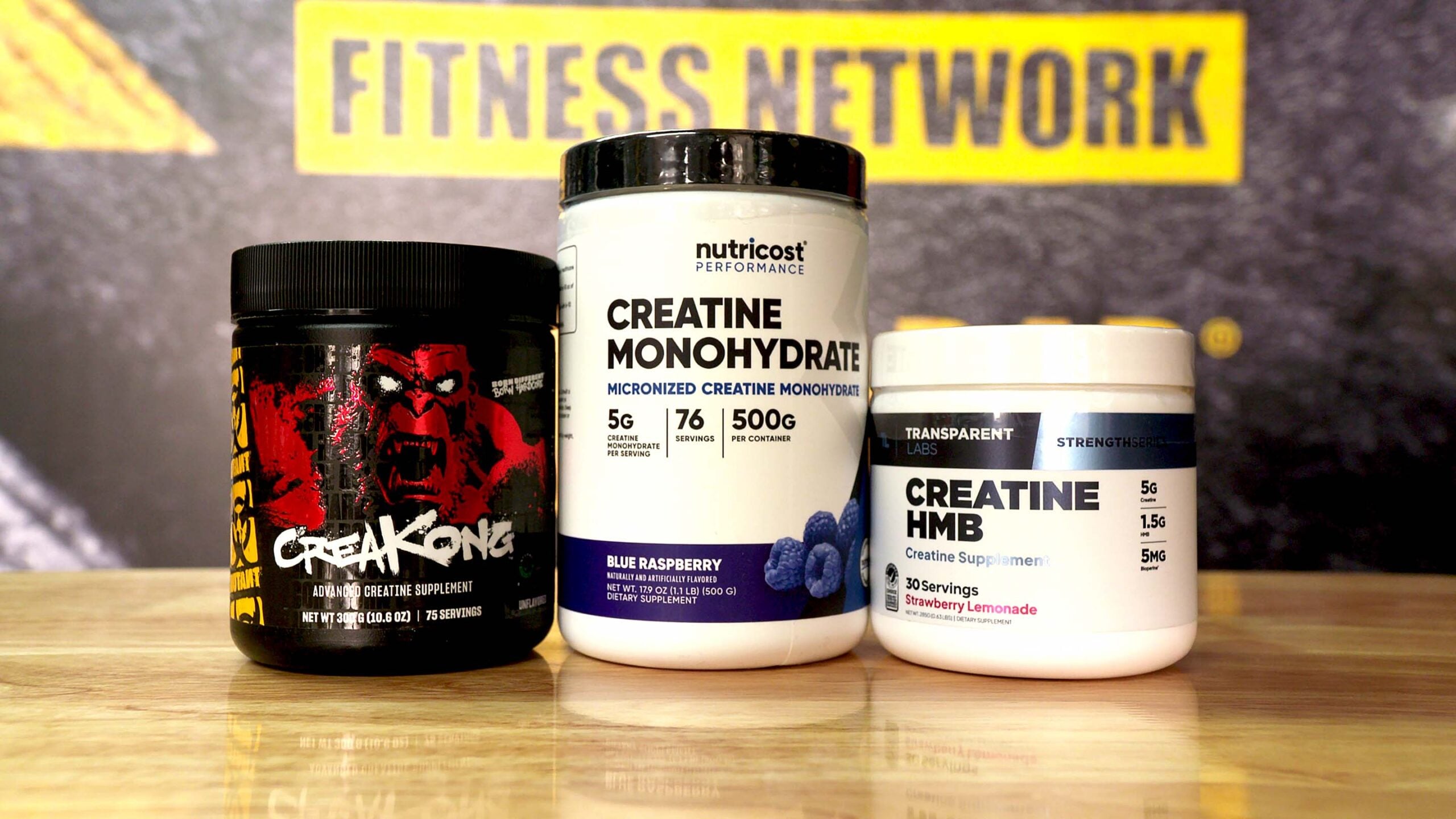
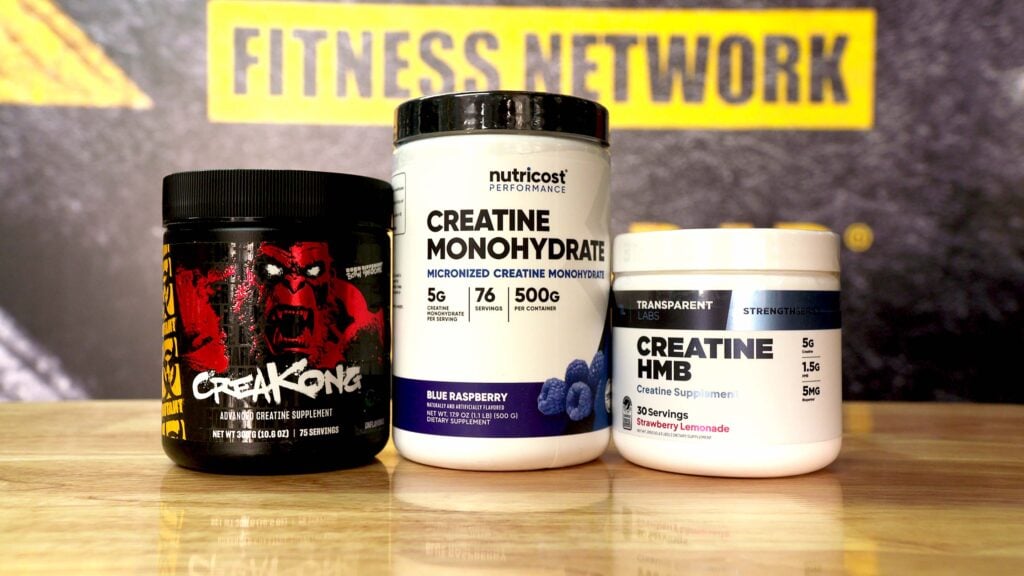
Best Creatine Supplement: Transparent Labs StrengthSeries Creatine HMB
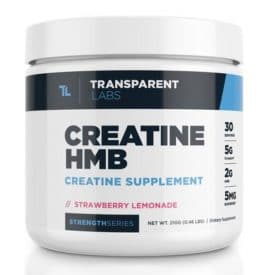
Transparent Labs Creatine HMB is clean and effective for tackling all of your strength building needs. With no artificial additives or preservatives, what you get is pure creatine with added HMB for better strength.
For athletes and bodybuilders looking to add creatine to their daily supplement routine, Transparent Labs StrengthSeries Creatine HMB stands out because it goes beyond a basic creatine-only formula.
Each serving provides:
- 5 grams of creatine monohydrate
- 1.5 grams of HMB
- 500 IU of vitamin D
- 5 mg of BioPerine® black pepper extract
The formula is also free from artificial sweeteners, artificial coloring, and artificial preservatives.
The five-gram creatine dose makes it particularly straightforward for lifters looking for a full daily serving without having to calculate multiple scoops.
Why Add HMB?
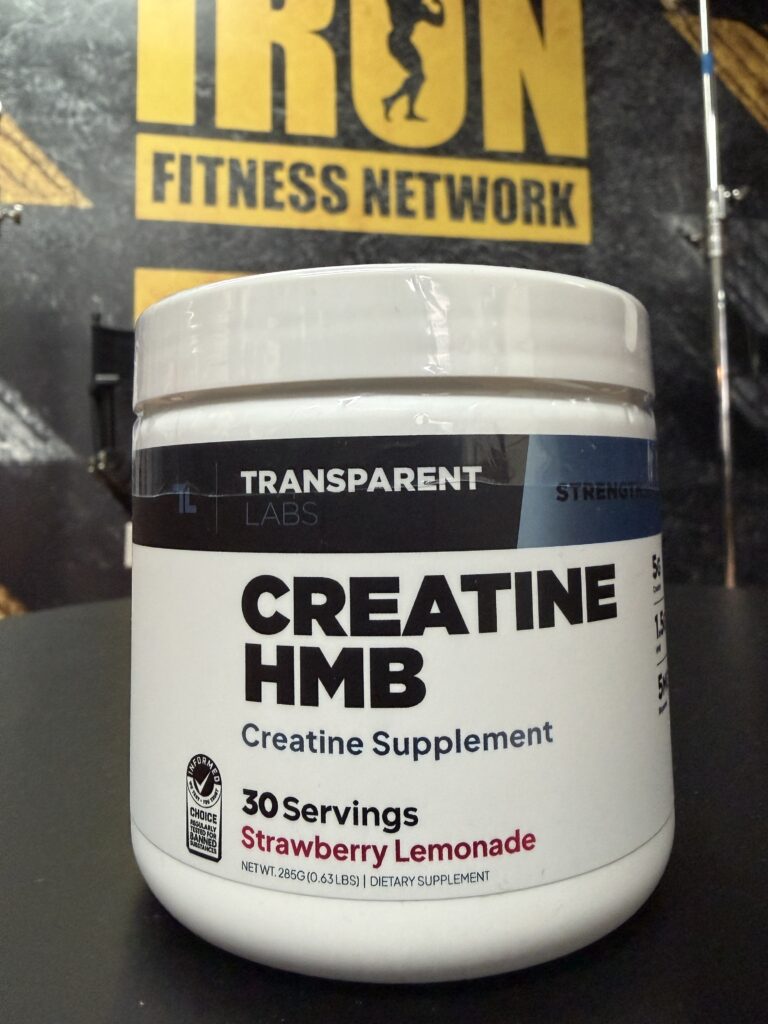
Transparent Labs pairs creatine with β-hydroxy β-methylbutyrate (HMB).
HMB is a metabolite of the essential amino acid leucine and has been studied in the context of exercise, muscle protein breakdown, recovery, and body composition.
Transparent Labs includes 1.5 grams of patented myHMB® per serving, positioning Creatine HMB as a more comprehensive performance and recovery formula than standalone creatine monohydrate.
That makes the product particularly interesting for lifters whose goals extend beyond simply increasing their daily creatine intake.
When Should You Take Transparent Labs Creatine HMB?
This brings us directly back to the original question.
Do you need to take Transparent Labs Creatine HMB before your workout? Not necessarily.
Do you need to take it immediately afterward? Again, probably not.
The most important thing is taking your serving consistently.
Transparent Labs itself notes that consistency, form, and dosing are more important considerations than obsessing over the exact timing of creatine supplementation.
If you like taking supplements before training, you can make it part of your pre-workout routine.
If you already drink a shake after training, adding your serving around that routine may be more convenient.
And on rest days, simply choose a consistent time that’s easy to remember.
Can You Take Creatine With Pre-Workout?
In many cases, yes.
Creatine and pre-workout serve different purposes.
A traditional pre-workout might contain ingredients intended to support acute workout performance, energy, focus, endurance, or pumps.
Creatine is different because its benefits depend primarily on increasing and maintaining muscular creatine stores.
This means there’s no inherent need to choose between the two.
However, always check your pre-workout’s supplement facts first. Some formulas already contain creatine, and combining multiple products without reading their labels could cause you to consume more than you intended.
Can You Mix Creatine With Protein?
Creatine can also conveniently be incorporated into a protein shake.
This is one reason post-workout creatine has become such a popular routine among bodybuilders.
You’re already drinking your protein shake, so adding your daily creatine—or taking a creatine product alongside it—requires virtually no additional effort.
There has also been research into consuming creatine alongside carbohydrates and protein. Nutrient timing research has suggested that co-ingestion strategies may influence creatine retention or training adaptations under certain conditions, although this doesn’t establish a requirement to combine creatine with a post-workout shake.
Again, convenience and consistency remain the priority.
Is Creatine Worth Taking for Bodybuilding?
For resistance-trained athletes, creatine remains one of the most established sports supplements available.
But its popularity can sometimes make supplementation unnecessarily complicated.
You don’t need an elaborate creatine protocol.
You don’t need to panic if you miss the supposed post-workout anabolic window.
And you don’t need to set a timer so you can drink creatine the second your workout ends.
The fundamental strategy is much simpler:
Take an effective dose consistently and keep training.
The Bottom Line: Creatine Timing Matters Less Than Consistency
So, should you take creatine before or after your workout?
Based on the current research, either approach is reasonable.
Some evidence has suggested potential benefits to taking creatine around or after resistance training, but the available research isn’t strong enough to establish a definitive timing advantage. What matters most is consistently consuming enough creatine to increase and maintain muscular creatine stores.
For most lifters, the best time to take creatine is therefore whenever you’re most likely to remember it every day.
Before training? Fine.
After training? Fine.
With breakfast? Also fine.
And for athletes looking for more than standalone creatine, Transparent Labs StrengthSeries Creatine HMB combines five grams of creatine monohydrate with HMB, vitamin D, and BioPerine® in one daily formula.
Don’t overthink the clock.
Consistency, progressive training, adequate nutrition, and recovery are ultimately what turn your creatine supplementation into meaningful results.
Let us know in the comments how much creatine you take, and be sure to follow Generation Iron on Facebook and Twitter.