Build muscle without dumbbells and barbells
When it comes to building muscle and strength, most lifters think of free weights first — barbells and dumbbells have long been the gold standard, and for good reason. While free weights are a great option to build your dream physique, cable machines are an underrated powerhouse that deserve a permanent place in your training routine. They offer constant tension throughout the entire range of motion, allow for a wide variety of movement angles, and are incredibly joint-friendly. Whether your goal is hypertrophy, functional strength, or overall muscle definition, cable training can help you get there faster and safer.
Our team at Generation Iron has broken down the 5 best cable exercises you should be doing, why they work, and how to perform them correctly.
1. Cable Chest Fly – For Maximum Chest Activation
Primary muscles worked: Pectoralis major, anterior deltoids, triceps (stabilizers)
Why it’s great:
The cable chest fly is one of the most effective isolation movements for the chest. Unlike dumbbells, which lose tension at the top of the movement, cables keep your pecs engaged through the entire range of motion. This constant tension helps build both strength and definition while improving your mind-muscle connection.
How to do it:
- Set the cable pulleys at chest height on both sides of a dual cable station.
- Grab a handle in each hand and step forward into a split stance.
- With a slight bend in your elbows, bring your hands together in front of you in a wide arc, squeezing your chest at the peak.
- Slowly return to the starting position under control.
Pro tip: Pause and contract your chest for 1-2 seconds at the midpoint of the movement to maximize muscle activation.
2. Cable Row – For a Strong, Thick Back
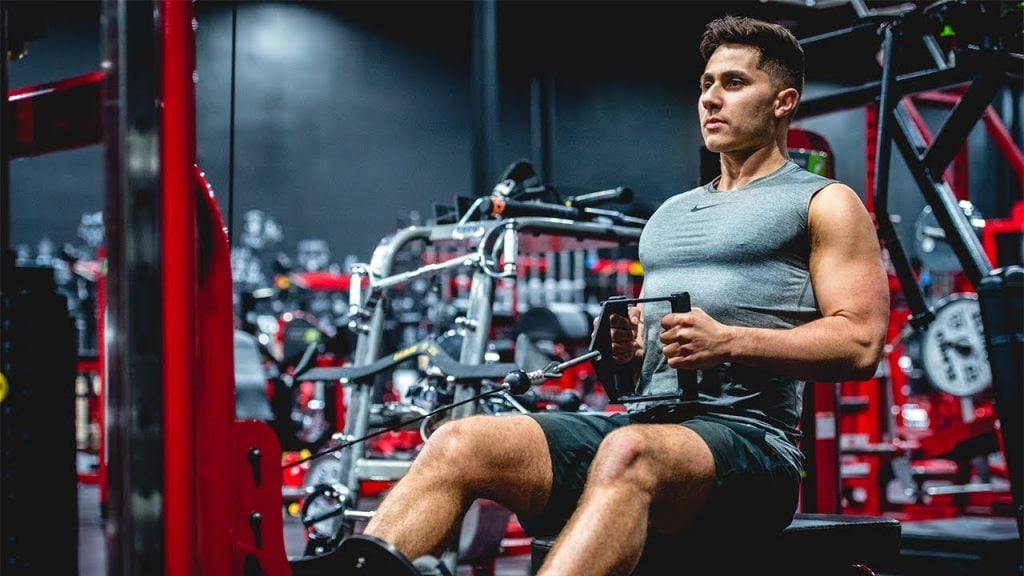
Primary muscles worked: Latissimus dorsi, rhomboids, traps, biceps
Why it’s great:
A strong back is crucial for posture, pulling strength, and overall upper-body balance. The cable row is a staple for back development because it allows you to fully stretch and contract the lats without jerky movements. Cables also let you adjust your grip and hand position to target different parts of the back.
How to do it:
- Sit at a low cable row station and grab the handle with both hands.
- Keep your back straight and chest up as you pull the handle toward your torso.
- Squeeze your shoulder blades together at the end of the movement.
- Slowly extend your arms back to the starting position.
Pro tip: Avoid leaning too far back — focus on pulling with your back muscles rather than using momentum.
3. Cable Face Pull – For Shoulder Health and Rear Delts
Primary muscles worked: Rear deltoids, rhomboids, traps, rotator cuff
Why it’s great:
The cable face pull is one of the best exercises for shoulder health, posture, and upper back strength. It’s a must-do movement if you spend a lot of time bench pressing or sitting at a desk. The face pull strengthens the rear delts and rotator cuff muscles, which improves shoulder stability and reduces injury risk.
How to do it:
- Set a rope attachment at upper chest or eye level.
- Grab the rope with an overhand grip and step back until there’s tension on the cable.
- Pull the rope toward your face, driving your elbows high and wide.
- Squeeze your rear delts and upper back at the peak, then slowly return to the start.
Pro tip: Keep your chest up and avoid shrugging your shoulders to maximize rear delt engagement.
4. Cable Woodchopper – For Core Strength and Rotation
Primary muscles worked: Obliques, rectus abdominis, transverse abdominis, hip flexors
Why it’s great:
Strong abs are more than just aesthetics — they’re essential for athletic performance, spinal stability, and injury prevention. The cable woodchopper is a dynamic movement that trains rotational power and core stability, making it ideal for athletes and anyone who wants a functional, powerful midsection.
How to do it:
- Attach a single handle to a high pulley.
- Stand with your side facing the cable machine, feet shoulder-width apart.
- Grab the handle with both hands and pull it diagonally across your body toward your opposite hip, rotating your torso as you go.
- Slowly return to the start and repeat on both sides.
Pro tip: Keep your arms slightly bent but fixed — the movement should come from your core rotation, not your arms.
5. Cable Tricep Pushdown – For Bigger, Stronger Arms

Primary muscles worked: Triceps brachii
Why it’s great:
If you want bigger arms, you can’t skip triceps training — they make up about two-thirds of your upper arm mass. The cable tricep pushdown is one of the most efficient ways to isolate and overload the triceps while maintaining strict form and constant tension.
How to do it:
- Attach a straight bar or rope to a high pulley.
- Grab the attachment with an overhand grip and bring your elbows close to your sides.
- Push the bar down until your arms are fully extended, then squeeze your triceps.
- Slowly return to the starting position without letting your elbows flare out.
Pro tip: For maximum muscle growth, control the eccentric (upward) portion of the lift — don’t let the weight snap back up.
Why Cable Exercises Deserve a Spot in Your Routine
Cables offer several unique advantages over free weights:
- Constant tension: Unlike dumbbells and barbells, cables provide resistance throughout the entire movement.
- Joint-friendly: The smooth resistance path is easier on joints and tendons.
- Versatility: You can target muscles from multiple angles and planes of motion.
- Improved muscle activation: Isolation is easier, which means better hypertrophy and mind-muscle connection.
Whether you’re a beginner or a seasoned lifter, adding cable work to your program will help you build more balanced, functional, and aesthetic muscle.
Final Thoughts
The five exercises above — cable chest fly, cable row, cable face pull, cable woodchopper, and cable tricep pushdown — are some of the most effective ways to build muscle, improve strength, and develop better overall movement patterns. They’re easy to scale for any fitness level and can be rotated into almost any workout split.
Start incorporating these cable exercises into your weekly routine, and you’ll quickly notice stronger lifts, better muscle definition, and improved athletic performance.
Have you ever injured yourself in the gym before? If so, let us know what happened and follow us on Instagram, Facebook, and Twitter.