Build Your Back Thickness
If you’re looking to build a thick, muscular back, rowing exercises should be a major part of your workout routine. While vertical pulling movements like pull-ups and lat pulldowns are excellent for developing back width, rowing exercises help build the density and thickness that give your back a powerful, three-dimensional appearance.
Rows target several major muscles throughout the upper and middle back, including the latissimus dorsi, rhomboids, trapezius, and rear deltoids. They also recruit supporting muscles like the biceps and forearms, making them an effective addition to any upper-body workout.
Whether you’re a beginner looking to develop your back or an experienced lifter trying to add more thickness to your physique, incorporating different rowing variations can help you target your back muscles from multiple angles.
In this guide, our team at Generation Iron breaks down the top five rowing exercises to build a thick back, how to perform each movement, and why they deserve a place in your training routine.
1. Barbell Bent-Over Rows

Primary Muscles Worked: Latissimus dorsi, rhomboids, trapezius, rear deltoids
Barbell bent-over rows are one of the most effective compound exercises for developing overall back thickness. This movement allows you to use substantial resistance while recruiting multiple muscle groups throughout your upper and middle back.
Because you’re using a barbell, you can progressively increase the weight as your strength improves.
How to Perform Barbell Bent-Over Rows:
- Stand with your feet approximately shoulder-width apart and hold a barbell with an overhand grip.
- Hinge at your hips and lean your torso forward while maintaining a neutral spine.
- Allow your arms to hang naturally beneath your shoulders.
- Pull the barbell toward your lower abdomen, driving your elbows behind your body.
- Squeeze your shoulder blades together at the top of the movement.
- Slowly lower the barbell until your arms are extended.
- Repeat for the desired number of repetitions.
Training Tip: Avoid using excessive momentum or rounding your lower back to move heavier weight. Keep your torso stable and focus on pulling with your back muscles.
2. Seated Cable Rows
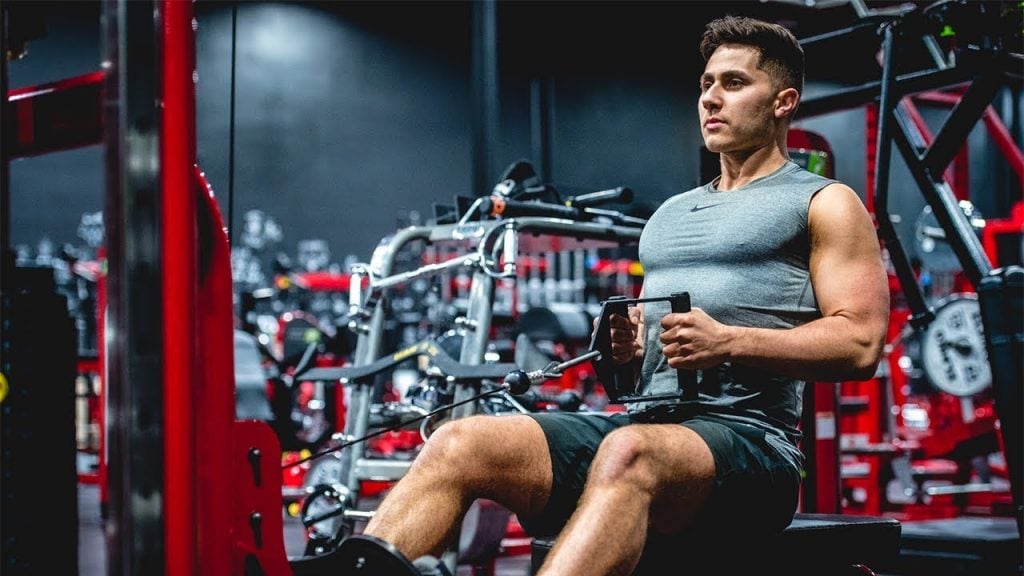
Primary Muscles Worked: Latissimus dorsi, rhomboids, middle trapezius, rear deltoids
Seated cable rows are an excellent exercise for building back thickness while maintaining consistent resistance throughout the movement.
Unlike free-weight rowing exercises, the cable machine provides continuous tension, allowing you to focus on controlling each repetition and contracting your back muscles.
Another advantage is the ability to experiment with different attachments and grip positions to emphasize different areas of your back.
How to Perform Seated Cable Rows:
- Sit at a cable row machine with your feet positioned securely on the footplates.
- Grab the handle with both hands and sit upright.
- Extend your arms while maintaining a neutral spine.
- Pull the handle toward your abdomen while driving your elbows backward.
- Squeeze your shoulder blades together as the handle approaches your torso.
- Slowly extend your arms to return to the starting position.
- Repeat for the desired number of repetitions.
Training Tip: Avoid leaning excessively backward to move the weight. Keep your torso relatively stable and focus on squeezing your back muscles during every repetition.
3. Chest-Supported Dumbbell Rows

Primary Muscles Worked: Rhomboids, middle trapezius, latissimus dorsi, rear deltoids
Chest-supported dumbbell rows are particularly useful for lifters who want to build a thicker back without placing as much demand on their lower back.
By positioning your chest against an inclined bench, you reduce the need to stabilize your torso throughout the exercise. This allows you to concentrate more directly on pulling the dumbbells and contracting your upper and middle back.
The independent dumbbells also allow each arm to work separately, which can help identify and address strength imbalances.
How to Perform Chest-Supported Dumbbell Rows:
- Set an adjustable bench to an incline of approximately 30-45 degrees.
- Lie face down with your chest supported against the bench.
- Hold a dumbbell in each hand with your arms extended toward the floor.
- Pull both dumbbells upward while driving your elbows behind your body.
- Squeeze your shoulder blades together at the top.
- Slowly lower the dumbbells to the starting position.
- Repeat for the desired number of repetitions.
Training Tip: Avoid shrugging your shoulders toward your ears. Focus on driving your elbows backward and controlling the dumbbells throughout the movement.
4. T-Bar Rows

Primary Muscles Worked: Latissimus dorsi, rhomboids, trapezius, rear deltoids
T-bar rows are a popular bodybuilding exercise for developing a thick, dense back. This movement allows you to work with substantial resistance while targeting the muscles responsible for upper- and mid-back development.
Depending on the equipment and grip you use, T-bar rows can place slightly different emphasis on your back musculature.
Whether you’re using a dedicated T-bar row machine or a landmine attachment, this exercise deserves consideration when building a back-focused workout.
How to Perform T-Bar Rows:
- Position yourself over a T-bar row machine or landmine attachment.
- Grip the handles with both hands and establish a stable stance.
- Hinge forward at your hips while maintaining a neutral spine.
- Allow your arms to extend toward the floor.
- Pull the weight toward your lower chest or upper abdomen.
- Squeeze your back muscles at the top of the movement.
- Slowly lower the weight and repeat.
Training Tip: Keep your torso stable and avoid using excessive hip movement to swing the weight upward. Choose a resistance that allows you to maintain control.
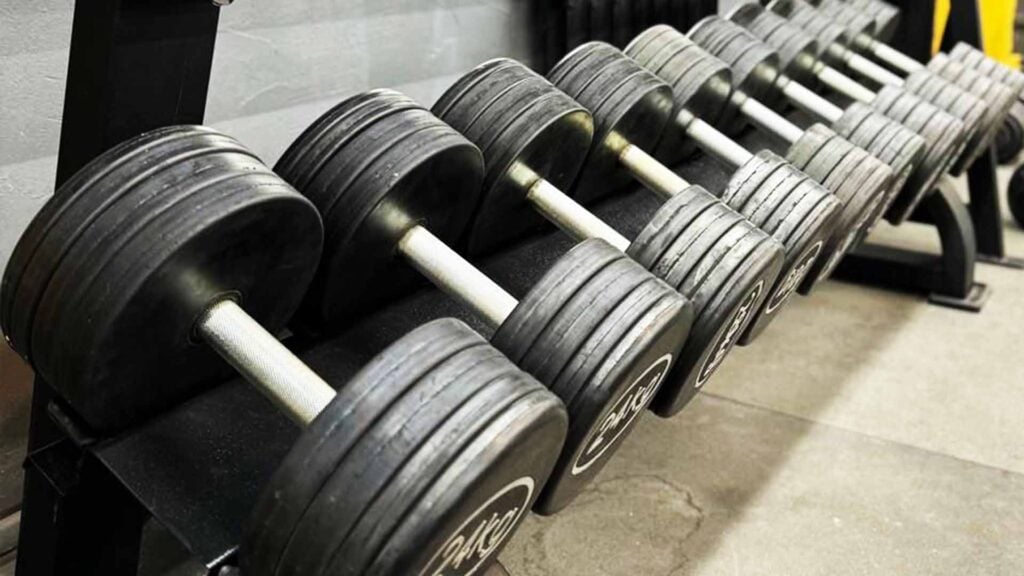
5. Single-Arm Dumbbell Rows
Primary Muscles Worked: Latissimus dorsi, rhomboids, trapezius, rear deltoids
Single-arm dumbbell rows are a staple exercise for building a thicker, stronger back. Unlike bilateral rowing movements, this variation allows you to focus on one side at a time.
This makes it easier to concentrate on your technique, work through a comfortable range of motion, and address potential muscular imbalances.
Single-arm dumbbell rows also allow you to adjust your elbow path to emphasize different portions of your back.
How to Perform Single-Arm Dumbbell Rows:
- Position one knee and hand on a flat bench for support.
- Place your opposite foot firmly on the floor.
- Hold a dumbbell in your free hand with your arm extended.
- Keep your back relatively flat and your torso stable.
- Pull the dumbbell toward your hip while driving your elbow backward.
- Squeeze your lat and upper-back muscles at the top.
- Slowly lower the dumbbell until your arm is extended.
- Complete your repetitions before switching sides.
Training Tip: Avoid rotating your torso to lift the dumbbell. Keep your hips and shoulders relatively square while focusing on a controlled rowing motion.
Why Are Rowing Exercises Important for Building Back Thickness?
If your goal is to develop a wide, thick, and muscular back, rowing movements should be a central component of your training program.
Here are several reasons why.
1. Develops Upper and Middle Back Thickness
Rowing movements recruit the rhomboids and trapezius, which contribute to the density and thickness of your upper and middle back.
Developing these muscles helps create a fuller appearance when viewed from behind.
2. Builds Your Lats
The latissimus dorsi are among the largest muscles in your upper body and play a major role in creating a wider back.
Depending on your grip and elbow position, rowing exercises can effectively challenge the lats and contribute to overall back development.
3. Improves Pulling Strength
Rows strengthen the muscles involved in pulling movements, which can carry over to exercises like pull-ups, deadlifts, and other upper-body movements.
4. Strengthens Supporting Muscles
Many rowing variations also recruit your biceps, forearms, and core muscles.
These supporting muscles help stabilize your body and contribute to overall upper-body strength.
5. Creates a More Balanced Physique
A well-developed back is essential for creating a balanced bodybuilding physique.
Combining rowing exercises with vertical pulling movements helps develop both back width and thickness, contributing to a more complete appearance.
How to Incorporate Rowing Exercises Into Your Back Workout
You don’t need to perform all five rowing exercises in a single workout to build a thick back. Instead, choose two or three variations and combine them with vertical pulling movements.
Here is an example back workout:
Back Thickness and Development Workout
- Barbell Bent-Over Rows: 3 sets of 6-10 reps
- Chest-Supported Dumbbell Rows: 3 sets of 8-12 reps
- Seated Cable Rows: 3 sets of 10-15 reps
- Lat Pulldowns: 3 sets of 10-12 reps
- Face Pulls: 3 sets of 12-15 reps
Adjust the number of sets and repetitions based on your experience, recovery, and training goals.
Remember that progressive overload, proper technique, adequate nutrition, and recovery are all important components of building muscle.
Top 5 Rowing Exercises Conclusion
Building a thick, muscular back requires more than simply performing pull-ups and lat pulldowns. Rowing exercises are essential for developing the upper and middle back, strengthening your lats, and creating the dense appearance associated with a well-developed physique.
Barbell bent-over rows, seated cable rows, chest-supported dumbbell rows, T-bar rows, and single-arm dumbbell rows each offer unique benefits that can contribute to overall back development.
The key is to train consistently, prioritize proper technique, and progressively challenge your muscles over time.
If you’re serious about building a bigger back, make rowing exercises a priority in your training routine.
What is your favorite rowing exercise for building back thickness? Let us know in the comments below!
Let us know what you think in the comments below and be sure to follow us on Facebook and Twitter.