Understanding the Difference and Why They’re Often Compared
Peptides and anabolic steroids are frequently mentioned in the same conversations within bodybuilding, sports performance, and fitness culture. Both have become associated with physique enhancement, recovery, improving muscle mass, and other performance-related goals.
But are peptides the same as steroids?
No. Peptides and anabolic steroids are fundamentally different classes of compounds.
The confusion comes from the fact that some peptides can influence biological pathways associated with hormones, the metabolism, growth, and tissue signaling. Certain peptides are also investigated for effects that can overlap with outcomes athletes associate with anabolic drugs.
Understanding that distinction is important—particularly as peptide research continues to expand and compounds such as growth hormone secretagogues and peptide analogues receive increasing attention in bodybuilding.
Our team at Generation Iron is going to break it down.
What Are Steroids?

When people in bodybuilding talk about “steroids,” they’re usually referring to anabolic-androgenic steroids (AAS). Anabolic steroids are synthetic derivatives of testosterone designed to produce anabolic effects, androgenic effects, or both. Their chemical structure is based on the steroid framework.
Steroid hormones are lipid-soluble molecules that can cross cell membranes and interact with intracellular receptors. Their mechanisms are fundamentally different from those of most peptide hormones and peptide-based compounds.
That’s the first major distinction:
Steroids are steroid molecules. Peptides are chains of amino acids.
They aren’t simply different versions of the same thing.
What Are Peptides?
Peptides are short chains of amino acids connected through peptide bonds.
Their biological activity depends heavily on their amino acid sequence and structure. Some peptides function naturally as signaling molecules or hormones, while others are synthetic compounds designed to mimic, modify, or interact with biological signaling pathways.
Modern peptide research encompasses a huge range of applications. More than 100 peptide-based drugs have received regulatory approval, while many additional candidates remain in clinical and preclinical development.
Examples include peptide-based medicines that interact with metabolic pathways, hormone signaling, immune processes, and other biological systems.
So while “peptide” may sound like a single category, it actually encompasses a remarkably diverse group of molecules.
Peptides vs. Steroids: What’s the Difference?

The simplest comparison is molecular.
| Peptides | Anabolic Steroids |
|---|---|
| Made from amino acids | Steroid-based chemical structures |
| Often interact with cell-surface receptors | Often interact with intracellular androgen receptors |
| Can act as signaling molecules | Designed to produce anabolic/androgenic effects |
| May mimic naturally occurring peptides or hormones | Often derived from or structurally related to testosterone |
| Mechanisms vary dramatically by compound | Primarily associated with androgen receptor signaling |
This difference doesn’t mean peptides can’t have significant physiological effects. It means those effects occur through different mechanisms.
Can Peptides Have Steroid-Like Effects?
This is where the answer becomes more nuanced.
Some peptides can produce physiological effects that people associate with anabolic steroids, but that doesn’t make them steroids.
For example, certain peptide compounds are studied because they influence growth hormone or other endocrine pathways. Growth hormone secretagogues and growth hormone-releasing hormone analogues have attracted particular interest within bodybuilding and sports research.
Compounds such as CJC-1295 and sermorelin are examples of peptides investigated in relation to the growth hormone axis. NewBioRx describes sermorelin research in terms of GHRH receptor activation and downstream endocrine signaling.
That can create an indirect relationship between peptide signaling and anabolic processes.
But the mechanism is different from taking an anabolic-androgenic steroid.
How Growth Hormone-Related Peptides Work

Some peptides are studied because they interact with the body’s growth hormone regulatory system.
For example, sermorelin is a peptide analogue of growth hormone-releasing hormone (GHRH). It interacts with the GHRH receptor and activates signaling associated with growth hormone release.
CJC-1295 is another peptide studied for its interaction with the growth hormone regulatory system.
These compounds don’t simply introduce testosterone into the body. Instead, researchers can use them to investigate how specific receptors and endocrine signaling pathways respond to peptide stimulation.
That’s a fundamentally different approach from anabolic steroids.
Why Do Bodybuilders Compare Peptides to Steroids?
The comparison largely comes from the outcomes people are interested in, rather than the chemistry.
Bodybuilders commonly associate performance-enhancing drugs with goals such as:
- Increasing muscle mass
- Improving recovery
- Altering body composition
- Increasing strength
- Supporting fat-loss research
- Influencing hormone signaling
Some peptides are researched in these same general areas.
A recent critical review of peptide and peptide-analogue use in bodybuilding notes that compounds such as ipamorelin, CJC-1295, sermorelin, and other peptides are promoted within sports communities for muscle growth, fat metabolism, recovery, and related effects. The review also emphasizes that clinical evidence for performance use remains limited and that long-term risks are not well defined.
So the overlap is primarily about why people are interested in them.
It doesn’t mean the compounds are pharmacologically identical.
Peptides Don’t Automatically Mean Muscle Growth
Another misconception is that every peptide is anabolic.
That’s not the case. There are thousands of peptide sequences with dramatically different biological properties.
Some peptides are being studied for metabolic signaling. Others are investigated for tissue biology, immune signaling, drug delivery, neurological research, or completely different applications.
Modern peptide therapeutics can act as receptor agonists or antagonists, influence signaling pathways, or serve as components of drug-delivery systems.
Calling every peptide a “muscle-building compound” would be scientifically inaccurate.
What About BPC-157 and TB-500?
BPC-157 and TB-500 are two peptides that have become especially recognizable within bodybuilding and fitness discussions.
They’re often discussed in connection with tissue biology, recovery, and musculoskeletal research.
NewBioRx offers both compounds as research materials and describes laboratory applications involving signaling pathways related to vascular biology, cellular migration, connective-tissue remodeling, and related experimental systems.
However, this is another area where it’s important to distinguish research interest from proven human outcomes.
The existence of laboratory research doesn’t mean a compound has been demonstrated to safely or effectively produce a specific result in athletes.
Are Peptides Safer Than Steroids?
This is one of the biggest claims surrounding peptides—and one of the easiest to get wrong.
It’s tempting to assume:
Peptides = natural = safe
and
Steroids = dangerous
But biology isn’t that simple. The safety profile depends on the specific compound, dose, route of administration, purity, interactions, and available human evidence.
Some peptide-based medicines are well established because they’ve undergone extensive clinical development. Others remain experimental.
A 2026 review specifically examining peptide and peptide-analogue use in bodybuilding concluded that many performance-oriented applications lack sufficient clinical evidence and highlighted concerns surrounding cardiovascular, metabolic, and other potential risks.
So peptides shouldn’t automatically be marketed as a “safe alternative” to anabolic steroids.
Are Peptides Legal?
The answer depends on the specific compound, jurisdiction, intended use, and regulatory status.
Some peptides are approved pharmaceutical medicines. Others are experimental research compounds.
Additionally, athletes subject to drug testing need to understand that certain peptide hormones and related compounds can be prohibited in competitive sport. Anti-doping rules have long included peptide hormones and hormone modulators among prohibited substances.
Therefore, competitive athletes should always check the current rules of their governing organization before using any substance that could affect endocrine or performance-related pathways.
NewBioRx: Research-Grade Peptides
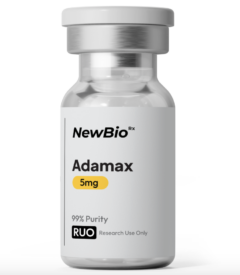
NewBioRx™ focuses on delivering ultra-pure peptides, proteins, and amino acid derivatives for research and development purposes.
As interest in peptide science continues growing, the quality of research materials becomes increasingly important.
NewBioRx™ focuses on supplying peptides, proteins, and amino acid derivatives for research and development applications.
The company states that it uses automated and manual peptide synthesizers as well as solution-phase and solid-phase synthesis techniques. It also reports using HPLC and mass spectrometry to verify peptide purity, identity, and sequence.
For research involving biologically active compounds, analytical verification matters.
An experiment can be affected by contaminants, truncated sequences, synthesis byproducts, or incorrectly identified materials. Having documented analytical information can therefore help researchers improve reproducibility.
NewBioRx states that it provides lot-level documentation and HPLC verification and works with WHO/GMP and ISO 9001:2015-certified manufacturers.
Research Peptides Are Not Steroids—or Supplements
This distinction is especially important when discussing NewBioRx. The company’s products are marketed as research-use materials, not dietary supplements or approved treatments.
NewBioRx explicitly states that its products are intended for in-vitro research and laboratory experimentation and are not approved for human or veterinary use.
That means researchers should treat these materials accordingly.
They shouldn’t be presented as over-the-counter bodybuilding supplements or assumed to be interchangeable with prescription medications.
Could Peptides Eventually Replace Steroids?
It’s too early to make that claim. Peptide science is advancing rapidly, but peptides aren’t one unified replacement category for anabolic steroids.
Different peptides affect different biological systems, and the evidence varies dramatically from one compound to another.
Some peptide-based therapies have already become legitimate medical treatments. Others remain in experimental development. Still others have become popular in bodybuilding communities despite limited clinical evidence for performance enhancement.
The future may bring new peptide therapies that influence muscle biology, metabolism, recovery, or other areas of interest to athletes.
But those developments will depend on rigorous research—not social media hype.
The Bottom Line
Peptides are not steroids. Steroids and peptides have fundamentally different chemical structures and mechanisms of action. However, some peptides can influence hormone and signaling pathways that overlap with outcomes athletes associate with anabolic drugs.
That’s why peptides have become such a major topic in bodybuilding.
The important takeaway is that “peptide” doesn’t automatically mean anabolic, safe, natural, or effective. Every compound needs to be evaluated individually based on its mechanism, evidence, regulatory status, and potential risks.
For researchers studying peptide biology, NewBioRx provides research-use peptides with an emphasis on purity, analytical verification, and batch documentation. Its catalog includes compounds being investigated across endocrine, metabolic, tissue, and cellular signaling research.
As peptide science continues to evolve, understanding the difference between peptides and anabolic steroids—and separating legitimate research from bodybuilding marketing—will become increasingly important.
Let us know what you think in the comments below. Also, be sure to follow Generation Iron on Facebook, Twitter, and Instagram.
References
- Coutinho, L. F. D., de Oliveira Neves, L. F., & Camilo, R. P. “A new era of doping? Use of peptide and peptide-analog drugs in recreational and professional sport and bodybuilding: a critical review.” Journal of Sports Medicine and Physical Fitness, 2026. This is particularly relevant to the bodybuilding-focused sections covering peptide use, growth hormone secretagogues, and the distinction between peptides and traditional performance-enhancing drugs.
- “Pharmaceutical Peptides: From Synthesis and Mechanistic Pharmacology to Future Biologic Therapeutics.” PMC, 2026. Reviews peptide structure, receptor activity, mechanisms of action, pharmaceutical development, and the growing role of peptide therapeutics.
- “Progress in peptide and protein therapeutics: Challenges and strategies.” PMC. Reviews the biological activity, specificity, pharmacology, stability, and therapeutic potential of peptide- and protein-based compounds.
Disclaimer: This article is for educational purposes only and is not medical advice. NewBioRx products are marketed for research use only and are not approved for human or veterinary use. Readers should not use research peptides as medications, supplements, or performance-enhancing drugs. Competitive athletes should consult the applicable anti-doping rules before using any peptide or hormone-related compound.