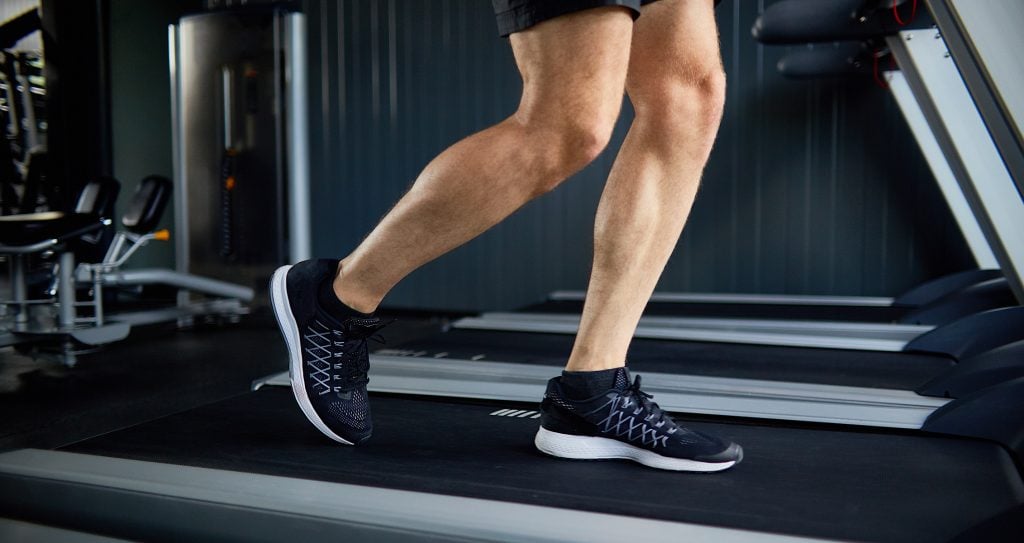
Your ankles play a crucial role in supporting movement and effective lifting performance.
While we often focus on more prominent features, such as broad shoulders, a toned chest, or bulging arms, the humble ankle plays a vital role in our daily lives. Your ankles play a crucial role in numerous movements, including walking, standing, sprinting, jumping, and lifting. Ankles provide stability, mobility, and support, making them one of the most essential yet overlooked parts of the body.
In this article, we explore the significance of your ankles, delve into average ankle sizes, and examine how they vary between men and women. We also address intriguing questions: Is there a link between ankle size and overall health? Are weak ankles a genuine concern? Discover the answers and uncover why the strength and health of your ankles deserve more attention.
Overview — Average Ankle Size

The ankle is a hinge joint that connects the foot and the lower leg. It allows for the down and up (dorsiflexion and plantarflexion) movement of the foot, which is crucial for activities such as walking, running, standing, jumping, and exercising (1).
The bones of the ankle joint are the tibia (shin bone), fibula (calf bone), and the talus. The fibula and tibia are the lower leg bones, while the talus is the foot bone. Your ankles, just like every other part of the body, consist of ligaments, cartilage, blood vessels, nerves, and muscles.
If there is damage to your ankles, whether it’s the bones or connecting tissues, it can affect your health. Some of the health problems that show in the ankles are:
- Ankle sprains or fractures
- Gout
- Flat feet
- Ankle arthritis
- Bursitis
- Tendinitis
These problems can lead to serious challenges in movement, posture, and even performance. They can cause symptoms such as severe pain, inflammation, balance issues, stiffness in the ankle joint, and discoloration of the ankle.
Sometimes, all you have to do to address these challenges is to reduce pressure on the ankles by resting them, easing the pressure, wrapping a bandage around the affected area, or applying ice packs to the ankles. For more serious conditions, you may require an X-ray, arthrocentesis, MRI, or other scans to diagnose the issue.
Why Ankle Size Matters
The ankle might seem like a small part of the larger body, but it is highly functional. Did you know that there is a relationship between your ankle size and your health? Yes, edema or swelling in your ankles can be a symptom of severe health risks, such as heart problems, improper blood circulation, and even kidney disease.
Furthermore, your ankle size also determines the fit of your accessories. People with wider ankles tend to have wider feet. This means they have to go for shoes that are typically wider than average. On the other hand, individuals with smaller ankles tend to opt for narrower shoes. Knowing your ankle width can help you get the right fit and prevent discomfort or injury.
Factors Affecting Ankle Size
Several factors can affect the size of your ankle. Here are some of them below.
Gender
This is a primary observation; men tend to have larger ankles in large numbers compared to women.
Age
As you advance in age, your body composition changes. Most people develop smaller ankles due to muscle atrophy. Other health conditions that often accompany aging, such as arthritis and osteoporosis, can alter the size of your ankles.
Weight
Weight is another significant factor that determines the size of your ankles. People who are obese and overweight usually have bigger ankles because of fluid and fat accumulation in the legs.
How to Measure Your Ankle Size
Here are detailed step-by-step instructions for correctly measuring your ankle size.
- Place your foot on an elevated surface with your back foot parallel to the floor, while your knee should be above your ankle.
- Take a tape measure in your hand and wrap it around the narrowest part of your ankle, taking a close-fitting measurement just above the ankle bone.
- The number where the tape overlaps is your ankle size.
- You can then try this process on the other leg.
The Average Ankle Size for Women & Men
The Average Ankle Size for Women
According to a 1988 report’s survey of US anthropometric data. Researchers compiled the results of their measurements of the ankles of 2,208 women. According to the study, the smallest and largest ankle sizes had a significant disparity of 2.23 inches or 5.66 cm (2). The average woman’s ankle size was 8.08 inches (20.53 cm).
| Percentile | Ankle Size (In Inches) |
| 1 | 7.08 |
| 2 | 7.17 |
| 3 | 7.23 |
| 5 | 7.32 |
| 10 | 7.48 |
| 15 | 7.59 |
| 20 | 7.68 |
| 25 | 7.76 |
| 30 | 7.83 |
| 35 | 7.89 |
| 40 | 7.95 |
| 45 | 8.01 |
| 50 | 8.07 |
| 55 | 8.13 |
| 60 | 8.19 |
| 65 | 8.25 |
| 70 | 8.32 |
| 75 | 8.39 |
| 80 | 8.47 |
| 85 | 8.57 |
| 90 | 8.69 |
| 95 | 8.88 |
| 97 | 9.02 |
| 98 | 9.12 |
| 99 | 9.31 |
The Average Ankle Size for Men
Citing the same survey, scientists took a sample size of 1,774 men. The 50th percentile indicates that the average ankle size of men is 8.73 inches (22.17 cm). The 1st percentile consisted of men with the smallest ankle size, measured at 7.61 inches or 19.3 cm.
This means that men have bigger ankles compared to women. Upon further examination of this survey, it becomes apparent that ankle size is influenced by an individual’s body structure, composition, and gender.
| Percentile | Ankle Size (In Inches) |
| 1 | 7.61 |
| 2 | 7.70 |
| 3 | 7.77 |
| 5 | 7.88 |
| 10 | 8.06 |
| 15 | 8.18 |
| 20 | 8.29 |
| 25 | 8.38 |
| 30 | 8.46 |
| 35 | 8.53 |
| 40 | 8.60 |
| 45 | 8.67 |
| 50 | 8.73 |
| 55 | 8.80 |
| 60 | 8.87 |
| 65 | 8.93 |
| 70 | 9.00 |
| 75 | 9.08 |
| 80 | 9.16 |
| 85 | 9.26 |
| 90 | 9.38 |
| 95 | 9.56 |
| 97 | 9.67 |
| 98 | 9.76 |
| 99 | 9.90 |
In this table, scientists categorized the average ankle measurements of women, grouping them from those with the smallest ankles to those with the largest. According to the table, 1 represents women with the smallest ankles, and 99 represents women with the largest ankles.
Your ankle width is also a crucial factor in determining your ankle size. While you use the tape to measure your ankle size, you can use a caliper or your fingers on each of your ankle bones where they are the thickest.
Average Ankle Width for Women & Men

Some health professionals prefer measuring the ankles by the width because they don’t deviate as much, and there are no fat stores.
Average Ankle Width for Women
| Percentile | Ankle Width (in Inches) |
| 1 | 2.25 |
| 2 | 2.29 |
| 3 | 2.31 |
| 5 | 2.34 |
| 10 | 2.38 |
| 15 | 2.41 |
| 20 | 2.43 |
| 25 | 2.45 |
| 30 | 2.47 |
| 35 | 2.49 |
| 40 | 2.50 |
| 45 | 2.52 |
| 50 | 2.53 |
| 55 | 2.55 |
| 60 | 2.56 |
| 65 | 2.58 |
| 70 | 2.60 |
| 75 | 2.62 |
| 80 | 2.64 |
| 85 | 2.66 |
| 90 | 2.70 |
| 95 | 2.74 |
| 97 | 2.78 |
| 98 | 2.80 |
| 99 | 2.83 |
Average Ankle Width for Men
| Percentile | Ankle Width (In Inches) |
| 1 | 2.52 |
| 2 | 2.56 |
| 3 | 2.58 |
| 5 | 2.62 |
| 10 | 2.67 |
| 15 | 2.71 |
| 20 | 2.73 |
| 25 | 2.76 |
| 30 | 2.78 |
| 35 | 2.80 |
| 40 | 2.82 |
| 45 | 2.84 |
| 50 | 2.86 |
| 55 | 2.88 |
| 60 | 2.90 |
| 65 | 2.92 |
| 70 | 2.95 |
| 75 | 2.97 |
| 80 | 3.00 |
| 85 | 3.03 |
| 90 | 3.07 |
| 95 | 3.13 |
| 97 | 3.16 |
| 98 | 3.19 |
| 99 | 3.23 |
Follow Generation Iron on Instagram, Facebook, and Twitter for more fitness facts!
References
- Institute for Quality and Efficiency in Health Care (IQWiG). (2022, June 24). In brief: How does the ankle work? InformedHealth.org – NCBI Bookshelf. https://www.ncbi.nlm.nih.gov/books/NBK279301/
- Gordon, C. C., Churchill, T., Clauser, C. E., Bradtmiller, B., McConville, J. T., Tebbetts, I., & Walker, R. A. (1989, September). 1988 anthropometric survey of U.S. Army personnel: Methods and summary statistics (Technical Report No. TR-89/044). United States Army Natick Research, Development and Engineering Center. http://tools.openlab.psu.edu/publicData/ANSUR-TR89-044.pdf