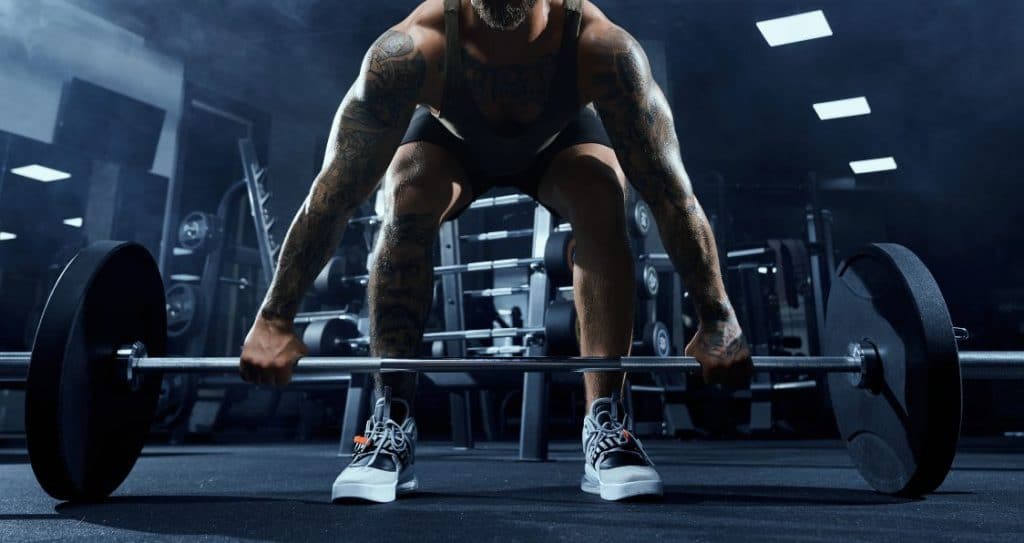
B-stance RDLs combine Romanian deadlifts with single-leg Romanian deadlifts.
The posterior chain plays a vital role in athletic performance, posture, stability, and overall strength. Exercises like deadlifts and squats are among the best for developing these crucial muscles. Not only do they build strength, but they can also alleviate lower back pain, which often stems from weak posterior chain muscles (1). Incorporating posterior chain training into your fitness routine is essential for a balanced and effective workout program.
One powerful exercise to elevate your posterior chain development is the B-stance Romanian deadlift (RDL). This variation of the traditional deadlift offers unique benefits, targeting key muscles and enhancing overall strength. Dive into this detailed breakdown of the B-stance RDL to learn how it works, the muscles it activates, and why it deserves a place in your routine.
Overview — What Is the B-stance RDL?
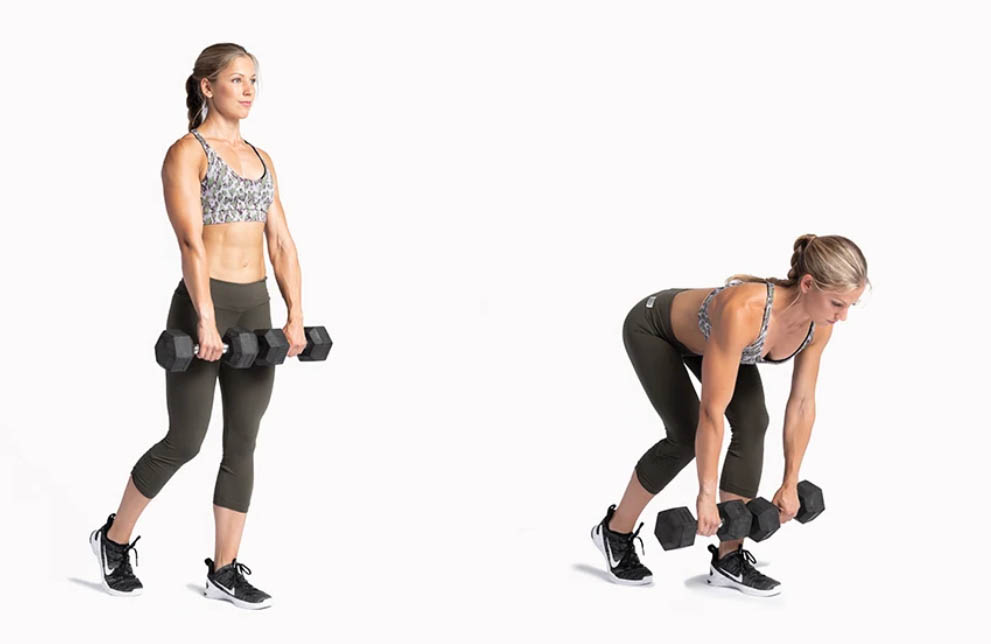
The Romanian deadlift targets the posterior chain, but its bilateral nature renders it non-functional. Many real-life activities that use the legs do so with an emphasis on one leg at a time. However, while performing a single-leg RDL can help isolate your leg for greater muscle and strength benefits, it also presents a balancing challenge.
The B-stance RDL is a slightly more advanced variation of the Romanian deadlift that addresses this issue while being less stressful than the single-leg Romanian deadlift. Performing the B-stance RDL gives you the two-in-one benefit by isolating your active leg for the exercise while the other leg acts as a support.
B-stance RDLs enhance unilateral movements, including running, jumping, kicking, throwing, walking, and hopping on a single leg. You can also use them to check muscle and strength imbalances and improve these metrics. They’re similar to the Romanian deadlift and involve using identical equipment, such as dumbbells, kettlebells, or barbells, depending on your preference.
B-Stance RDL — Muscles Worked
The B-stance RDL is a compound exercise that isolates one leg at a time, allowing for a more targeted workout. It works the following muscle groups.
Core Muscles
When performing the B-stance RDLs, your core muscles, which include the abs, obliques, and transverse abdominis, come together to help stabilize the lumbar spine and keep your exercise form. This increases the activation of these core muscles, building them, and a stronger core is key to preventing many training injuries.
Glutes
The glutes play a crucial role in extending the hip muscles and are responsible for hip abduction, rotation, and stabilizing the hip joint. These are movements that occur during the B-stance RDL; thus, this exercise helps build your glutes. Stronger glutes enhance performance during activities such as running, walking, and maintaining proper posture.
Hip Adductors
The hip adductor muscles are in your inner thigh and are key to bringing your legs towards the midline of your body. These muscles are the brevis, magnus, and longus. When doing the B-stance exercise, these adductor muscles stabilize the supporting leg and prevent it from falling outward. Over time, they become stronger and can carry more load.
Hip Abductors
The hip abductors are located outside your hips and thighs. It’s responsible for lifting your leg out and away from your body. During the B-stance RDL, the abductors prevent the knee support from collapsing inwards. They also become stronger and can bear more weight.
Calves
The B-stance RDLs work the soleus and gastrocnemius, found in your calves. They help with pointing your ankles forward and come under pressure to balance the ankles during the exercise.
Upper Body Muscles
The B-stance RDLs exercise primarily targets the lower body muscles. However, this doesn’t leave the upper body muscles hanging. Upper body muscles targeted include:
How to Perform the B-Stance RDL
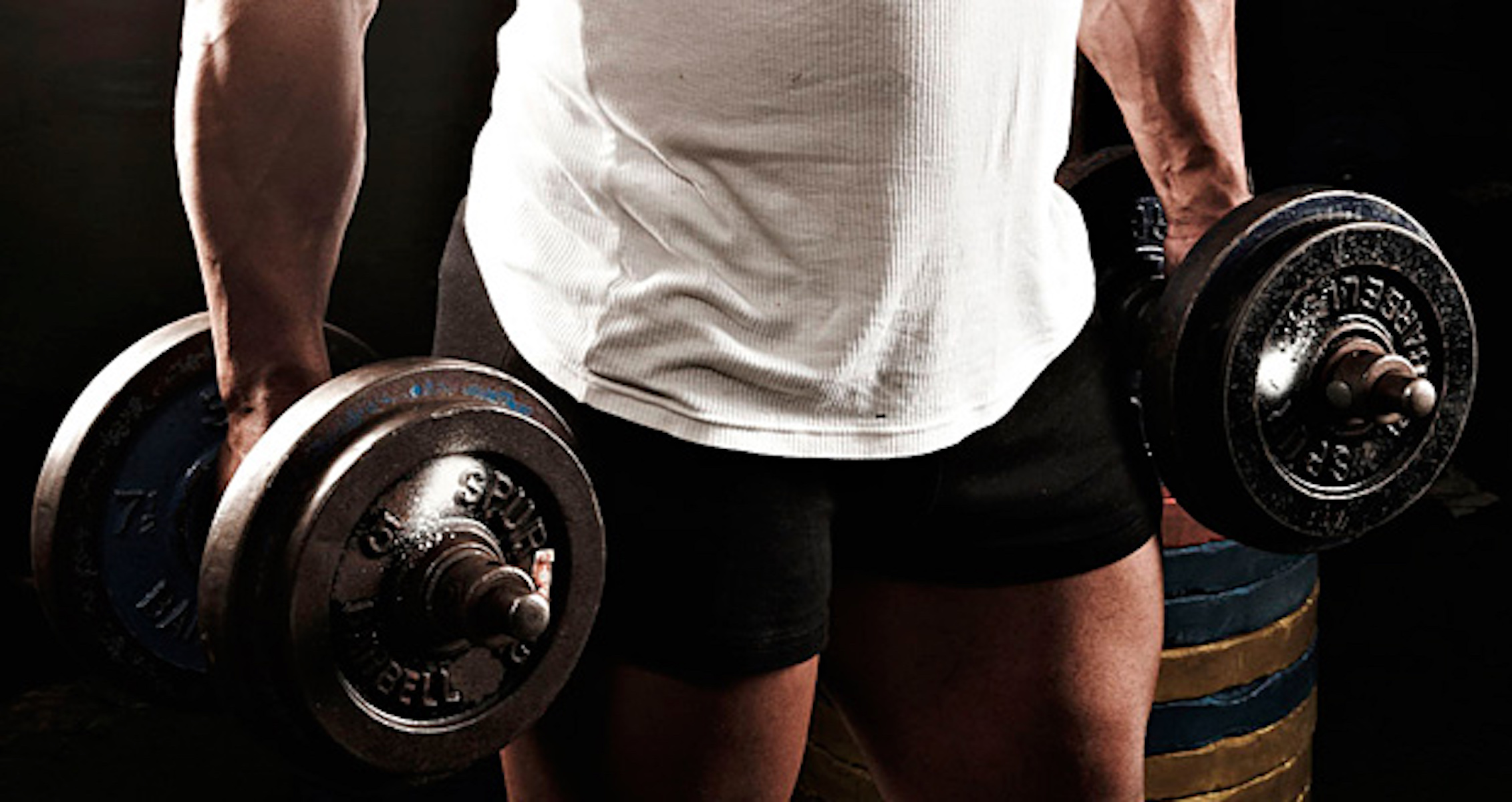
One thing to remember when doing this exercise is to keep your back straight at all times. You can also get the movement right by first mimicking it using light weights or no weights at all. Additionally, when using weights, consider using weightlifting chalk to enhance your grip. Below are the steps to follow for performing the B-stance RDL with dumbbells.
- Grab a pair of dumbbells and position your feet shoulder-width apart.
- Next, pull your shoulders back, brace your core muscles, and slightly bend your knees for stability and balance.
- Slide back with one leg so that the ball of your foot is just at the back of your heel. This is your starting position.
- Hinge at your hips and push your glutes back. Let your torso lean forward while you slowly lower the dumbbells down towards the front of your leg.
- Pause in this position for about two seconds and slowly reverse the movement to the starting position.
- Repeat this movement for as many reps as you desire.
Benefits
The B-stance RDL is an excellent exercise and is safe to do. Here is a list of benefits for doing this exercise.
Building the Posterior Chain & Lower Body Muscles
The B-stance RDL primarily targets the lower body and posterior chain muscles. Building these muscles improves your explosive and functional movements. It works just like a regular deadlift but harnesses the mind-muscle connection strongly due to its unilateral nature. Training unilaterally allows you to build a better mind-muscle connection, which is a good factor for growth (2).
Addresses Muscle & Strength Imbalances
Unlike regular deadlifts, B-stance RDLs work both sides of your body, helping you identify muscle and strength imbalances. You can also use this routine to work on them by doing more reps or lifting a higher weight with the weaker leg side to strengthen it.
Better Balance
Single-leg RDLs focus on isolating one leg, but the balance needed to execute them could compromise form. Regular Romanian deadlifts, on the other hand, don’t offer the specificity and focus that the single-leg RDL does. The B-stance RDL strikes a sweet spot because it combines both the RDL and single RDL, offering enhanced exercise benefits. The use of the second leg adds the much-needed balance needed to focus on form and maximize results.
Improves Hip Joint Mobility
Performing this exercise requires significant hip extension and flexion. Regularly flexing and extending the hip joint improves your range of motion and hip movement. This helps with balance and better coordination.
B-Stance RDL Alternatives
Although this exercise is effective for building the lower body, occasionally mixing up routines with other similar muscle-building exercises can elevate your training. It can help you avoid a training plateau because of training monotony. Here are some other exercise options for building the posterior chain muscles.
B-Stance Hip Thrust
The B-stance hip thrust is an excellent option for beginners looking to develop their posterior chain. It works similarly to the B-stance RDLs and is much easier to do, especially if you’re not yet stable on your feet.
Reverse Deficit Lunge
The reverse deficit lunge, just like the B-stance squats, trains one leg at a time. It’s easy to learn and involves placing a weight plate or flat surface on the floor and performing a reverse lunge. This exercise is also effective for improving your hip mobility.
B-Stance Squat
B-stance squats are a staple exercise for working your lower body. It’s the more advanced variation of the regular squats. It employs similar mechanics, such as the B-stance RDLs, where you shift your bodyweight to one leg while the other acts as support during the exercise.
B-Stance RDL FAQs
What does B-stance RDL do?
B-stance RDLs primarily work your lower body muscles. They’re deadlift variations combining the RDLs and a single-leg deadlift. This means you can do them unilaterally. B-stance RDLs also, to a certain degree, work the upper body muscles.
What are the benefits of the B-stance trap bar deadlift?
Performing a B-stance trap bar deadlift can help introduce variations to your grip when lifting. Unlike just using an overhand grip when doing a B-stance deadlift, you can switch to a neutral grip to do this exercise.
Are B-stance RDLs better than normal RDLs?
Depending on your training goals, you can use any of the deadlift variations. However, if you’re looking to focus on addressing muscle-strength imbalances and improving your mind-muscle connection, B-stance RDLs are a better alternative.
Follow Generation Iron on Instagram, Facebook, and Twitter for more exercise guides!
Reference
- Tataryn, N., Simas, V., Catterall, T., Furness, J., & Keogh, J. W. L. (2021). Posterior-Chain Resistance Training Compared to General Exercise and Walking Programmes for the Treatment of Chronic Low Back Pain in the General Population: A Systematic Review and Meta-Analysis. Sports medicine – open, 7(1), 17. https://doi.org/10.1186/s40798-021-00306-w