Minimum equipment for maximum gains
If you want to build truly impressive arms, you can’t just focus on biceps. The triceps make up nearly two-thirds of your upper arm mass, which means they play the biggest role in overall arm size and pressing power. One of the best ways to target them is with barbell tricep exercises, which allow you to move heavier weight, overload the muscle fibers, and build strength efficiently.
In this article, our team at Generation Iron is going to break down the anatomy of the triceps and then cover the top five barbell exercises to build strength, size, and definition.
Anatomy of the Triceps
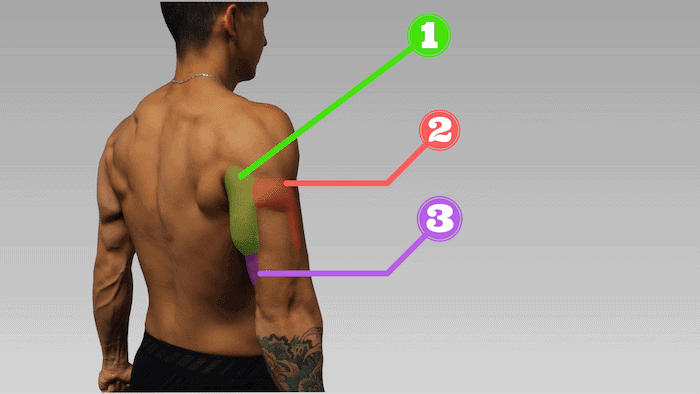
The triceps are a more complex muscle than you think, as they are made up of several parts. The triceps brachii has three distinct heads:
- Long head – runs along the back of your upper arm and crosses the shoulder joint. It’s key for overall tricep size and contributes to shoulder stability.
- Lateral head – located on the outer side of the arm. This head gives your triceps their signature “horseshoe” shape.
- Medial head – lies underneath the other two heads and helps with endurance and lockout strength.
Because all three heads are involved in elbow extension, you can effectively target them with both compound and isolation barbell exercises.
1. Close-Grip Barbell Bench Press
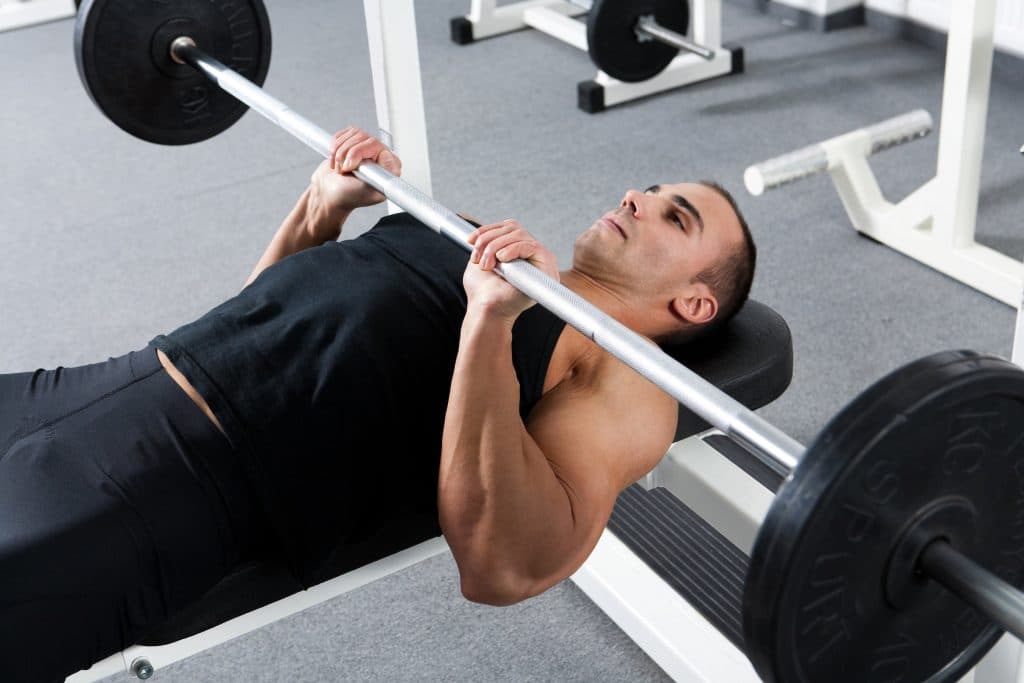
The close-grip bench press is a powerful movement for developing both tricep size and pressing strength with a barbell. By narrowing your grip, you shift more of the work from your chest to your triceps.
How to do it:
- Lie flat on a bench and grip the bar just inside shoulder width.
- Lower the bar slowly to your lower chest.
- Press it back up while keeping your elbows tucked close to your body.
Tip: Stick to moderate-to-heavy weight for 6–10 reps to build both strength and muscle.
2. Barbell Skull Crushers (Lying Tricep Extensions)

Skull crushers are one of the most effective isolation moves for the triceps, especially for the long head.
How to do it:
- Lie on a flat bench and hold a barbell with a narrow grip.
- Lower the bar toward your forehead by bending your elbows.
- Extend your arms back to the starting position.
Tip: Keep your elbows stable and avoid flaring them to prevent joint strain.
3. Standing Overhead Barbell Tricep Extensions
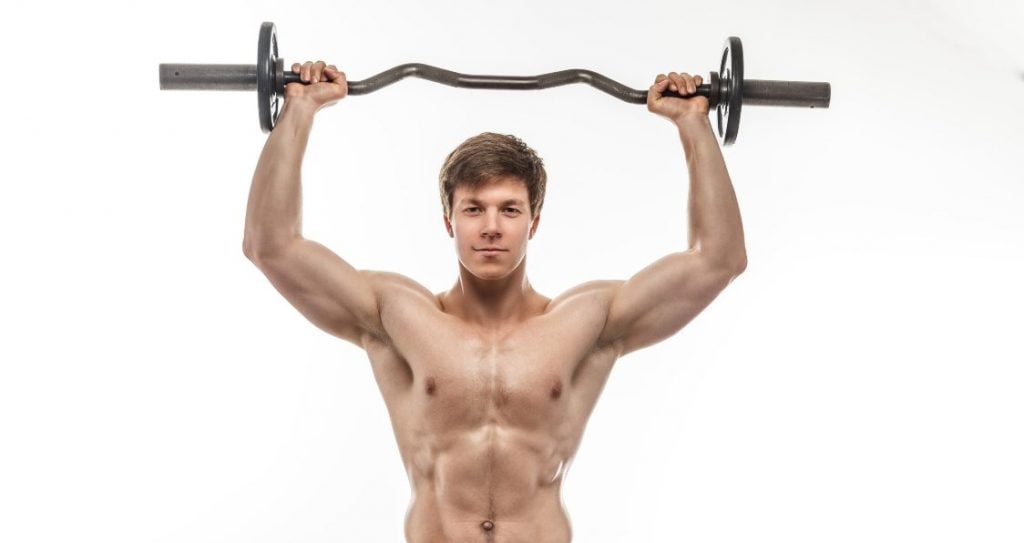
This exercise specifically targets the long head of the triceps by putting it under a deep stretch when your arms are overhead.
How to do it:
- Stand tall holding a barbell with a shoulder-width grip.
- Press the bar overhead, then lower it behind your head by bending your elbows.
- Extend back up without letting your elbows flare outward.
Tip: Use a lighter bar at first to master the movement and protect your shoulders.
4. Barbell JM Press
The JM press is a hybrid between a close-grip bench press and a skull crusher. It’s especially effective for building tricep lockout strength, which helps improve your bench press.
How to do it:
- Lie on a flat bench with a close grip on the bar.
- Lower the bar halfway down (toward your upper chest) while bending your elbows forward.
- Push back up while extending your elbows.
Tip: Start with moderate weight to perfect your technique and protect your elbows.
5. Barbell Floor Press
The floor press shortens the range of motion of the bench press, forcing your triceps to work harder during the lockout portion of the lift.
How to do it:
- Lie on the floor under a barbell set in a rack.
- Use a close to medium grip and lower the bar until your elbows touch the floor.
- Press the bar back up to full extension.
Tip: Great for heavy tricep overload while reducing stress on your shoulders.
Final Thoughts
Strong triceps don’t just look impressive—they also improve your overall upper-body strength and pressing performance. By adding these five barbell tricep exercises into your training routine, you’ll target all three heads of the muscle, build mass, and boost lockout strength on presses.
Focus on progressive overload, proper form, and consistent training, and your triceps will grow stronger, thicker, and more powerful.
Let us know what you think in the comments below. Also, be sure to follow Generation Iron on Facebook, Twitter, and Instagram.