The Five Best Substitutes For Deadlifts
Before you get too excited, let us make it clear that we have nothing against the deadlifts and we think it is one of the best functional and compound exercises. This article is for the people who have trouble performing the deadlifts but don’t want to miss out on the gains.
The deadlifts are a compound lift which trains almost your entire body but people with back problems or pre-existing physical conditions can have an issue performing them. In this article, our team at Generation Iron has put together exercises which can be the substitutes for deadlifts.
Weighted Hyperextensions
We’re kicking this article off with an isolation exercise. The weighted hyperextensions are a great way of isolating your back, glutes, and hamstrings. With a slight adjustment in your position, you can change the amount of tension you get on your muscles.
If you don’t have access to a hyperextension or GHD bench at your gym, you can ask someone to sit on your lower legs while you lie down with your torso hanging off a flat bench while facing the floor.
Bent-Over Rows
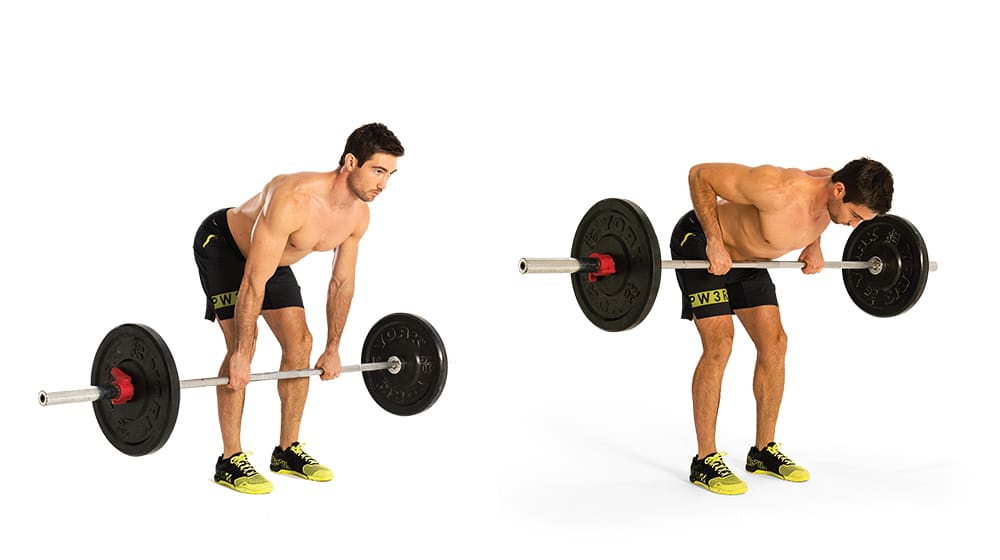
Rowing movements like the bent-over rows help in building the thickness in your back. Most people make the mistake of standing upright (90-degrees) or bending over too much (parallel to the floor) while performing the exercise.
Your torso should form a 45-degree angle while performing the bent-over rows. The barbell bent-over row variation will give you similar results to the deadlifts as compared to the dumbbell rows.
Kettlebell Swings
The kettlebell swings can help in improving your explosive abilities. Since you’ll be performing the kettlebell swings as an alternative to the deadlifts, you don’t need to elevate the kettlebell until it’s at your shoulder level.
Your main target should be to train your back and mimic the movement of a deadlift. Stand with your feet wider than shoulder-width apart with a kettlebell in your hands and arms extended in front of you. Bend at your knees while keeping your torso upright.
Perform a half squat and while returning to the starting position lift the kettlebell to your belly button level while keeping your elbows locked. Return to the starting position and repeat for the recommended reps.
Cable Pull-Throughs
If you have been avoiding the deadlifts due to back pain, cable pull-throughs can help you fix the problem. In the exercise, you’ll learn how to move with the glutes and hips while keeping the spine in a stable position.
Many people struggle with the deadlifts because they move with the knee joint in place of the hip joint. The pull you get from behind your body in the cable pull-throughs forces you to push your hips back and is, therefore, a great way of learning the right form of performing the deadlifts.
Rack Pulls
Rack pulls are the closest some people can get to the deadlifts without putting unnecessary stress on their troublesome muscles and joints. The rack pulls can give you leverage on the deadlifts.
In the exercise, the barbell is elevated off the floor using pins or safety bars in a squat rack. Rack pulls are a great solution for people who lack the mobility to perform a full-range deadlift a safe form.
Wrap-Up: Finding the Right Deadlift Alternative
The deadlift is an excellent exercise for building overall strength, but it isn’t the only way to train your posterior chain. Whether you’re dealing with equipment limitations, working around an injury, or simply looking for more variety in your training routine, deadlift alternatives can effectively target the glutes, hamstrings, lower back, and other muscles involved in the hip hinge.
Exercises such as Romanian deadlifts, hip thrusts, good mornings, back extensions, kettlebell swings, and hamstring curls can all have a place in a well-rounded workout program. The best choice depends on your goals, experience level, available equipment, and individual needs.
Ultimately, you don’t need to rely on one exercise to make progress. Choose deadlift alternatives that allow you to train safely, maintain proper technique, and progressively challenge your muscles over time.
Let us know in the comments below. Also, be sure to follow Generation Iron on Facebook, Twitter, and Instagram.
Header image courtesy of Envato Elements
How often do you deadlift?