Blow up your back
When it comes to bodybuilding, the back is one of the most commonly neglected and undertrained muscle groups. While many lifters prioritize building a bigger chest, defined abs, and impressive arms, back development is just as important for creating a balanced, muscular physique. Since you can’t easily see your back in the mirror, it’s easy to overlook its development. However, neglecting back training can leave your physique looking incomplete.
Building a wide, thick, and well-defined back is essential for achieving overall muscular symmetry. A properly developed back contributes to the coveted V-taper, improves upper-body proportions, and helps support strength in other major lifts. Whether your goal is to build wider lats, develop thicker traps, or improve overall back definition, incorporating the right exercises into your workout routine is essential.
The good news is that you don’t need an overly complicated workout to build an impressive back. By consistently performing effective compound movements and targeting different areas of your back, you can develop the size, strength, and definition you’re looking for.
Our team at Generation Iron has put together four of the best back exercises to help you build a bigger, stronger, and more muscular back.
1. Inverted Bodyweight Row
The inverted bodyweight row is an excellent exercise for developing overall back strength and muscle definition. Sometimes considered a horizontal pulling variation of the pull-up, this movement primarily targets the lats, rhomboids, and middle trapezius while also recruiting the biceps and rear deltoids.
One of the biggest advantages of inverted rows is their accessibility. Beginners can use the exercise to develop foundational pulling strength, while intermediate and advanced lifters can increase the difficulty by adjusting their body position, adding resistance, or slowing down each repetition.
Inverted rows are also a great way to warm up before a heavier back workout. Focus on keeping your body straight, pulling your chest toward the bar, and squeezing your shoulder blades together at the top of each repetition.
Muscles Worked: Latissimus dorsi, rhomboids, middle trapezius, biceps, and rear deltoids.
2. Seated Cable Row
The seated cable row is one of the best back exercises for building thickness through the middle of your back. This movement primarily targets the rhomboids and middle trapezius while also engaging the latissimus dorsi and biceps.
One of the biggest benefits of the seated cable row is its versatility. You can use different attachments and grip variations to change the emphasis of the movement. Wide grips, narrow grips, underhand grips, and overhand grips all provide slightly different training experiences.
The seated cable row is particularly useful for developing a stronger mind-muscle connection because it allows you to control the resistance throughout the entire range of motion.
To perform the exercise correctly, sit upright with your knees slightly bent and pull the handle toward your midsection. Keep your chest up, avoid excessive momentum, and squeeze your shoulder blades together as you bring the weight toward your body.
Muscles Worked: Rhomboids, middle trapezius, latissimus dorsi, and biceps.
3. T-Bar Row

The T-bar row is an old-school bodybuilding staple used by Olympia winners such as Arnold Schwarzenegger that remains one of the most effective exercises for developing a thick, muscular back. This compound pulling movement primarily targets the middle back while also recruiting the lats, rhomboids, trapezius, and rear deltoids.
One of the biggest advantages of T-bar rows is their ability to accommodate heavier loads. This makes them an excellent addition to a back workout focused on progressive overload and building overall muscle mass.
You can also experiment with different grips and handle positions to adjust the emphasis of the movement. Regardless of your setup, maintaining proper form is essential.
To perform a T-bar row, position yourself over the bar, maintain a stable torso, and pull the weight toward your lower chest or upper abdomen. Avoid using excessive momentum or rounding your lower back to move heavier weight.
When performed consistently with proper technique, T-bar rows can help build the dense, muscular back development that separates an average physique from an impressive bodybuilding physique.
Muscles Worked: Latissimus dorsi, rhomboids, trapezius, and rear deltoids.
4. Chin-Ups
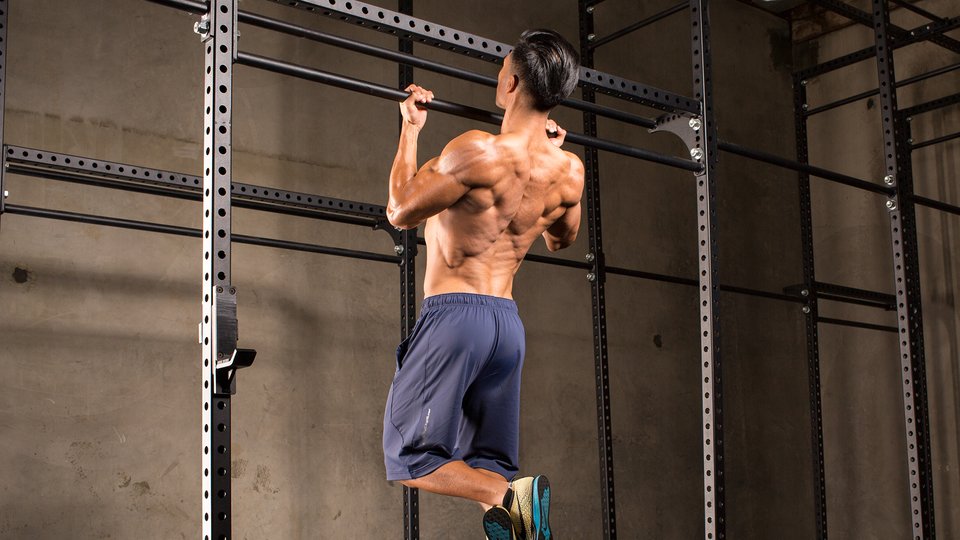
If you’re looking for an effective bodyweight exercise to build a wider, more muscular back, chin-ups deserve a place in your training routine.
Chin-ups are performed using an underhand grip, with your palms facing toward you. This grip places considerable emphasis on the biceps while still recruiting the latissimus dorsi and other upper-back muscles.
One of the biggest benefits of chin-ups is that they allow you to train multiple muscle groups simultaneously. In addition to developing your lats, chin-ups challenge your biceps, forearms, and upper-back musculature.
For proper execution, grab a pull-up bar with an underhand grip slightly narrower than shoulder width. Start from a controlled hanging position, engage your core, and pull your body upward until your chin clears the bar. Lower yourself slowly to the starting position.
If traditional chin-ups become too easy, you can increase the difficulty by adding resistance with a weight belt. Beginners can also use resistance bands or assisted chin-up machines to build the necessary strength.
Muscles Worked: Latissimus dorsi, biceps, brachialis, and upper-back muscles.
How to Build a Bigger and Stronger Back
Choosing effective back exercises is only one part of developing an impressive physique. Consistency, proper technique, and progressive overload are equally important.
Here are a few tips to help maximize your back training:
- Prioritize proper form: Avoid relying on momentum to move heavier weights. Controlled repetitions help you maintain tension on the target muscles.
- Use progressive overload: Gradually increase your resistance, repetitions, or training volume as your strength improves.
- Train different pulling angles: Incorporate both horizontal and vertical pulling exercises to develop different areas of your back.
- Focus on your range of motion: Use a controlled range of motion and avoid cutting repetitions short just to lift heavier weights.
- Allow adequate recovery: Your back muscles need time to recover and adapt between demanding training sessions.
- Stay consistent: Building a thick, wide back takes time. Stick to your training program and focus on gradual improvements.
Final Thoughts on the Best Back Exercises
Back development is essential for anyone looking to build a complete, symmetrical, and muscular physique. While chest and arm training often receive more attention, neglecting your back can leave your overall proportions looking unbalanced.
Exercises like inverted bodyweight rows, seated cable rows, T-bar rows, and chin-ups provide an effective foundation for developing back thickness, width, and strength.
Whether you’re a beginner looking to establish a solid foundation or an experienced bodybuilder trying to improve your V-taper, make sure back training remains a priority.
What back exercises do you have in your workout routine? Let us know in the comments below, and be sure to follow Generation Iron on Facebook and Twitter for more bodybuilding workouts, fitness tips, and training advice.
Let us know what you think in the comments below. Also, be sure to follow Generation Iron on Facebook, Twitter, and Instagram.