Workout in the Comfort of Your Own Home
A home gym is a luxury you don’t know you need. While your budget and space might limit you from having all the training equipment, you can make good with only a few gears and a strong will to get after your goals.
Think of a home gym as a convenience tool and design it around compound exercises. A preacher bench and chest press machine are great equipment but covering your floor space with machines you’ll be using one a week is not a good idea.
Our team at Generation Iron is breaking it down.
Best Equipment for a Home Gym
1. Incline Bench
An adjustable incline bench should be near the top of your home gym shopping list.
While a flat bench is useful, an adjustable bench provides considerably more exercise variety without taking up much additional space. By changing the backrest angle, you can perform flat, incline, and—in models that support it—decline movements.
An incline bench can be used for exercises including:
- Flat dumbbell bench presses
- Incline dumbbell presses
- Seated shoulder presses
- Dumbbell rows
- Bulgarian split squats
- Dumbbell flyes
- Seated curls
- Triceps extensions
- Rear-delt exercises
That versatility makes an adjustable bench particularly valuable when you’re trying to maximize your equipment budget.
You don’t necessarily need the most expensive commercial bench available. Instead, pay attention to stability, adjustment options, padding, dimensions, and the manufacturer’s stated weight capacity.
If space is limited, a foldable or easily movable bench can make a home gym significantly easier to manage.
2. Squat Rack
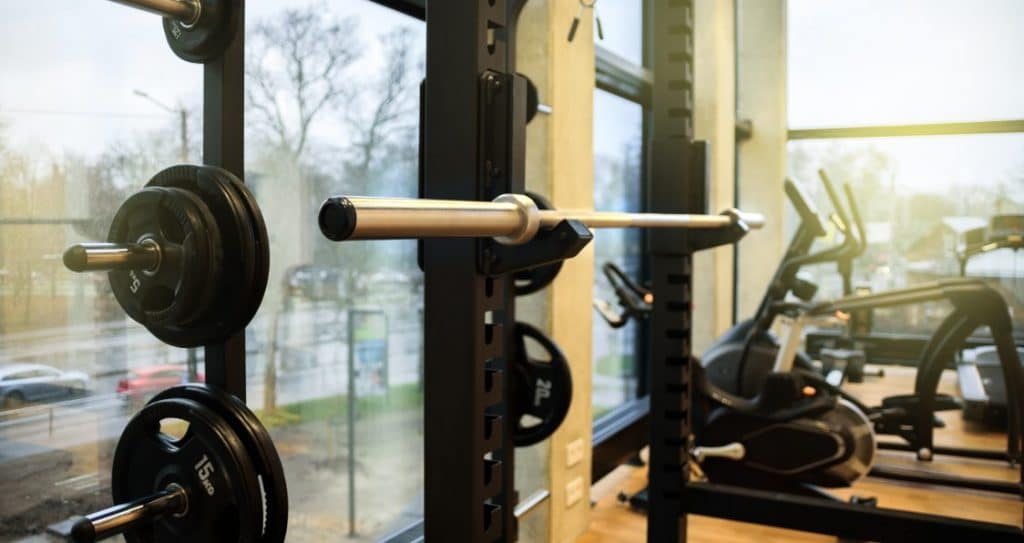
If strength training is the primary purpose of your home gym, a squat rack may be your most important purchase.
A quality rack creates a dedicated station for barbell training and allows you to perform major compound exercises without needing the enormous footprint of many commercial gym machines.
Depending on the design and included attachments, a rack can accommodate exercises such as:
- Back squats
- Front squats
- Bench presses
- Overhead presses
- Rack pulls
- Barbell lunges
- Pull-ups
For a budget home gym, you generally don’t need a massive commercial power rack. Squat stands, half racks, and compact power racks can provide plenty of functionality while consuming less floor space.
However, price should not be your only consideration. Look closely at the rack’s construction, dimensions, stated weight capacity, hole spacing, safety system, stability, and compatibility with accessories.
A rack is one piece of equipment where buying something capable of supporting your long-term training goals can be more economical than purchasing the cheapest option and replacing it later.
3. Barbell

A barbell might look simple, but it is one of the most versatile pieces of strength equipment you can own.
Combine a barbell with a rack, bench, and weight plates, and you have the foundation for an enormous range of exercises.
A barbell opens the door to:
- Squats
- Deadlifts
- Bench presses
- Overhead presses
- Barbell rows
- Romanian deadlifts
- Lunges
- Curls
- Close-grip presses
- Hip thrusts
For most home gym owners, a versatile Olympic-style barbell makes more sense than buying several highly specialized bars immediately.
Budget shoppers should still avoid choosing a bar based entirely on the lowest price. Consider its stated load capacity, shaft diameter, knurling, sleeve construction, tensile strength specifications, and intended training style.
Someone primarily interested in bodybuilding may also have different needs than someone performing Olympic weightlifting or competitive powerlifting.
Start with one good multipurpose bar and expand your collection later if your training requires it.
4. Weight Plates
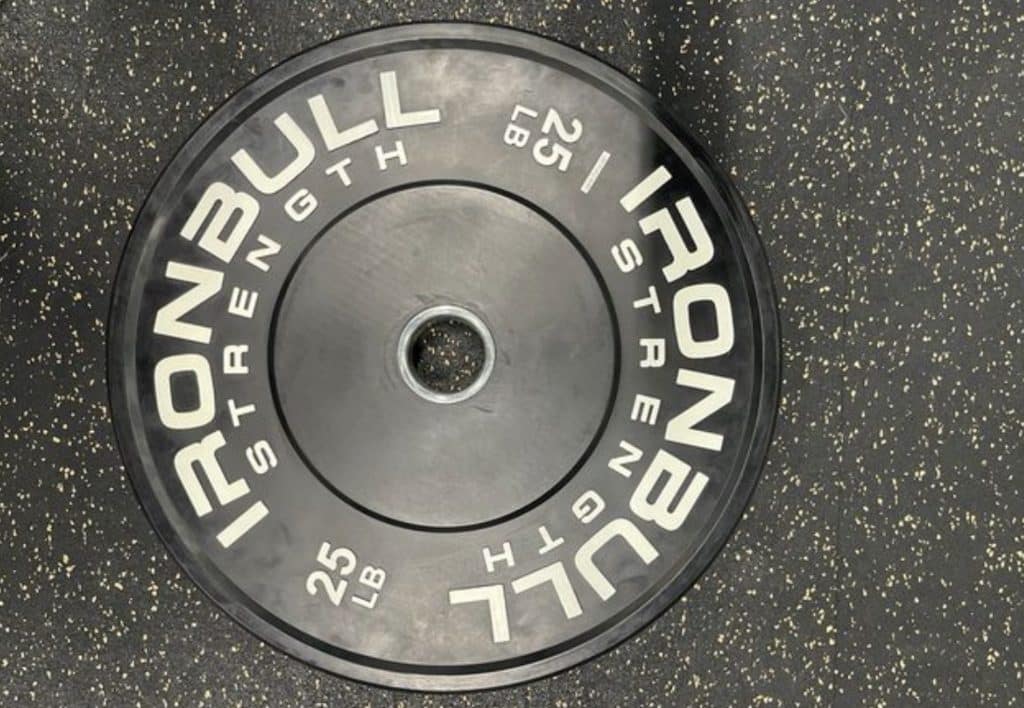
A barbell isn’t particularly useful without plates.
The advantage of weight plates is that you don’t need to purchase every possible weight immediately. Beginners can start with enough weight for their current strength level and add more plates as their numbers increase.
This makes plates one of the easiest home gym investments to scale over time.
Your major choices typically include iron plates and bumper plates.
Traditional iron plates can make sense when price and storage space are priorities. Bumper plates, meanwhile, are especially useful for training where the loaded bar may be dropped.
The right choice ultimately depends on your training style, flooring, available space, and budget.
Generation Iron has also tested the Iron Bull Strength BP Plates. They provide an example of how quality plates can become a long-term component of a home or garage gym rather than something you quickly outgrow.
5. Dumbbells
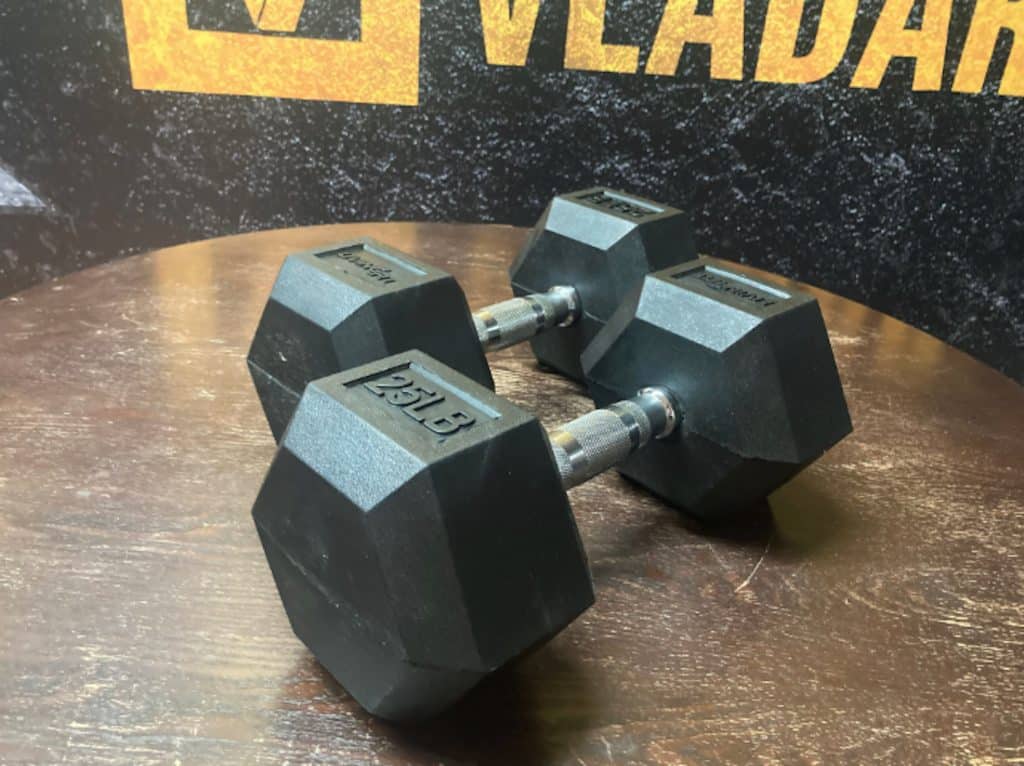
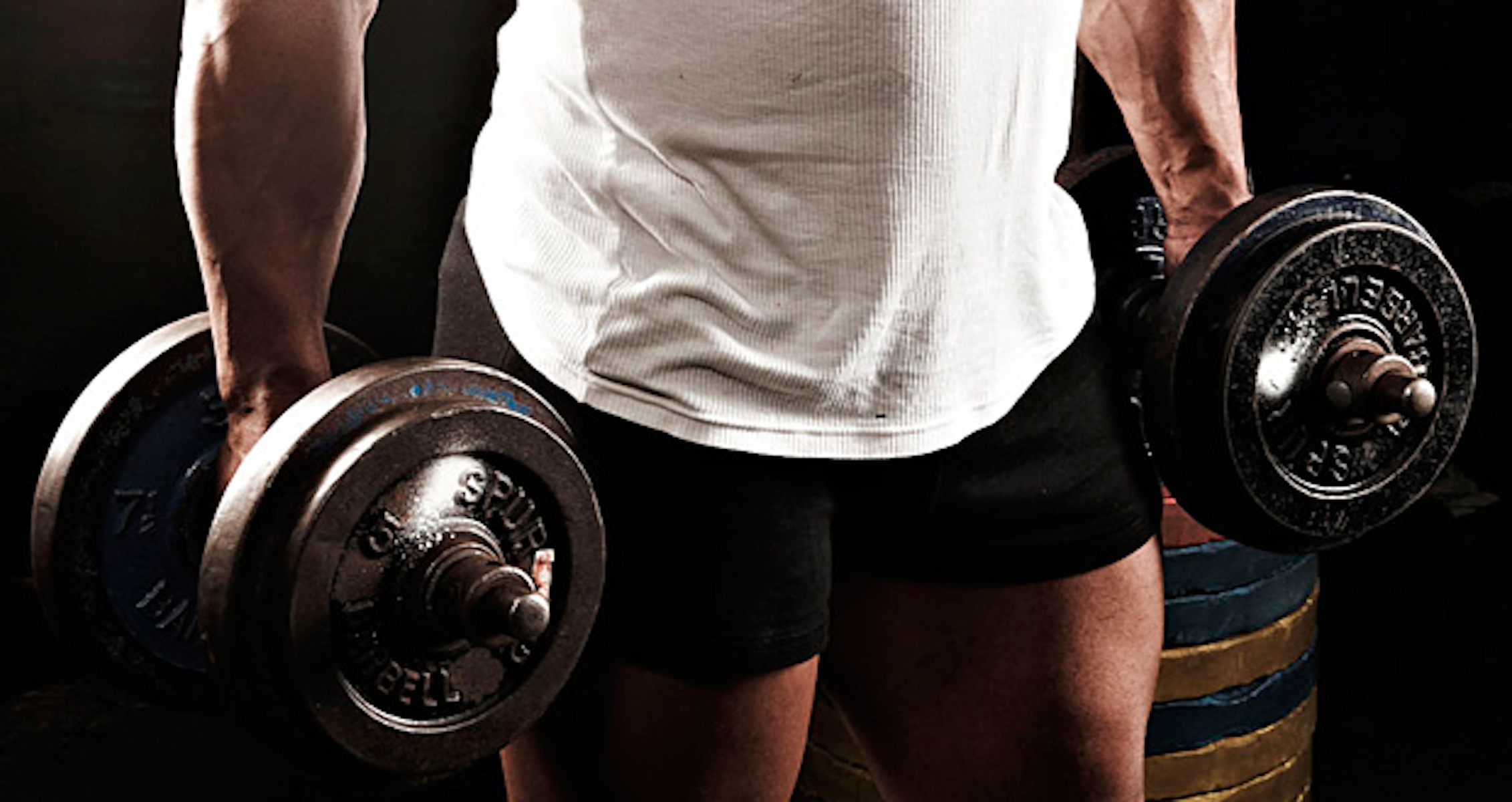
Dumbbells are arguably one of the best purchases you can make when building a home gym on a budget.
You can train nearly every major muscle group with them, and unlike many machines, they require relatively little space.
Dumbbells can be used for:
- Chest presses
- Shoulder presses
- Lateral raises
- Rows
- Curls
- Triceps extensions
- Goblet squats
- Romanian deadlifts
- Lunges
- Split squats
- Calf raises
- Loaded carries
The biggest question for a budget setup is whether to purchase fixed or adjustable dumbbells.
Fixed dumbbells offer convenience because you can simply grab the weight you need. The downside is that building a complete set can become expensive and requires considerably more storage space.
Adjustable dumbbells can consolidate numerous weights into a much smaller footprint, making them particularly attractive for apartment, basement, bedroom, and garage gyms.
However, consider adjustment speed, maximum available weight, durability, handle comfort, and how the adjustment mechanism fits your training style before purchasing.
6. Treadmill

Strength equipment should take priority if your primary goal is building muscle and getting stronger, but cardio equipment can make a home gym significantly more complete.
A treadmill provides an easy way to walk, jog, perform incline cardio, or run without worrying about the weather or traveling to a gym.
It can also complement bodybuilding and strength training programs by providing an accessible option for increasing daily activity and performing structured cardiovascular exercise.
Treadmills can become one of the more expensive home gym purchases, so budget shoppers should concentrate on the features they will actually use.
Consider:
- Motor and performance specifications
- Maximum speed
- Incline capability
- Running surface dimensions
- User weight capacity
- Storage or folding capability
- Warranty
- Overall footprint
If you’re mainly using a treadmill for walking, you may not need the same machine as someone regularly performing high-speed running workouts.
Choosing a treadmill based on your actual training needs can prevent you from paying for unnecessary features.
How Much Should You Spend on a Budget Home Gym?
There is no single amount you need to spend. More importantly, you don’t need to purchase everything at once. One of the smartest ways to build a home gym on a budget is to construct it in stages.
Start with the equipment that supports the largest number of exercises. For someone focused on bodybuilding or strength training, that could mean purchasing dumbbells and an adjustable bench first.
You could then add a rack, barbell, and plates as your budget allows. A treadmill or other dedicated cardio machine can come later.
Buying incrementally also gives you time to determine what you actually need rather than filling your gym with equipment that rarely gets used.
What Equipment Should You Buy First?
For a strength-focused home gym, we would prioritize equipment approximately like this:
- Adjustable dumbbells or a basic dumbbell set
- Adjustable incline bench
- Squat rack
- Barbell
- Weight plates
- Treadmill
However, the order can change depending on your goals.
If barbell strength is your primary objective, the rack, barbell, and plates should move to the top of the list. If weight loss, walking, or cardiovascular conditioning is the priority, investing in a treadmill earlier may make more sense.
How to Save Money When Building a Home Gym
A budget home gym shouldn’t mean buying poor-quality equipment.
Instead, think about cost per use.
A $300 piece of equipment you use four times every week for years can provide far better value than a $75 gadget you stop using after a month.
Prioritize equipment that performs multiple functions. An adjustable bench is generally more useful than a single-position bench. Dumbbells can replace numerous isolation machines. A squat rack, barbell, and plates can facilitate dozens of compound and accessory movements.
You can also build gradually, watch for sales, consider reputable used equipment, and avoid paying extra for technology or accessories you don’t need.
You Don’t Need a Commercial Gym to Get Strong
Building an effective home gym isn’t about recreating every machine at your local fitness center.
It’s about having enough quality equipment to train consistently and progressively.
For most lifters, an incline bench, squat rack, barbell, weight plates, dumbbells, and treadmill provide an excellent foundation. Together, these pieces can support everything from hypertrophy and strength workouts to cardiovascular conditioning.
Start with the equipment that best fits your current goals and budget, then expand your setup over time.
A simple gym that you use consistently will always provide more value than an expensive room full of equipment collecting dust.
Are you in favor of a home gym?
Let us know in the comments below. Also, be sure to follow Generation Iron on Facebook and Twitter.
Header image courtesy of Envato Elements