8 Glute Exercises for Bigger, Stronger Glutes
The cable kickback has become a staple in glute-focused training for a reason. It is relatively simple, easy to perform one leg at a time, and allows you to train hip extension without turning the exercise into another squat or deadlift variation.
But what happens when the cable station is taken?
Or maybe you train at home without access to a cable machine. Perhaps you simply want to add more variety to your glute training.
That’s where cable kickback alternatives come into play.
The good news is that you don’t need a cable machine to train the glutes effectively. Several exercises can challenge the gluteus maximus through hip extension, while others can provide a different stimulus that complements the work you get from kickbacks.
In fact, research comparing different hip-extension exercises has found that cable kickbacks can produce substantial gluteus maximus activation, while movements such as hip extensions, step-ups and Romanian deadlifts can also effectively recruit the glutes.
Our team at Generation Iron has put together some of the best cable kickback alternatives to add to your training arsenal.
What Muscles Does the Cable Kickback Work?

Before choosing an alternative, it’s worth understanding what you’re actually trying to replace.
The cable kickback is primarily a hip-extension exercise. The main muscle responsible for that movement is the gluteus maximus.
Other muscles can contribute as well, including:
- Gluteus medius
- Hamstrings
- Core musculature
- Muscles of the standing leg
Because you’re working one leg at a time, the exercise can also provide a useful unilateral component to your lower-body training.
Research examining resistance-trained women found that cable kickbacks produced relatively high gluteus maximus activation compared with several other exercises, including Nordic hamstring curls and leg curls.
That doesn’t mean you need to chase the highest possible EMG reading to build muscle. Instead, it tells us something useful about exercise selection: hip-extension movements can be valuable tools for directly training the glutes.
1. Barbell Hip Thrust
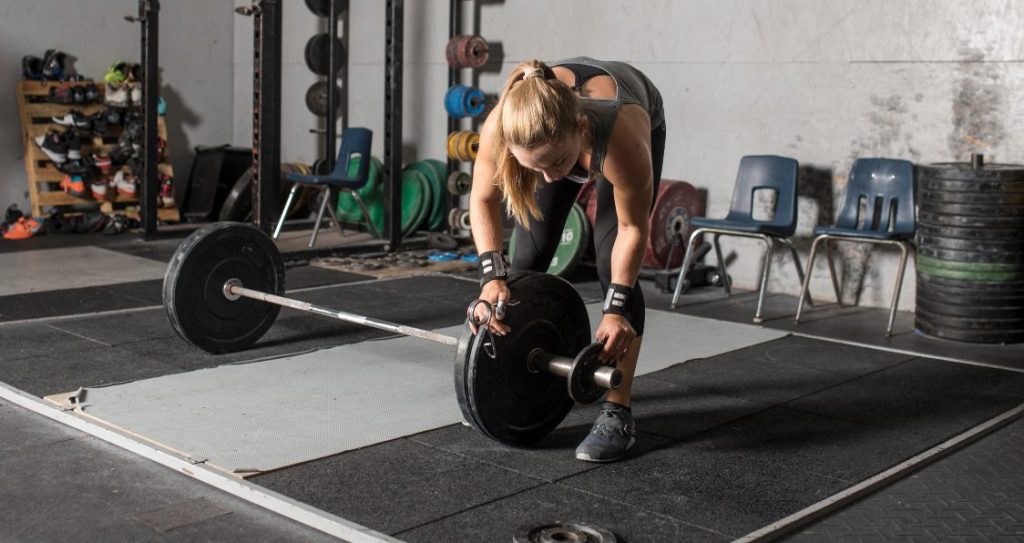
If your primary goal is glute hypertrophy, the barbell hip thrust should be near the top of your list.
Unlike the cable kickback, the hip thrust allows you to use substantially more external resistance. That makes it easier to progressively overload the glutes over time.
The setup is straightforward:
- Position your upper back against a bench.
- Place a loaded barbell across your hips.
- Plant your feet firmly on the floor.
- Drive your hips upward.
- Contract your glutes at the top.
- Lower under control and repeat.
The hip thrust is particularly useful when you’re looking for a heavier movement to anchor your glute workout.
Best for:
- Glute hypertrophy
- Progressive overload
- Intermediate and advanced lifters
- Building a heavy glute-focused workout
If cable kickbacks are your finishing movement, hip thrusts can serve as the heavy compound movement earlier in the session.
2. Romanian Deadlift
The Romanian deadlift is another excellent cable kickback alternative, although it trains the glutes differently.
Instead of focusing on squeezing the glutes through hip extension at the end of the movement, the RDL challenges the posterior chain while the hips move through a loaded hinge.
That means you’ll train:
- Gluteus maximus
- Hamstrings
- Erector spinae
- Core
The RDL is particularly useful because it gives your glutes a completely different stimulus from a kickback.
Rather than replacing kickbacks one-for-one, think of the two movements as complementary.
Cable kickbacks = targeted hip extension.
RDLs = loaded hip hinge.
That combination can make for a very effective posterior-chain workout.
3. 45-Degree Back Extension
Don’t overlook the humble back extension. When performed with a glute-focused technique, the 45-degree back extension can become an excellent cable kickback alternative.
Instead of simply extending your lower back, focus on driving the movement with your hips.
Think about:
- Keeping your spine controlled
- Hinging through the hips
- Driving your hips into the pad
- Squeezing your glutes at the top
- Avoiding excessive lumbar extension
You can also hold a dumbbell or plate against your chest to progressively increase the difficulty.
This makes the movement particularly useful for lifters who want a glute exercise that sits somewhere between an isolation movement and a heavier posterior-chain exercise.
4. Banded Glute Kickback
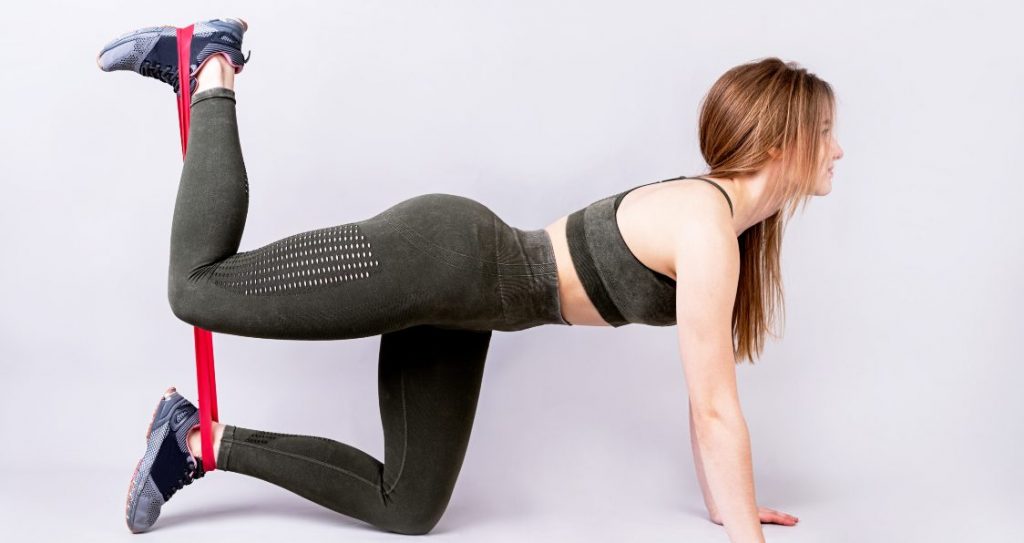
Want the closest thing to a cable kickback without using a cable? Grab a resistance band.
A banded glute kickback allows you to reproduce the basic hip-extension pattern while requiring very little equipment. You can perform it standing or from a quadruped position.
For a standing variation, anchor the band securely and attach it around your ankle. From there, drive your leg backward while keeping your torso stable.
The biggest advantage is accessibility.
You can perform banded kickbacks:
- At home
- In a hotel room
- In a garage gym
- While traveling
- At a gym without an available cable station
The resistance profile isn’t identical to a cable machine, so don’t expect it to feel exactly the same. But as a practical glute accessory, it gets the job done.
5. Step-Ups
Step-ups might not look like an obvious replacement for cable kickbacks, but they’re a fantastic option when you want to combine unilateral training with a more demanding lower-body movement.
The glutes have to contribute to hip extension as you drive yourself onto the platform.
To emphasize the glutes:
- Use a box or bench at an appropriate height.
- Keep the working foot planted.
- Drive through the entire foot.
- Avoid launching yourself upward with the trailing leg.
- Control the descent.
Step-ups can also provide more overall lower-body training than a kickback because you’re asking multiple muscles to contribute.
Research comparing lower-body exercises has found step-ups can produce substantial gluteus maximus activation, making them a legitimate option when you’re looking beyond isolation exercises.
6. Glute-Focused Split Squat
The Bulgarian split squat isn’t just a quad exercise. With the right setup and torso position, it can become a brutal glute builder.
Place one foot behind you on a bench and position your front foot far enough forward to allow a deep hip movement. Lower under control before driving through the front leg.
This gives you:
- Unilateral training
- Significant range of motion
- Glute loading
- Quad involvement
- Balance and stability demands
The biggest difference between a split squat and cable kickback is overall loading.
The kickback is an accessory.
The split squat can become one of the main movements of your leg day.
7. Glute Bridge
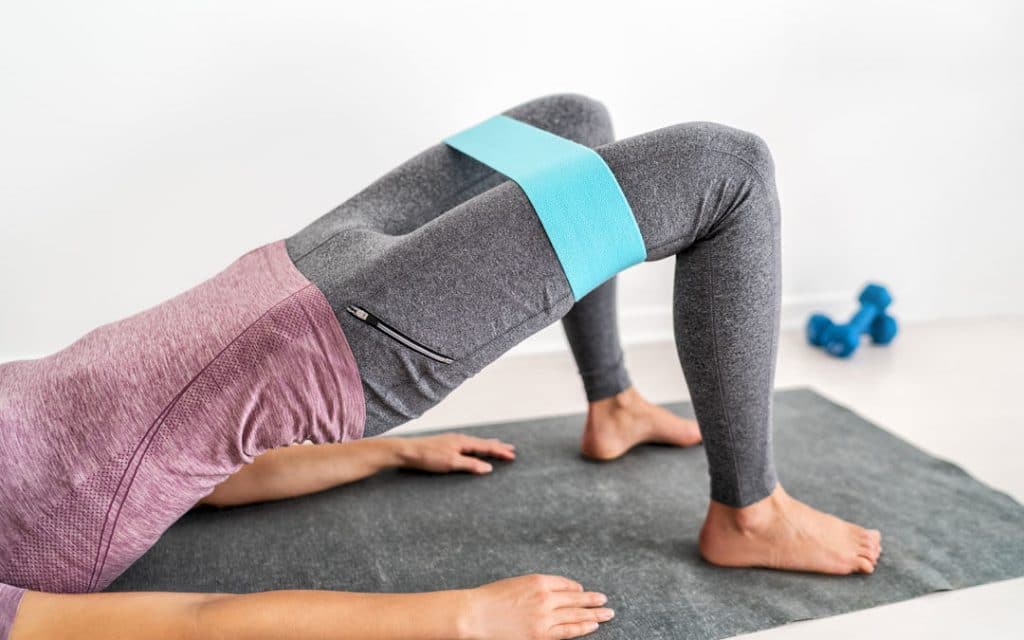
Sometimes you don’t need another complicated exercise.
The glute bridge is a simple way to train hip extension with minimal equipment.
You can perform it with:
- Bodyweight
- A dumbbell
- A barbell
- A resistance band
Lie on your back with your feet planted and drive your hips upward. At the top, squeeze your glutes without turning the movement into excessive lower-back extension.
For advanced lifters, the loaded version can provide substantially more resistance than a bodyweight bridge.
For beginners or home lifters, however, the bodyweight version can be an easy entry point.
8. Donkey Kicks
If you’re looking for a no-gym cable kickback alternative, donkey kicks are one of the simplest options available.
Get onto your hands and knees and drive one leg upward while keeping the knee bent.
The goal isn’t to see how high you can get your foot. The goal is to extend the hip while keeping your pelvis controlled.
You can increase the challenge with a resistance band or ankle weight.
Donkey kicks aren’t going to replace a heavily loaded hip thrust for progressive overload, but they’re useful as a high-rep accessory or finisher.
Cable Kickback Alternatives for Different Goals
Not every lifter needs the same replacement.
If your goal is maximum glute growth, prioritize exercises that allow you to progressively overload the muscle while still maintaining good technique.
For maximum glute hypertrophy:
- Barbell hip thrust
- Romanian deadlift
- 45-degree back extension
- Bulgarian split squat
For home workouts:
- Banded kickback
- Glute bridge
- Donkey kick
- Bodyweight split squat
For unilateral training:
- Step-up
- Bulgarian split squat
- Single-leg glute bridge
- Banded kickback
For a glute finisher:
- Banded kickback
- Donkey kick
- Bodyweight glute bridge
- Cable kickback
How to Program Cable Kickback Alternatives
The best alternative depends on where the exercise falls in your workout.
If you’re using a heavy movement such as a hip thrust, split squat or RDL, you can generally treat it as one of your primary exercises.
A simple glute-focused session could look like:
Glute Workout
Barbell Hip Thrust
3–4 sets of 6–10 reps
Romanian Deadlift
3 sets of 8–12 reps
Bulgarian Split Squat
3 sets of 8–12 reps per leg
45-Degree Back Extension
2–3 sets of 10–15 reps
Banded Kickback
2–3 sets of 15–25 reps per leg
The exact sets and reps aren’t magical. What matters more is that you’re consistently challenging the target muscles, recovering properly and progressing your training over time. The American College of Sports Medicine’s 2026 resistance-training position stand emphasizes individualized programming and flexibility rather than one rigid prescription for everyone.
Don’t Turn Every Glute Exercise Into a Max-Out
One of the biggest mistakes lifters make with glute isolation exercises is trying to use more weight than they can control.
This is especially relevant with kickbacks.
If you have to swing your leg, rotate your torso or hyperextend your lower back just to move the weight, you’re probably making the exercise harder without necessarily making it better.
Instead, focus on:
- Controlled repetitions
- A stable pelvis
- Consistent range of motion
- Full hip extension
- A strong glute contraction
- Progressive overload over time
The same principle applies to your alternatives.
More weight isn’t automatically better if your technique falls apart.
Do You Need Cable Kickbacks to Build Bigger Glutes?
No. Cable kickbacks can be a useful glute accessory, but they’re not mandatory for building muscle.
Research increasingly supports the idea that exercise selection can influence the specific hypertrophy stimulus across the gluteal muscles, rather than there being one universally superior exercise. A recent 10-week study comparing unilateral cable-based hip extension and hip abduction found both produced gluteal hypertrophy, while hip extension produced greater overall gluteus maximus growth in that study.
That is why your best glute program probably shouldn’t revolve around one exercise.
Use different movements to attack different aspects of training.
A heavy hip thrust can provide substantial loading.
An RDL can challenge the posterior chain through a loaded hinge.
A split squat can bring unilateral work into the equation.
And a kickback or banded kickback can finish the workout with targeted hip-extension volume.
The Bottom Line
The cable kickback is a good exercise, but you don’t need a cable machine to build impressive glutes.
If the cable station is busy, you’re training at home or you’re simply looking for more variety, you have plenty of options.
The best cable kickback alternatives include:
- Barbell hip thrusts
- Romanian deadlifts
- 45-degree back extensions
- Banded kickbacks
- Step-ups
- Bulgarian split squats
- Glute bridges
- Donkey kicks
The key is to stop thinking about finding an exercise that looks exactly like the cable kickback and start thinking about what you’re trying to train.
If the goal is bigger glutes, build your program around movements you can perform consistently, recover from and progressively overload.
The cable is just a tool. Your training stimulus is what matters.
Let us know in the comments below. Also, be sure to follow Generation Iron on Facebook and Twitter.
References
- Currier BS, D’Souza AC, Singh MAF, et al. American College of Sports Medicine Position Stand: Resistance Training Prescription for Muscle Function, Hypertrophy, and Physical Performance in Healthy Adults: An Overview of Reviews. 2026.
- Muscle Activation Patterns of the Proximal Medial and Distal Biceps Femoris and Gluteus Maximus Among 6 Hip Extension and Knee Flexion Exercises in Trained Women.
- Electromyographic Comparison of Five Lower-Limb Muscles between Single- and Multi-Joint Exercises among Trained Men.