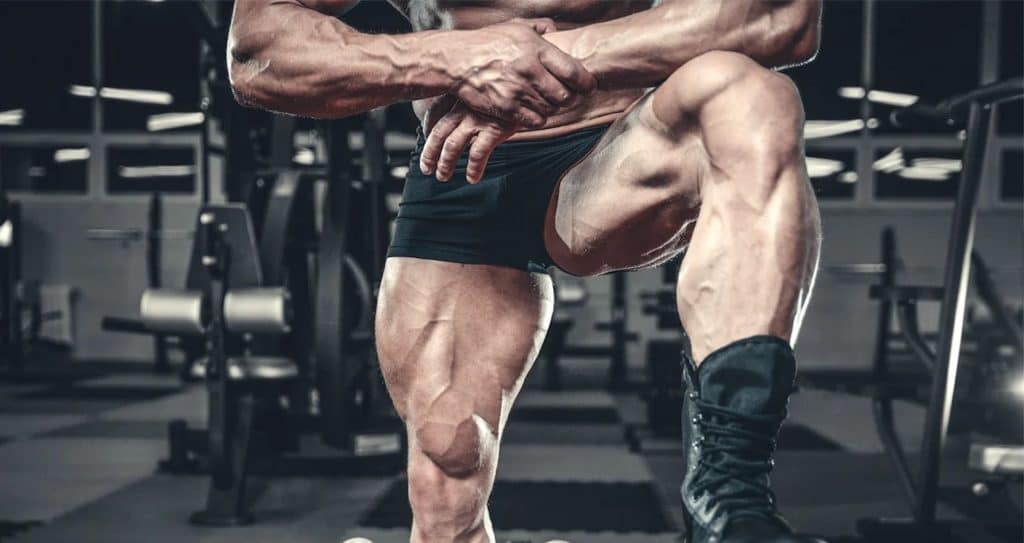
Try this unilateral squat variation for explosive leg growth.
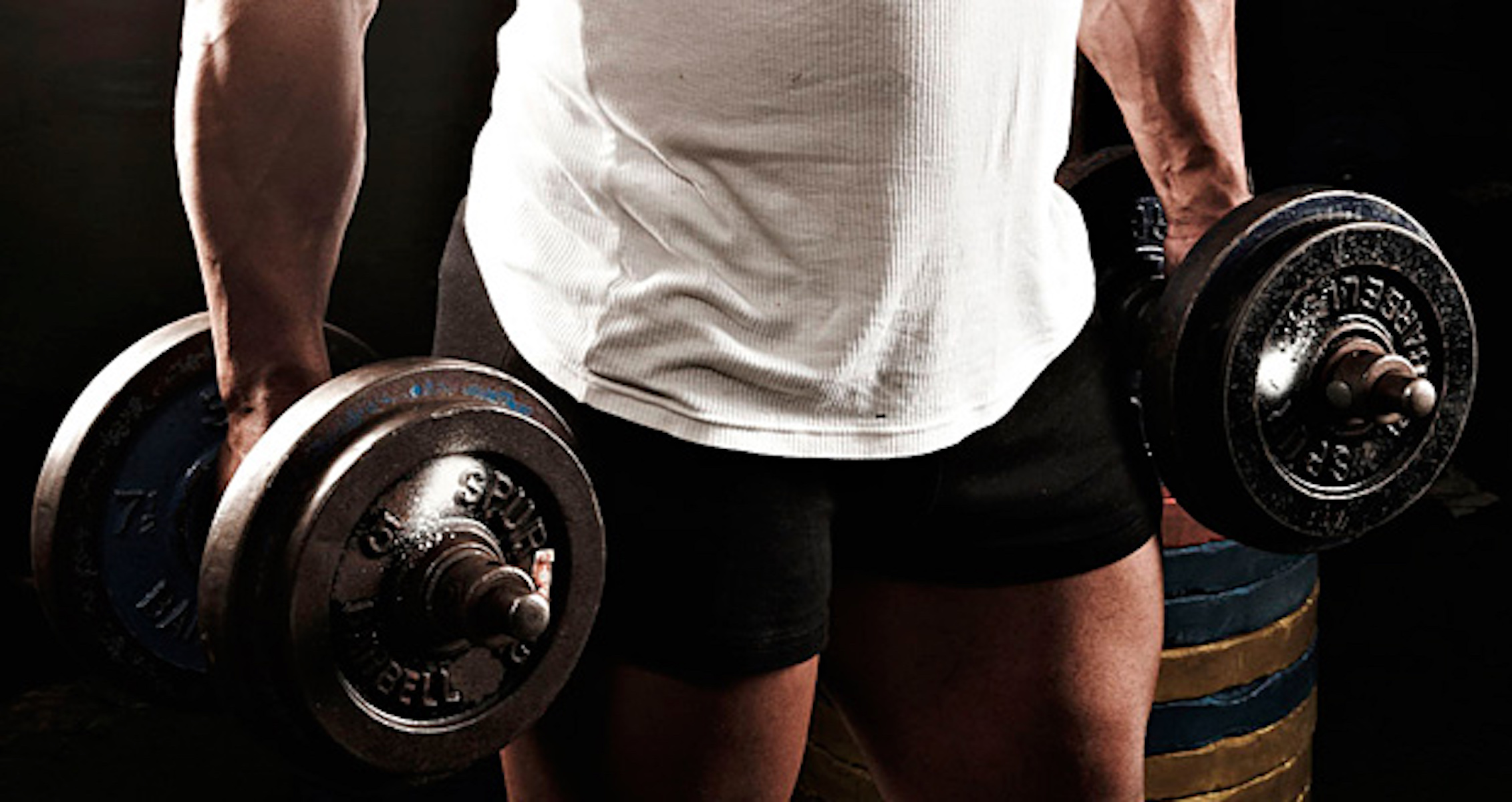
Squats are a cornerstone exercise for building lower-body strength, developing explosive power, improving balance, and enhancing overall athletic performance. As one of the foundational movement patterns, squats not only boost functional fitness but also help burn calories, making them an effective tool for weight loss (1).
The barbell split squat offers a dynamic, unilateral variation that targets muscle imbalances while elevating athletic performance. Its distinct movement pattern provides a unique approach to building muscle and strength. Discover everything you need to know about this powerful exercise below.
Overview — What Are Barbell Split Squats?

Barbell split squats are a squat variation that uses a loaded barbell to work your lower body muscles. What makes this squat variation more interesting is that you can work each leg individually. This allows you to focus better on each side of your body and build a better mind-muscle connection, which is effective for great muscle and strength gains (2).
Barbell split squats add an extra dimension to your squat gains. They are more challenging to do compared to your regular squats and offer separate benefits. For example, performing this routine enables you to identify imbalances in your lower body, which can impact your stability and balance.
The barbell split squat utilizes the barbell as its primary equipment. However, for the sake of variety or preference, you can switch to using alternative equipment, such as resistance bands, kettlebells, dumbbells, or a Smith machine.
Barbell Split Squats — Muscles Worked
Barbell split squats work multiple muscle groups. We can split the muscles worked into primary movers and secondary movers.
Quads
Your quads are the primary movers in this routine. Strengthening them helps with your lower body movements when you run, sprint, jump, or try to lift heavier weights. This is one of the key benefits that this exercise offers.
Hamstrings
This exercise lengthens the hamstrings during the lowering phase of the movement. This helps build stronger and more functional hamstrings, which can improve athletic performance.
Glutes
Just like your regular squats, this squat variation activates your gluteal muscles. Strong glutes also provide stability in your hip joints and prevent injuries, especially when you’re lifting heavy.
Core Muscles
This movement engages your core muscles, including your abs and obliques, which are crucial for stability. They help you maintain your posture correctly, which in turn prevents the risk of injury.
Lower Back
The lower back prevents you from getting injured from just lifting weights. During this routine, the lower back helps support the body.
Calves
Your calves help hold the ankles in place and give you a stable base to perform your barbell split squats without any injuries.
How to Do the Barbell Split Squats
- Keep your feet at shoulder-width distance and let your upper back and traps touch the barbell.
- Now, place your hands on the bar using a slightly wider than shoulder-width length and lift the bar by standing straight with your upper back.
- Keep your back straight, with your chest out, and brace your core muscles. Then take a step forward.
- Take a deep breath and lower yourself to the floor with both legs (your front foot should stay flat with the front knee bending over the toes, while your back knee should be almost touching the floor).
- Hold this position for about two to three seconds and slowly push through your front legs until both legs are completely straight.
- Alternate between legs for as many reps as you desire and return the barbell carefully to the rack.
Benefits
The barbell split squat effectively works multiple muscle groups. Here are some benefits of performing this exercise.
Builds Your Lower Body Muscles
Doing this exercise works your glutes, quads, hamstrings, calves, lower back, and core. It also builds and strengthens your hip and knee joints, which improves your mobility, stability, and balance. Did you know that doing squats and working your lower body muscles can trigger the release of testosterone and other human growth hormones, which are key for muscle development (3).
Addresses Strength & Muscle Imbalances
Barbell split squats differ from regular squats because they focus on building each side of your body unilaterally. It allows you to focus on which side of your body lags and address these imbalances. This leads to improved training performances, resulting in better overall results compared to bilateral training (4).
Better Mind-Muscle Connection
If you’re looking for an exercise that allows you to focus better on target muscles. This routine gives you the opportunity. Focusing enables you to achieve a better mind-muscle connection, which is a beneficial factor for improved growth and development.
Builds the Lower Back & Core
Your lower back and core muscles provide a stable base for your movements. This exercise strengthens the muscles that help prevent training injuries and maintain proper form during your exercises.
Barbell Split Squats Alternatives
Walking Lunges
Walking lunges are bodyweight exercises that target the same muscle groups as the barbell split squats. They are convenient to do because they require no equipment. This exercise can serve as a good warm-up for your major lower-body exercises.
Leg Presses
Leg presses are excellent leg-building exercises. They primarily work your quads, glutes, and hamstrings, but are not as functional as barbell split squats. However, they are great for building and strengthening those lower body muscles. Performing a 45-degree leg press makes it more challenging compared to a regular leg press.
Deadlifts
Deadlifts give you an overall training experience. Primarily, deadlifts build muscular mass in your back, but they also improve lower-body functional movements and develop the lower-body muscle groups. This is an excellent addition to your workout arsenal.
FAQs
What does a barbell split squat work?
The barbell split squat targets your lower body muscles, including your glutes, hamstrings, quadriceps, calves, lower back, and core. This exercise also targets those hip and knee joints, which are crucial for your functional movements.
What is another name for a split squat?
One can also refer to the split squat or the barbell split squat as a stationary lunge. They both have similar mechanics and focus on building functional movements and lower-body muscles.
What is a good substitute for split squats?
We all know that doing the same exercise repeatedly can eventually become monotonous and boring, leading to a lack of motivation or a training plateau. This article lists some effective alternatives you can try to build similar muscles. Check above to find them.
Follow Generation Iron on Instagram, Facebook, and Twitter for more exercise guides!
References
- Takai, Y., Fukunaga, Y., Fujita, E., Mori, H., Yoshimoto, T., Yamamoto, M., & Kanehisa, H. (2013). Effects of body mass-based squat training in adolescent boys. Journal of sports science & medicine, 12(1), 60–65.
- Calatayud, J., Vinstrup, J., Jakobsen, M. D., Sundstrup, E., Brandt, M., Jay, K., Colado, J. C., & Andersen, L. L. (2016). Importance of mind-muscle connection during progressive resistance training. European journal of applied physiology, 116(3), 527–533. https://doi.org/10.1007/s00421-015-3305-7
- Kraemer, W. J., Häkkinen, K., Newton, R. U., McCormick, M., Nindl, B. C., Volek, J. S., Gotshalk, L. A., Fleck, S. J., Campbell, W. W., Gordon, S. E., Farrell, P. A., & Evans, W. J. (1998). Acute hormonal responses to heavy resistance exercise in younger and older men. European journal of applied physiology and occupational physiology, 77(3), 206–211. https://doi.org/10.1007/s004210050323
- Zhang, W., Chen, X., Xu, K., Xie, H., Li, D., Ding, S., & Sun, J. (2023). Effect of unilateral training and bilateral training on physical performance: A meta-analysis. Frontiers in physiology, 14, 1128250. https://doi.org/10.3389/fphys.2023.1128250