Which Is Better for Building Your Chest?
When it comes to building a bigger, more developed chest, presses like the bench press tend to get most of the attention. But if you want to isolate the pectorals and add more direct chest volume to your workout, the dumbbell flye and cable flye are two of the most popular options.
Both exercises train the chest through a similar basic movement: bringing the upper arms toward the midline of the body. The pectoralis major is heavily involved in this shoulder adduction and horizontal adduction movement, making both variations useful additions to a hypertrophy-focused chest workout.
But is one better than the other?
Not necessarily.
The dumbbell flye and cable flye have different resistance profiles, stability requirements and setup options. Understanding those differences can help you choose the exercise that makes the most sense for your training goals, and our team at Generation Iron is going to break it down.
Dumbbell Flye vs. Cable Fly: What’s the Difference?
The biggest difference between the two exercises comes down to where the resistance is coming from.
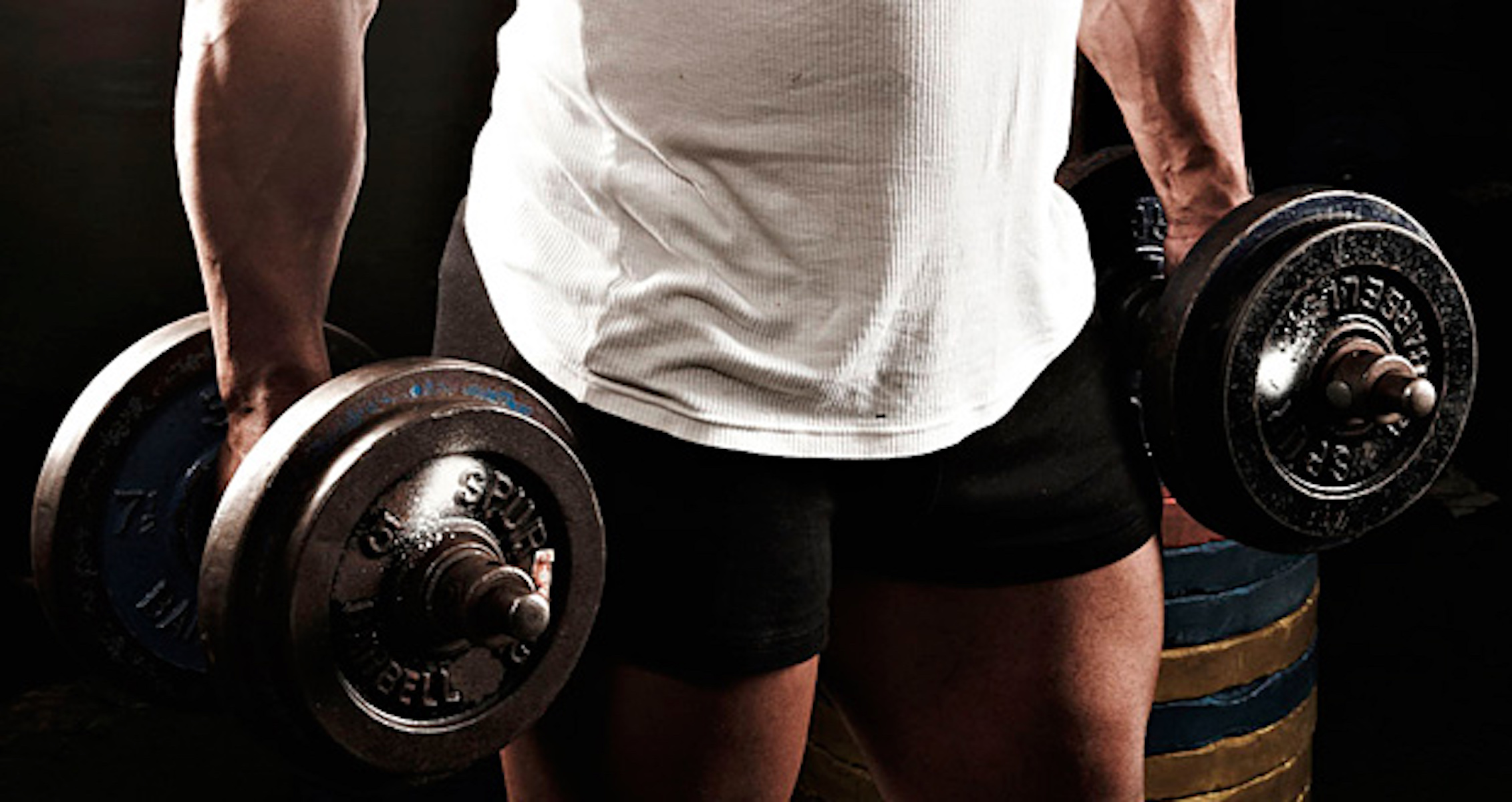
With a dumbbell flye, gravity provides the resistance. As you lower the dumbbells and your arms move farther away from your body, the leverage changes. The exercise is generally most challenging when the arms are extended out to the sides and the dumbbells are positioned farther from the body.
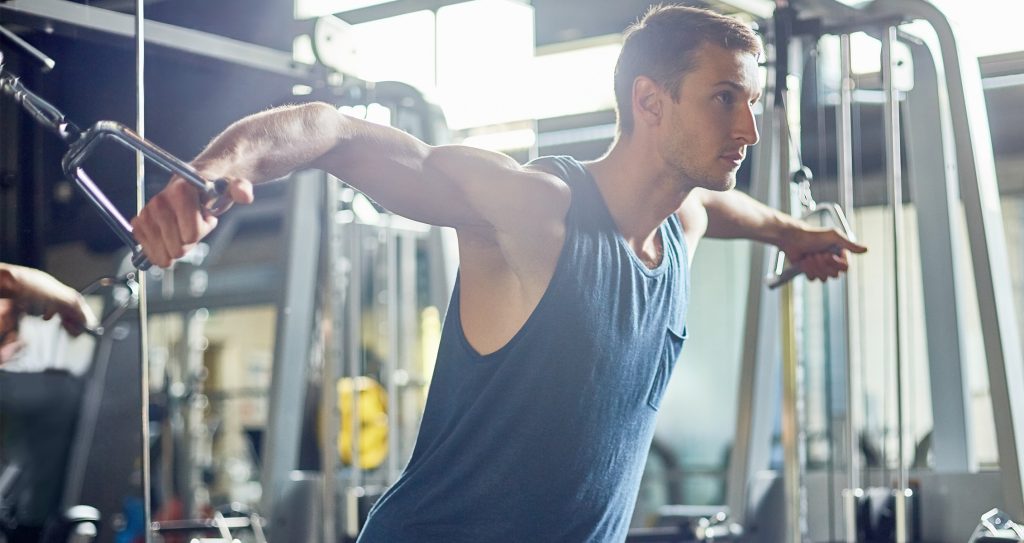
With a cable fly, the cables provide resistance through the direction of the cable. Changing the height and position of the pulleys can alter the line of resistance and allow you to perform variations such as high-to-low, mid-level or low-to-high cable flyes.
That gives cables a major advantage when it comes to manipulating the resistance profile.
Dumbbell Flye: Pros and Cons

The dumbbell flye has been a bodybuilding staple for decades.
Pros of Dumbbell Flyes
1. Easy to access
Almost every commercial gym has dumbbells, and you don’t need a specialized machine to perform the exercise.
2. Simple progression
You can gradually increase the dumbbell weight as you become stronger. Progressive overload remains an important component of resistance training, although the exact equipment used is less important than consistently performing effective training. The 2026 American College of Sports Medicine position stand emphasizes consistency, progressive training and sufficient weekly volume as important components of resistance training.
3. Excellent stretch
A properly performed dumbbell flye can provide a substantial loaded stretch for the chest. However, you should not interpret “more stretch” as “more is always better.” The range of motion should remain controlled and comfortable rather than forcing the shoulders into an excessively deep position.
4. Useful for lifters who prefer free weights
Some lifters simply perform better with dumbbells. The ability to independently control each arm can also make dumbbell exercises appealing for addressing differences in strength or coordination between sides.
Cons of Dumbbell Flyes
The biggest limitation is the exercise’s resistance curve.
Because the dumbbells are being pulled downward by gravity, the amount of torque placed on the shoulder changes throughout the movement. As the hands approach each other at the top, the dumbbells move closer to the body’s center of mass, reducing the external demand on the chest.
That means the chest isn’t necessarily challenged equally throughout the entire range of motion.
Cable Fly: Pros and Cons

Cable flyes solve some of the limitations associated with dumbbells by allowing you to change the direction of resistance.
Pros of Cable Flyes
1. More consistent resistance
Unlike dumbbells, cables can maintain meaningful resistance through more of the movement because the resistance comes from the cable rather than straight downward from gravity.
The exact resistance profile still depends on the machine, pulley height and your body position, but cables give you considerably more control over the direction of resistance.
2. More exercise variations
You can perform:
- High-to-low cable flyes
- Mid-height cable flyes
- Low-to-high cable flyes
- Standing cable flyes
- Seated cable flyes
- Single-arm cable flyes
Changing the pulley position changes the line of pull, allowing you to experiment with different arm paths.
3. Easy to maintain tension
The cable can continue pulling against you as your hands come together. This makes the cable flye particularly useful for lifters who enjoy maintaining tension throughout the contraction.
4. Easy to modify
You can change your stance, arm path, pulley height and range of motion without completely changing the exercise.
Cons of Cable Flyes
The obvious disadvantage is accessibility.
You need a cable station or functional trainer, and some gyms have cable machines that make certain setups difficult.
Cables also aren’t automatically superior simply because they provide a different resistance profile. A 2022 systematic review and meta-analysis comparing free-weight and machine-based resistance training found no significant difference in muscle hypertrophy between the two modalities.
That is an important distinction: a different training tool doesn’t automatically mean greater muscle growth.
Which Is Better for Chest Growth?
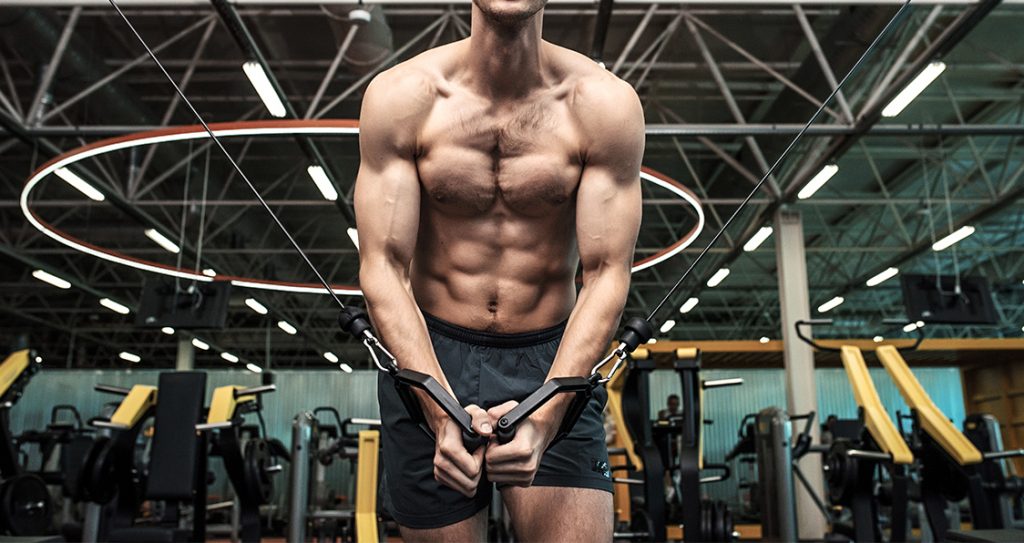
If your goal is chest hypertrophy, both can work.
There isn’t strong evidence showing that dumbbell flyes universally produce more chest growth than cable flyes—or vice versa. Much of the evidence comparing free weights and machines suggests that both can effectively build muscle mass when training is appropriately programmed. A 2023 systematic review and meta-analysis similarly found no significant difference in hypertrophy between free-weight and machine-based training.
So rather than asking which exercise is objectively better, ask:
Which exercise allows you to train the chest effectively, comfortably and progressively?
For some lifters, that’s dumbbell flyes. For others, it’s cables.
And there is no reason you can’t use both.
Dumbbell Flye vs. Cable Flye for the Upper Chest
Neither exercise magically isolates a specific portion of the chest.
However, changing the direction of the arm path can influence which portions of the pectoralis major contribute to the movement.
A low-to-high cable fly, for example, involves an upward arm path and is commonly used to emphasize the clavicular portion of the pectoralis major. A more horizontal cable flye can be used to train the chest through a more traditional horizontal-adduction pattern.
The important point is that the pectoralis major is one muscle with different regions, rather than completely separate “upper” and “lower” chest muscles.
If developing the upper chest is a priority, exercises such as incline pressing can also be valuable rather than relying exclusively on flye variations.
Which Exercise Is Better for Progressive Overload?
Dumbbells have an advantage in simplicity.
If you can perform 10 reps with a certain dumbbell weight this week and 12 reps with the same weight next week, you’ve established an easy progression system.
Cable machines can also be progressively overloaded, but the weight stack and pulley configuration can make direct comparisons between different machines more difficult.
For hypertrophy, however, progression doesn’t have to mean adding weight every workout.
You can progressively increase:
- Repetitions
- Resistance
- Sets
- Range of motion
- Exercise quality
- Training proximity to failure
The 2026 ACSM position stand emphasizes that resistance training programs should be individualized and that consistency matters more than obsessing over a particular piece of equipment or advanced technique.
Which Is Better for Beginners?

For beginners, the cable flye may be easier to control because the resistance is guided by the cable and you don’t have to stabilize two independent dumbbells.
However, this doesn’t mean beginners should avoid dumbbells.
A lighter dumbbell flye can teach the lifter how to control shoulder movement and maintain a stable body position.
Regardless of which variation you choose, technique should come before loading.
How to Perform a Dumbbell Flye Correctly
To perform a dumbbell fly:
- Lie on a flat or slightly inclined bench with a dumbbell in each hand.
- Hold the dumbbells above your chest with your palms facing each other.
- Maintain a slight bend in your elbows.
- Slowly lower the dumbbells out and down in a controlled arc.
- Stop when you reach a comfortable range of motion.
- Bring the dumbbells back together by contracting your chest.
- Avoid aggressively smashing the dumbbells together at the top.
The movement should come primarily from the shoulder joint rather than turning the exercise into a dumbbell press.
How to Perform a Cable Flye Correctly
To perform a standard cable fly:
- Set the pulleys around chest height.
- Grab the handles and take a controlled stance between the cables.
- Keep a slight bend in your elbows.
- Begin with your arms opened behind or beside your torso within a comfortable range of motion.
- Bring your hands together in front of your body.
- Contract your chest as the hands approach each other.
- Slowly return to the starting position.
Don’t turn the exercise into a competition to see how far you can stretch the handles behind you. A controlled range of motion that allows you to train the chest without causing shoulder discomfort is the better approach.
Can You Do Both Dumbbell Flyes and Cable Flyes?
Absolutely. In fact, combining the two can be a useful way to take advantage of their different characteristics.
For example, you could perform heavy compound presses earlier in your workout and use one flye variation afterward:
Chest Hypertrophy Example
- Barbell bench press: 3–4 sets
- Incline dumbbell press: 3 sets
- Cable fly: 3 sets
- Push-ups: 2–3 sets
Alternatively, you could rotate the exercises between workouts:
Workout A: Dumbbell flyes
Workout B: Cable flyes
This can provide variety without unnecessarily complicating your training program.
What Does the Research Say About Free Weights vs. Machines?
The broader research doesn’t support the idea that one type of resistance equipment is inherently superior for muscle growth.
A systematic review and meta-analysis published in 2022 found no significant difference in hypertrophy between free-weight and machine-based training.
A separate 2023 meta-analysis that included 13 studies and more than 1,000 participants likewise found no significant difference in hypertrophy between free-weight and machine-based training.
More recent research examining variable-resistance and free-weight training also found no significant overall difference in muscle activation between the modalities, although some differences emerged during specific phases of movement.
That suggests the most productive approach isn’t necessarily picking a winner.
Instead, choose the exercise that allows you to train hard, maintain good technique, recover appropriately and progressively improve.
Dumbbell Flye vs. Cable Fly: The Verdict
So, which is better: dumbbell flyes or cable flyes?
For most lifters, there isn’t a universal winner.
Choose dumbbell flyes if:
- You prefer free weights.
- Your gym doesn’t have a good cable station.
- You want a simple exercise to track and progressively overload.
- You enjoy the loaded stretch provided by dumbbells.
Choose cable flyes if:
- You want more control over the direction of resistance.
- You prefer maintaining tension throughout the movement.
- You want more variations and adjustable arm paths.
- You find cables more comfortable for your shoulders.
And if you’re serious about building your chest, there’s no reason you can’t use both.
The bigger factor isn’t whether the resistance comes from a dumbbell or cable. It’s whether the exercise fits into a well-designed training program that provides enough weekly volume, appropriate effort and progressive overload.
The best chest exercise is ultimately the one you can perform consistently and progressively while keeping your technique under control.
Frequently Asked Questions
Are cable flyes better than dumbbell flyes for chest growth?
Not necessarily. Current evidence comparing free-weight and machine-based resistance training does not show a clear hypertrophy advantage for one modality. Both can be effective for building the chest.
Should I do dumbbell flyes or cable flyes first?
For most chest workouts, pressing movements such as the bench press or incline press can be performed first because they allow you to use heavier loads and train multiple muscle groups. Flyes can then be used as accessory work.
Can cable flyes build the chest?
Yes. Cable flyes train the pectoralis major through shoulder adduction/horizontal adduction and can be an effective accessory exercise for hypertrophy.
Are dumbbell flyes dangerous for your shoulders?
The exercise itself isn’t inherently dangerous, but using excessive weight, forcing an uncomfortable range of motion or losing control of the eccentric portion can increase the difficulty and potentially irritate the shoulders. Use a manageable load and a controlled range of motion.
How many sets of flyes should I do?
For most lifters, 2–4 sets of flyes performed as part of a larger chest-training program is a reasonable starting point. Your total weekly chest volume should account for pressing movements and other exercises as well. The 2026 ACSM position stand highlights weekly training volume as an important factor for hypertrophy.
What rep range should I use for cable or dumbbell flyes?
A moderate-to-high repetition range works well because flyes are isolation movements. Around 8–15 or even 10–20 controlled repetitions per set can be practical, provided you use a load that allows you to maintain good technique.
For more news and updates, follow Generation Iron on Facebook, Twitter, and Instagram.
References
- Currier BS, D’Souza AC, Fiatarone Singh M, et al. American College of Sports Medicine Position Stand: Resistance Training Prescription for Muscle Function, Hypertrophy, and Physical Performance in Healthy Adults: An Overview of Reviews. Medicine & Science in Sports & Exercise. 2026;58(4):851–872.
- Heidel KA, Novak ZJ, Dankel SJ. Machines and free weight exercises: a systematic review and meta-analysis comparing changes in muscle size, strength, and power. Journal of Sports Medicine and Physical Fitness. 2022;62(8):1061–1070.
- Haugen T, et al. Effect of free-weight vs. machine-based strength training on maximal strength, hypertrophy and jump performance: a systematic review and meta-analysis. BMC Sports Science, Medicine and Rehabilitation. 2023.