Are You Actually Making Progress?
Building noticeable muscle mass is one of the biggest goals for people who start strength training. Whether you’re trying to fill out your T-shirt sleeves, build a bigger chest, add size to your legs, or completely transform your physique, one question eventually comes up: how long does it take to build noticeable muscle?
The short answer is that most people can begin noticing changes within 8 to 12 weeks, but building a genuinely muscular physique takes much longer, especially if you are trying to be the next Mr. Olympia. Your results depend on your training experience, genetics, nutrition, recovery, consistency, and how effectively you progressively overload your muscles.
Understanding what to expect can help you stay consistent when the mirror doesn’t seem to change overnight. Our team at Generation Iron is going to break it down.
How Long Does It Take to Build Noticeable Muscle?

For someone who is new to resistance training, noticeable muscle growth can begin within the first 2 to 3 months of consistent training. However, early changes aren’t always entirely due to new muscle tissue.
Beginners often experience rapid improvements in strength during the first several weeks because their nervous system becomes more efficient at recruiting muscle fibers. Muscles may also appear fuller because of increased glycogen storage, water retention, and improved muscle tone.
Actual hypertrophy takes time.
A realistic timeline might look something like this:
- Weeks 1-4: Strength and technique improve, but visual changes may be subtle.
- Weeks 4-8: Muscles may begin looking fuller, particularly in beginners.
- Weeks 8-12: Noticeable changes may become apparent in the mirror and clothing.
- 3-6 months: Significant improvements in muscle size and overall physique can develop.
- 6-12 months: Consistent lifters can build a noticeably more muscular physique.
- 1-2+ years: Continued training can produce substantial changes, although the rate of muscle gain gradually slows.
These are general estimates, not guarantees. Some people will see visible results sooner, while others may need more time.
Why Beginners Can Build Muscle Faster
One reason beginners often see impressive results early is the newbie gains effect.
When someone who has never seriously lifted weights begins resistance training, their body has a significant stimulus to adapt to. Muscle protein synthesis increases, strength improves rapidly, and the body becomes more efficient at responding to training.
This means a beginner may be able to gain muscle faster than an experienced lifter.
However, muscle growth isn’t linear. Someone who has trained consistently for five years shouldn’t expect to gain muscle at the same rate as someone who has been lifting for five months. As you approach your genetic potential, adding additional muscle becomes progressively more difficult.
How Much Muscle Can You Gain in a Month?
There is no universal number for how much muscle a person can gain each month. Factors including training status, genetics, sex, age, nutrition, sleep, and body composition all influence the rate of muscle growth.
A beginner eating enough calories and protein while following a well-designed resistance-training program may gain muscle relatively quickly. An advanced lifter, on the other hand, may consider a much smaller amount of additional muscle to be a successful year of training.
It’s also important to distinguish muscle gain from weight gain.
If the scale goes up five pounds, that doesn’t mean you’ve gained five pounds of muscle. Weight gain can come from muscle, fat, glycogen, water, food volume, and other factors.
The Role of Progressive Overload
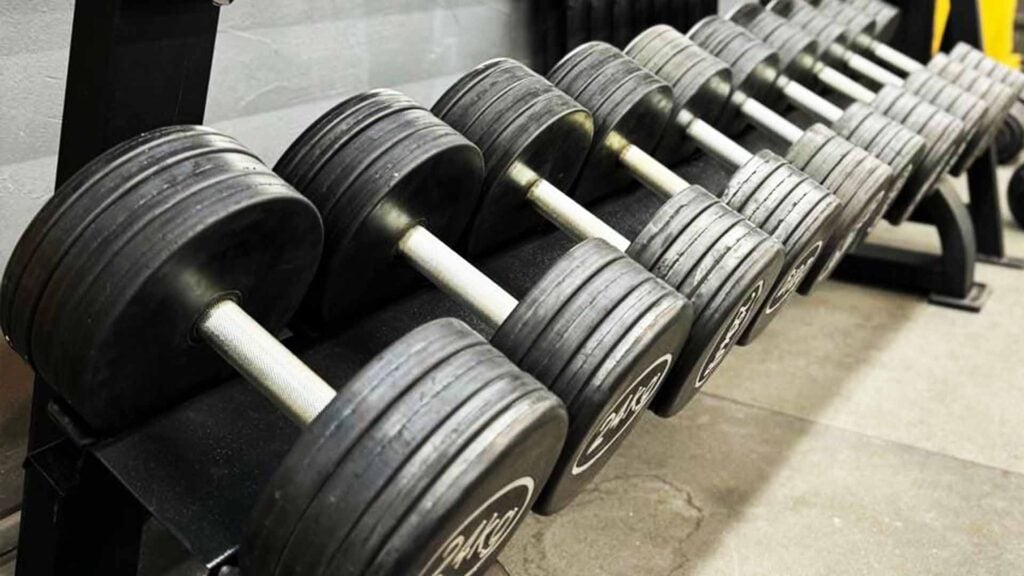
If your goal is to build noticeable muscle, simply going to the gym isn’t enough. Your muscles need a reason to adapt.
That’s where progressive overload comes in. Over time, you should gradually increase the demands placed on your muscles. This can mean:
- Adding weight to an exercise
- Performing additional repetitions
- Increasing training volume
- Improving exercise technique
- Increasing range of motion
- Improving control and execution
- Increasing training frequency when appropriate
You don’t necessarily need to add weight every workout. The goal is to create progressive improvements over time while maintaining good technique.
A structured program can make this much easier than randomly choosing exercises every time you enter the gym.
How Much Protein Do You Need to Build Muscle?
Training provides the stimulus for muscle growth, but nutrition supplies the materials your body needs to recover and build new tissue.
Protein is particularly important because it provides the amino acids required for muscle protein synthesis.
For people who regularly perform resistance training, a commonly recommended daily protein intake is approximately 1.6 to 2.2 grams per kilogram of body weight.
For example, a 180-pound lifter weighs roughly 82 kilograms. That would put the range around 130-180 grams of protein per day. Rather than obsessing over hitting a perfect number every day, focus on consistently eating enough high-quality protein while maintaining an overall diet that supports your goal.
Good protein sources include:
- Chicken
- Turkey
- Lean beef
- Fish
- Eggs
- Greek yogurt
- Cottage cheese
- Milk
- Whey protein
- Plant-based protein sources
Protein supplements can also make it easier to reach your daily protein target when whole foods aren’t convenient.
Do You Need to Eat More Calories to Build Muscle?
If maximizing muscle growth is the priority, eating enough calories is important. A calorie surplus provides your body with additional energy to support training, recovery, and tissue growth. However, a massive calorie surplus isn’t necessary.
Eating substantially more calories than you need can result in excessive fat gain without dramatically accelerating muscle growth.
A controlled calorie surplus is generally a more practical approach for someone intentionally trying to gain muscle.
On the other hand, beginners may sometimes build muscle while maintaining or even losing body fat, particularly if they have a higher starting body-fat percentage or are returning to training after a long break.
Sleep and Muscle Growth

You don’t build muscle simply because you lifted weights. Training creates a stimulus. Recovery allows your body to adapt to that stimulus.
Sleep is therefore an important part of any muscle-building program.
Most adults should aim for approximately 7-9 hours of quality sleep per night. Consistently poor sleep can make it harder to recover from demanding workouts and maintain high-quality training sessions.
If you’re training hard but regularly sleeping five or six hours per night, improving your recovery habits may be just as important as adding another exercise to your workout.
How Often Should You Train Each Muscle?
You don’t need to train a muscle every day to make it grow.
Many effective bodybuilding and strength-training programs train each major muscle group approximately twice per week, although frequency can vary depending on the individual and the overall program.
Popular approaches include:
Push-Pull-Legs
A Push-Pull-Legs split organizes training around movement patterns and muscle groups. It can work particularly well for lifters who want to train frequently while keeping workouts organized.
Upper-Lower Split
Upper-lower training divides workouts between the upper and lower body. It’s a popular option for people who want a balance between training frequency, recovery, and simplicity.
Full-Body Training
Full-body workouts can be particularly effective for beginners because they allow each major muscle group to receive frequent training without requiring five or six gym sessions per week.
The “best” workout split is ultimately the one that allows you to train consistently, recover adequately, and progressively improve.
Why You Might Not Be Seeing Muscle Growth
If you’ve been lifting for several months without noticing meaningful changes, look at the fundamentals before completely changing your workout.
You’re Not Training Consistently
Missing workouts frequently makes progressive overload difficult.
You’re Not Eating Enough
Trying to gain muscle while consistently undereating can make the process considerably more difficult.
You’re Not Eating Enough Protein
Insufficient protein can make it harder to support muscle recovery and growth.
Your Workouts Aren’t Progressing
If your weights, repetitions, technique, or overall performance haven’t improved for months, your training may not provide enough progressive stimulus.
You’re Not Recovering
Poor sleep and excessive training without adequate recovery can undermine performance.
You’re Expecting Results Too Quickly
Muscle growth is a long-term process. Comparing your progress after four weeks to someone else’s progress after five years of training is a recipe for frustration.
How Can You Make Muscle Growth More Noticeable?
If your goal is to build a visibly muscular physique, focus on the fundamentals for months and years rather than searching for shortcuts.
Prioritize:
- Progressive resistance training
- Adequate daily protein
- Enough total calories
- Quality sleep
- Consistent training
- Appropriate recovery
- Tracking your workouts and progress
Taking progress photos every four weeks can also be more useful than checking the mirror every day. Day-to-day changes are difficult to recognize, while comparing photos several months apart can make gradual muscle growth much easier to see.
MUTANT ISO SURGE: A High-Protein Option for Muscle Growth
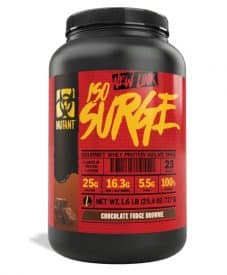
Maximize your gains with a great tasting and effective whey protein isolate, MUTANT ISOSURGE.
For those looking to make it easier to hit their daily protein target, MUTANT ISO SURGE delivers 25 grams of protein per scoop with just 1 gram of carbohydrates and 1 gram of fat. That makes it a convenient option for lifters who want a high-protein shake without adding a significant amount of carbohydrates or fat to their diet.
ISO SURGE combines whey protein isolate and whey protein hydrolysate, two highly concentrated forms of whey designed to provide a substantial dose of protein. The formula also includes MCT oil from fractionated coconut oil, along with lactase and protease enzymes.
For anyone trying to build noticeable muscle, the most important factor is consistently consuming enough total protein throughout the day. A convenient protein powder such as ISO SURGE can help make reaching that target easier alongside a balanced, muscle-building diet.
The Bottom Line: How Long Does It Take to Build Noticeable Muscle?
So, how long does it take to build noticeable muscle?
For most beginners, 8-12 weeks of consistent resistance training can be enough to begin seeing noticeable changes. However, building significant muscle mass is a much longer process.
Think in terms of months and years, not weeks.
Your first few months can produce relatively rapid progress, but muscle growth generally slows as you become more experienced. The lifters who ultimately build impressive physiques aren’t necessarily the people who find the perfect workout. They’re the people who consistently train, eat appropriately, recover, and continue progressing for years.
If building noticeable muscle is your goal, don’t worry about whether you’ll look dramatically different next month. Focus on making your next workout better than your last, hitting your nutrition targets, and staying consistent.
Over time, those small improvements add up to a dramatically different physique.
Let us know what you think in the comments below. Also, be sure to follow Generation Iron on Facebook, Twitter, and Instagram.
References
- Morton, R. W., et al. (2018). A systematic review, meta-analysis and meta-regression of the effect of protein supplementation on resistance training-induced gains in muscle mass and strength in healthy adults. British Journal of Sports Medicine, 52(6), 376–384.
- Jäger, R., et al. (2017). International Society of Sports Nutrition Position Stand: Protein and exercise. Journal of the International Society of Sports Nutrition, 14, 20.
- Schoenfeld, B. J., Ogborn, D., & Krieger, J. W. (2017). Dose-response relationship between weekly resistance training volume and increases in muscle mass: A systematic review and meta-analysis. Journal of Sports Sciences, 35(11), 1073–1082.