A Realistic Guide for Natural Lifters
One of the most common questions among gym-goers is, “How much muscle mass can I realistically build in a year?” Social media often showcases dramatic before-and-after transformations, making it easy to believe that adding 20, 30, or even 40 pounds of lean muscle in a year is normal, but the truth is much different.
For natural lifters, muscle growth is a slow process that requires consistent training, proper nutrition, quality sleep, and patience. While genetics play a major role, there are well-established expectations for how much muscle most people can gain.
Our team at Generation Iron is breaking down what you can realistically expect.
Muscle Growth Depends on Your Training Experience

The amount of muscle you can build decreases as you become a more experienced lifter.
Beginners typically experience the fastest gains because their bodies are highly responsive to resistance training, often referred to as “newbie gains.” As training age increases, adding additional muscle becomes progressively more difficult.
Beginner Lifters (First Year)
If you’re new to resistance training, you’re in the best position to build muscle quickly.
Most healthy men can expect to gain approximately:
- 15–25 pounds (7–11 kg) of muscle during their first year with excellent training, nutrition, and recovery.
- Many beginners will gain less due to inconsistent training or nutrition.
Women generally build muscle at a slower absolute rate because of lower testosterone levels, but they can still make significant improvements in strength and physique.
Intermediate Lifters (Years 2–3)
After the first year, muscle growth begins to slow considerably.
Most intermediate lifters can realistically expect:
- 5–10 pounds (2–5 kg) of muscle per year
At this stage, maximizing progressive overload, nutrition, and recovery becomes increasingly important.
Advanced Lifters
Once you’ve been training consistently for several years, adding new muscle becomes challenging.
Advanced natural lifters often gain:
- 2–5 pounds (1–2 kg) of muscle annually
Some experienced athletes may spend an entire year adding only a couple pounds of lean muscle while significantly improving strength, conditioning, and body composition.
The Alan Aragon Muscle Gain Model
Sports nutrition researcher Alan Aragon proposed one of the most widely referenced models for natural muscle gain potential.
Estimated monthly muscle gain:
- Beginner: 1–1.5% of body weight
- Intermediate: 0.5–1% of body weight
- Advanced: 0.25–0.5% of body weight
For example, a 180-pound beginner could potentially gain around 2–3 pounds of muscle per month under ideal conditions during the early stages of training.
Factors That Affect Muscle Growth

Everyone responds differently to resistance training. Several variables influence how much muscle you’ll build.
Genetics
Genetics influence:
- Muscle fiber composition
- Hormone levels
- Recovery ability
- Muscle insertions
- Overall growth potential
Some people naturally build muscle much faster than others. You can train and eat just like Arnold Schwarzenegger, but you may never get close to his physique, and that’s okay.
Training Program
Effective hypertrophy programs typically include:
- Progressive overload
- Adequate weekly training volume
- Compound movements
- Isolation exercises
- Consistent effort
- Proper recovery
Changing workouts every week is generally less effective than progressively improving on proven exercises.
Nutrition
Building muscle requires enough calories and hitting the right macros, specifically protein.
For most people:
- Eat a modest calorie surplus (around 200–300 calories per day).
- Consume 1.6–2.2 grams of protein per kilogram of body weight daily.
- Include sufficient carbohydrates to fuel training.
- Eat healthy fats to support hormone production.
Sleep
Muscle is built during recovery—not while you’re lifting.
Aim for 7–9 hours of sleep each night to maximize protein synthesis, hormone production, and recovery.
Consistency
The biggest difference between successful and unsuccessful lifters is consistency.
Training hard for six weeks before quitting won’t produce impressive results.
Training consistently for several years almost certainly will.
Why the Scale Can Be Misleading

Many people assume every pound they gain is muscle.
In reality, body weight increases often include:
- Water
- Glycogen
- Body fat
- Food weight
- Lean muscle tissue
This is why body composition measurements, progress photos, strength improvements, and circumference measurements provide a more complete picture than the scale alone.
Can You Build Muscle While Losing Fat?
Yes—but it depends on your experience level.
Body recomposition is most common in:
- Beginners
- Individuals returning after time off
- People with higher body fat percentages
Experienced lifters usually find it easier to focus on either gaining muscle in a calorie surplus or losing fat in a calorie deficit.
Supplements That Support Muscle Growth
No supplement replaces hard training and proper nutrition, but several have strong scientific support.
The most effective options include:
- Creatine monohydrate
- Whey protein
- Caffeine (for training performance)
- Electrolytes for hydration
- Vitamin D (if deficient)
While supplements can improve performance and recovery, they won’t override poor training or diet.
Recommended Supplement: MUTANT ISO SURGE
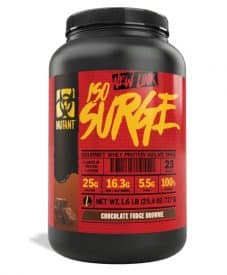
Maximize your gains with a great tasting and effective whey protein isolate, MUTANT ISOSURGE.
MUTANT ISO SURGE delivers an impressive 25 grams of premium protein per scoop while keeping carbohydrates and fat to a minimum, with just 1 gram of each per serving. This makes it an excellent choice for athletes, bodybuilders, and anyone looking to increase their daily protein intake without adding unnecessary calories.
The protein blend combines whey protein isolate and hydrolyzed whey protein, two fast-digesting, high-quality protein sources known for their excellent amino acid profiles and rapid absorption to support muscle recovery and growth.
How to Maximize Your Muscle Gains
To get the most out of every year in the gym:
- Train each muscle group 2–3 times per week.
- Focus on progressive overload.
- Prioritize compound lifts.
- Eat enough protein every day.
- Maintain a slight calorie surplus when bulking.
- Sleep 7–9 hours each night.
- Stay consistent for months and years—not weeks.
- Track workouts and strive to improve performance over time.
The Bottom Line
For natural lifters, muscle growth is a marathon, not a sprint.
While beginners may gain 15–25 pounds of muscle in their first year, most intermediate lifters should expect around 5–10 pounds annually, and advanced athletes may add only 2–5 pounds per year.
These numbers might seem modest compared to the dramatic transformations seen online, but they’re consistent with what exercise science and experienced coaches observe in real-world training.
Rather than chasing unrealistic expectations, focus on making small improvements each week. Over several years, those incremental gains can lead to a dramatically stronger, more muscular physique.
Let us know what you think in the comments below. Also, be sure to follow Generation Iron on Facebook, Twitter, and Instagram.
References
- Schoenfeld BJ. The Mechanisms of Muscle Hypertrophy and Their Application to Resistance Training. Journal of Strength and Conditioning Research. 2010.
- Morton RW, Murphy KT, McKellar SR, et al. A Systematic Review, Meta-analysis and Meta-regression of Protein Supplementation on Resistance Training–Induced Gains in Muscle Mass and Strength. British Journal of Sports Medicine. 2018.
- Phillips SM, Winett RA. Uncomplicated Resistance Training and Health-Related Outcomes. Current Sports Medicine Reports. 2010.
- American College of Sports Medicine. Progression Models in Resistance Training for Healthy Adults. Medicine & Science in Sports & Exercise. 2009.
- Helms ER, Aragon AA, Fitschen PJ. Evidence-Based Recommendations for Natural Bodybuilding Contest Preparation. Journal of the International Society of Sports Nutrition. 2014.
Images courtesy of Envato.