Is Creatine Worth Taking Even When You’re Not Lifting?
Creatine is one of the most popular and extensively researched supplements in strength sports, bodybuilding, and fitness. Whether you are trying to build muscle, increase strength, or improve high-intensity exercise performance, creatine monohydrate has become a staple in countless supplement stacks.
But there is one question that continues to come up: Should you take creatine on rest days?
The short answer is yes.
Unlike a pre-workout supplement that is primarily taken for an immediate boost before training, creatine works by increasing and maintaining the amount of creatine stored within your muscles. That means consistency matters more than whether you are actually training on a particular day.
Our team at Generation Iron is breaking down why taking creatine on your rest days can be an important part of maximizing its benefits.
How Does Creatine Work?

Creatine is a naturally occurring compound found primarily in skeletal muscle. It plays an important role in the phosphocreatine energy system, helping the body rapidly regenerate adenosine triphosphate (ATP).
ATP provides energy for muscular contractions, particularly during short bursts of high-intensity activity such as:
- Heavy weightlifting
- Sprinting
- Explosive movements
- High-intensity interval training
- Repeated sets of resistance exercise
Supplementing with creatine increases muscle creatine stores, giving your body a larger reservoir to draw from during intense exercise.
Research reviewed by the International Society of Sports Nutrition (ISSN) has found that creatine supplementation can increase intramuscular creatine concentrations and support improvements in exercise performance and training adaptations. The ISSN considers creatine monohydrate one of the most effective ergogenic nutritional supplements for increasing high-intensity exercise capacity and lean body mass during training.
Should You Take Creatine on Rest Days?
Yes, you should generally continue taking creatine on rest days.
Creatine supplementation is less about what happens immediately after you drink a scoop and more about maintaining elevated creatine stores within your muscles over time.
Once muscle creatine stores have been sufficiently increased, research suggests they can generally be maintained with approximately 3–5 grams of creatine per day, although larger athletes may require somewhat higher amounts.
This is why a simple daily routine works so well.
If you train Monday, Tuesday, Thursday, Friday, and Saturday, for example, there is generally no reason to eliminate creatine on Wednesday and Sunday simply because those are recovery days. Continuing your normal daily serving helps maintain a consistent supplementation routine.
Creatine Is About Saturation, Not an Immediate Boost
One of the biggest misconceptions about creatine is treating it like a stimulant-based pre-workout.
Taking caffeine 30 minutes before training can produce noticeable acute effects. Creatine doesn’t work the same way.
The goal of supplementation is to gradually increase the amount of creatine stored in your muscles and then maintain those elevated stores.
A traditional creatine loading protocol may involve roughly 20 grams per day divided into four 5-gram servings for 5–7 days, followed by a maintenance intake of approximately 3–5 grams daily. Loading isn’t mandatory, however. A consistent daily maintenance dose can also increase muscle creatine stores over time.
For most lifters, that makes consistency more important than obsessing over the exact time of day they take their creatine.
Why Take Creatine on Recovery Days?

A rest day may mean you aren’t lifting weights, but it doesn’t mean your body has stopped adapting to training.
Recovery is when the body is repairing muscle tissue and preparing for future training sessions. Maintaining your normal creatine supplementation schedule keeps the process simple while helping maintain elevated muscle creatine stores.
There are several practical reasons to continue using creatine on days away from the gym.
Maintain Muscle Creatine Stores
The primary reason is consistency.
Creatine’s performance benefits depend on maintaining increased creatine availability within muscle tissue. Daily supplementation provides a straightforward way to maintain those stores rather than constantly changing your intake according to your training schedule.
Support Your Next Workout
Your rest day is ultimately preparation for your next training session.
Keeping muscle creatine stores elevated means the creatine is already available when you return to squats, deadlifts, presses, sprints, or other high-intensity exercises.
Make Supplementation Easier
Daily habits are usually easier to follow than complicated schedules.
Instead of asking yourself whether today is a training day, cardio day, active recovery day, or complete rest day, you can simply take your normal serving of creatine every day.
For long-term supplementation, simplicity can make adherence considerably easier.
When Should You Take Creatine on Rest Days?
There is no need to schedule your entire rest day around your creatine serving.
Because the primary objective is maintaining muscle creatine stores, daily consistency is generally more important than a precise dosing time.
You could take creatine:
- In the morning
- With breakfast
- With another meal
- In a protein shake
- At approximately the same time you normally take it on training days
Pick a time that makes it easy to remember and stick with it.
Do You Need to Cycle Creatine?
Healthy adults generally don’t need to routinely cycle on and off creatine simply because they have been using it for an extended period.
The ISSN has reported that creatine monohydrate supplementation is well tolerated in healthy individuals and notes research involving both short- and long-term supplementation.
That doesn’t mean every supplement is appropriate for every individual. Anyone with a medical condition, kidney concerns, or questions about interactions with medications should speak with a qualified healthcare professional before starting a new supplement regimen.
What Happens If You Miss One Day of Creatine?
Don’t panic. Missing a single serving doesn’t suddenly erase weeks or months of supplementation. Muscle creatine stores do not disappear overnight.
Simply return to your normal supplementation schedule the following day. There is generally no need to double your serving to compensate for the missed dose.
The bigger goal is maintaining consistent supplementation over weeks and months.
A Creatine Option for Training and Rest Days: Transparent Labs Creatine HMB
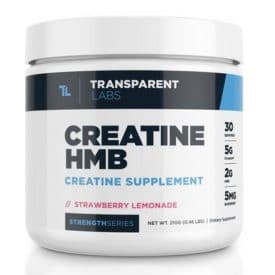
Transparent Labs Creatine HMB is clean and effective for tackling all of your strength building needs. With no artificial additives or preservatives, what you get is pure creatine with added HMB for better strength.
For athletes looking for more than a basic standalone creatine powder, Transparent Labs Creatine HMB combines a full serving of creatine monohydrate with additional ingredients aimed at supporting performance and recovery.
Each serving provides:
- 5,000 mg creatine monohydrate
- 1,500 mg myHMB®
- 500 IU vitamin D3
- 5 mg BioPerine® black pepper fruit extract
Transparent Labs describes HMB, or beta-hydroxy-beta-methylbutyrate, as a metabolite of the essential amino acid leucine associated with muscle health and recovery. The formula combines HMB with creatine monohydrate while also including vitamin D3 and BioPerine®.
The 5 grams of creatine monohydrate per serving is particularly noteworthy because it falls directly within the commonly recommended 3–5 gram daily maintenance range for maintaining elevated muscle creatine stores.
Transparent Labs also provides access to third-party testing information for the product and offers the formula without artificial sweeteners, artificial coloring, or artificial preservatives.
For lifters who want to make creatine part of their everyday supplement routine while adding HMB and vitamin D3, Transparent Labs Creatine HMB offers an all-in-one approach.
Is Transparent Labs Creatine HMB Worth Taking on Rest Days?
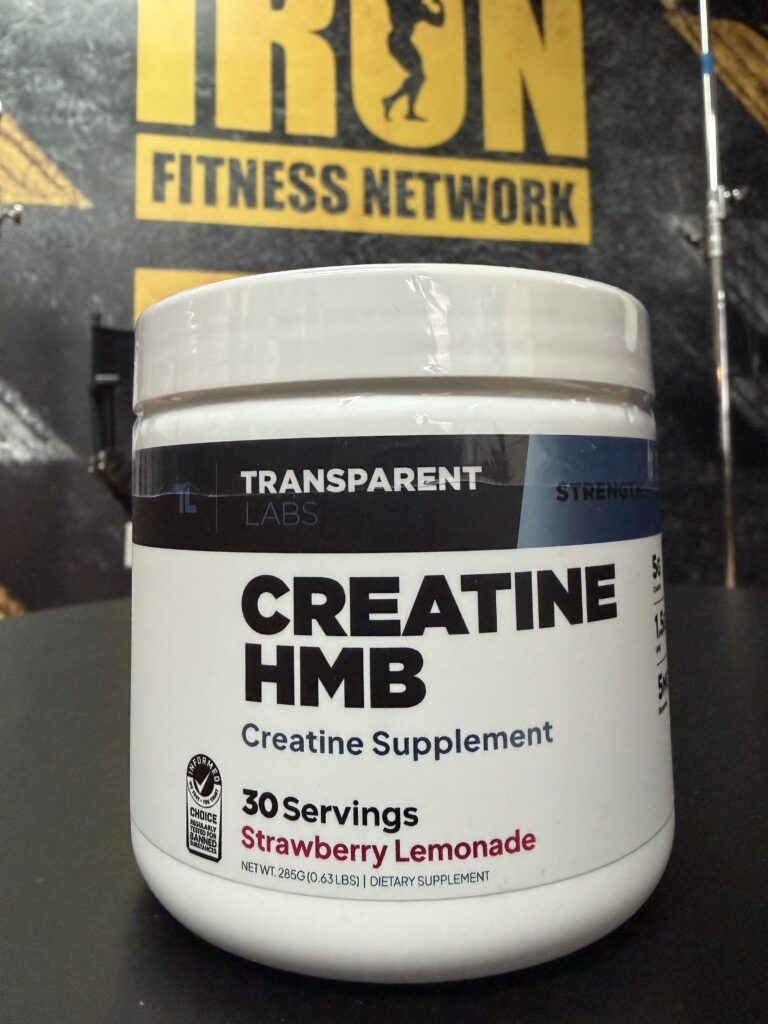
Rest days are actually an easy time to keep this supplement in your routine.
You don’t need to wait until you are about to train to take creatine. Maintaining a consistent daily intake helps keep muscle creatine stores elevated, while the inclusion of HMB makes the formula especially relevant to athletes interested in supporting recovery between demanding workouts.
That makes Transparent Labs Creatine HMB an option that fits both sides of a training program: performance when it is time to train and nutritional support during the recovery process between workouts.
Final Word: Should You Take Creatine on Rest Days?
Yes. Taking creatine on rest days is generally a good idea.
Creatine isn’t simply a pre-workout ingredient. Its primary benefits come from increasing and maintaining creatine stores within your muscles, making consistent daily supplementation the more important consideration.
For most people, that means taking creatine on training days and rest days.
You also don’t need to overcomplicate the timing. Take your normal daily serving at whatever time makes it easiest to remain consistent.
And if you’re looking for a formula that goes beyond standalone creatine monohydrate, Transparent Labs Creatine HMB combines 5 grams of creatine monohydrate with 1.5 grams of HMB, vitamin D3, and BioPerine® in each serving.
The bottom line is simple: your workout may take a day off, but your creatine routine doesn’t have to.
Let us know what you think in the comments below. Also, be sure to follow Generation Iron on Facebook, Twitter, and Instagram.
References
- Kreider, R. B., et al. (2017). International Society of Sports Nutrition position stand: Safety and efficacy of creatine supplementation in exercise, sport, and medicine. Journal of the International Society of Sports Nutrition, 14, 18. The review supports daily creatine supplementation, typical maintenance doses of 3–5 g/day, loading protocols, performance benefits, and long-term safety in healthy individuals. PubMed Central (PMC)
- Buford, T. W., et al. (2007). International Society of Sports Nutrition position stand: Creatine supplementation and exercise. Journal of the International Society of Sports Nutrition, 4, 6. Reviews creatine monohydrate’s effects on muscle creatine stores, high-intensity exercise capacity, and common supplementation protocols. PubMed Central (PMC)
- Kerksick, C. M., et al. (2018). ISSN exercise & sports nutrition review update: Research & recommendations. Journal of the International Society of Sports Nutrition, 15, 38. Includes recommendations on creatine monohydrate supplementation and the use of 3–5 g/day to increase and maintain muscle creatine stores. PubMed Central (PMC)