Benefits, Dosage, and Why It’s Used in Pre-Workouts
If you regularly use pre-workout supplements, chances are you have seen betaine anhydrous listed on the label alongside ingredients like caffeine, citrulline malate, and creatine. While it may not get as much attention as stimulants, betaine anhydrous has become one of the most popular performance ingredients in sports nutrition for a reason.
Known for supporting strength, endurance, hydration, and workout performance, betaine anhydrous is now included in many high-quality pre-workout formulas aimed at serious athletes and bodybuilders.
But what exactly is betaine anhydrous, and why is it such a common ingredient in modern pre-workouts? Our team at Generation Iron is going to break it down.
What Is Betaine Anhydrous?

Betaine anhydrous, also known as trimethylglycine (TMG), is a naturally occurring compound found in foods such as:
- Beets
- Spinach
- Whole grains
- Shellfish
- Quinoa
The term “anhydrous” simply means the ingredient contains no water molecules, making it more stable and concentrated for supplement use.
In the body, betaine plays several important roles related to:
- Cellular hydration
- Muscle performance
- Protein synthesis
- Methylation processes
- Exercise output
Because of its potential performance benefits, betaine anhydrous has become a staple ingredient in many advanced pre-workout supplements.
Why Is Betaine Anhydrous Used in Pre-Workouts?
Pre-workouts are designed to help athletes improve energy, focus, endurance, strength, and workout intensity. While stimulants like caffeine help increase alertness, ingredients like betaine anhydrous are included to support physical performance directly.
Betaine anhydrous is often used in pre-workouts because it may help:
- Increase strength output
- Improve muscular endurance
- Support power production
- Enhance hydration
- Reduce fatigue
- Improve training performance
This makes it especially valuable for:
- Bodybuilders
- Strength athletes
- Powerlifters
- CrossFit competitors
- High-volume trainers
- Athletes performing intense workouts
Unlike ingredients that simply provide a temporary energy spike, betaine works more on muscular performance and cellular function.
How Betaine Anhydrous Works

One of the primary ways betaine anhydrous works is by functioning as an osmolyte.
An osmolyte helps regulate fluid balance within cells, which may improve muscle hydration during exercise. Proper cellular hydration is important because it can influence:
- Muscle function
- Strength performance
- Endurance
- Recovery
- Muscle fullness
Betaine also supports methylation, a biological process involved in:
- Protein synthesis
- Hormone function
- Creatine production
- Recovery mechanisms
Because of these functions, betaine is often paired with other popular performance ingredients like:
- Creatine monohydrate
- Citrulline malate
- Beta-alanine
- Electrolytes
- Caffeine
Together, these ingredients create a more complete pre-workout formula that supports both physical and mental performance.
Benefits of Betaine Anhydrous
Increased Strength
One of the biggest reasons athletes use betaine anhydrous is its potential to support strength performance.
Research suggests betaine supplementation may help improve:
- Power output
- Explosive performance
- Bench press performance
- Squat strength
- Overall training intensity
This is why many strength-focused pre-workouts include betaine as a core ingredient.
Improved Muscular Endurance
Betaine may also help athletes maintain better performance during longer or higher-volume workouts.
Users often report:
- Better stamina
- More reps before fatigue
- Improved workout capacity
- Enhanced recovery between sets
This makes betaine especially useful during:
- Hypertrophy training
- High-volume workouts
- Conditioning sessions
- Functional fitness training
Better Muscle Hydration
Hydration plays a major role in athletic performance and recovery.
Because betaine supports fluid balance inside muscle cells, it may help improve:
- Muscle pumps
- Performance during training
- Recovery
- Muscle fullness
This is one reason why betaine is commonly included in pump-focused pre-workout supplements.
Potential Support for Muscle Growth

While betaine is not a direct muscle-building ingredient like protein or creatine, it may indirectly support hypertrophy by improving workout quality.
Better workouts can lead to:
- Greater training volume
- Increased intensity
- Better progressive overload
- Improved recovery capacity
Over time, these factors can contribute to muscle growth and athletic development.
Common Betaine Anhydrous Dosage
The most commonly studied dosage of betaine anhydrous is:
2.5 grams per day
Many pre-workout supplements include:
- 1.25 grams
- 2 grams
- 2.5 grams
Consistency matters with betaine supplementation. Like creatine, its benefits may become more noticeable with regular daily use over time.
Betaine Anhydrous vs. Beta-Alanine
Because the names sound similar, many people confuse betaine anhydrous with beta-alanine, but they are completely different ingredients.
Betaine Anhydrous
- Supports strength and hydration
- Helps muscular endurance
- No tingling sensation
- Commonly dosed at 2.5g
Beta-Alanine
- Helps buffer muscle acidity
- Supports endurance performance
- Causes tingling sensation
- Commonly dosed at 3.2g
Many advanced pre-workouts include both ingredients together to support overall performance.
Choosing a Pre-Workout With Betaine Anhydrous
Not all pre-workouts use effective doses of betaine anhydrous, which is why ingredient transparency matters when selecting a supplement.
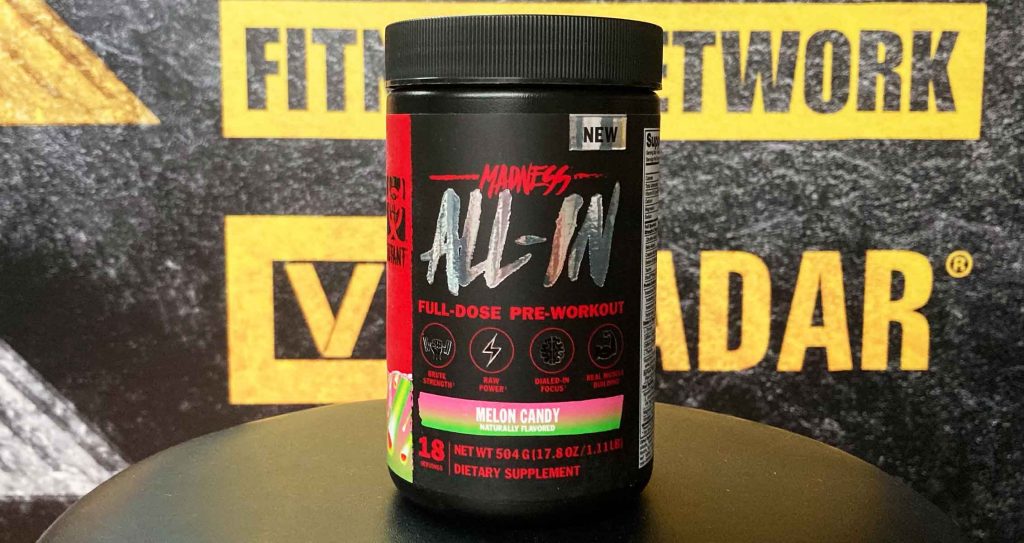
MUTANT MADNESS ALL-IN is one of the most powerful pre-workouts ever. MUTANT is the supplier of this trailblazing pre-workout. MUTANT only creates supplements that are clinically proven to get results.
One strong option is MUTANT MADNESS ALL-IN Pre-Workout, which combines betaine anhydrous with other proven performance ingredients like:
- Citrulline malate
- Creatine
- High-stimulant energy compounds
This combination helps support:
- Strength
- Pumps
- Endurance
- Focus
- Workout intensity
For experienced lifters looking for a more complete high-performance pre-workout, formulas that combine betaine with creatine and nitric oxide ingredients can often provide better overall training support than caffeine-heavy products alone.
Is Betaine Anhydrous Worth It?
For many athletes and serious gym-goers, betaine anhydrous is absolutely worth considering.
Unlike trendy ingredients that rely mostly on marketing hype, betaine has real research supporting its role in:
- Athletic performance
- Strength output
- Hydration
- Endurance
- Workout quality
It may be especially useful for:
- Strength athletes
- Bodybuilders
- Athletes training multiple times per week
- High-volume lifters
- Individuals looking to maximize training intensity
Final Thoughts
Betaine anhydrous has earned its place as one of the most common ingredients in modern pre-workout supplements. Its potential benefits for strength, endurance, hydration, and overall exercise performance make it valuable for both bodybuilders and athletes alike.
Whether you are looking to improve workout performance, support muscular endurance, or maximize training intensity, betaine anhydrous can be an effective addition to a well-designed supplement routine.
When paired with other proven ingredients in a fully loaded formula like MUTANT MADNESS ALL-IN, betaine becomes part of a complete performance stack designed to help athletes push harder during demanding workouts.
Let us know what you think in the comments below. Also, be sure to follow Generation Iron on Facebook, Twitter, and Instagram.
References
- Perreras MSL, Kim J. Effects of betaine supplementation on endurance exercise performance: a systematic review. Physical Activity and Nutrition. 2025.
- Zawieja E, Machek S, Zanchi NE, Cholewa J, et al. Effects of chronic betaine supplementation on exercise performance: Systematic review and meta-analysis. Journal of Sports Sciences. 2024.
- Cholewa JM, Guimarães-Ferreira L, Zanchi NE. Effects of betaine on performance and body composition: a review of recent findings and potential mechanisms. Amino Acids. 2014.