Jeff Nippard compares popular foods and snacks to show how dramatically portion sizes can differ, and peanut butter might shock you
When it comes to losing weight, not all 100-calorie portions look the same. Fitness expert Jeff Nippard is demonstrating just how dramatic those differences can be, comparing everything from strawberries and Gushers to peanut butter and peanuts.
In a recent YouTube Short, Nippard lined up several popular foods to show what 100 calories actually looks like. The results highlight why some foods can leave people feeling full while others make it surprisingly easy to consume hundreds of calories without realizing it.
Perhaps the biggest eye-opener? The tiny serving of peanut butter that contains 100 calories.

Jeff Nippard Compares 100 Calories of Healthy Foods and Junk Food Snacks
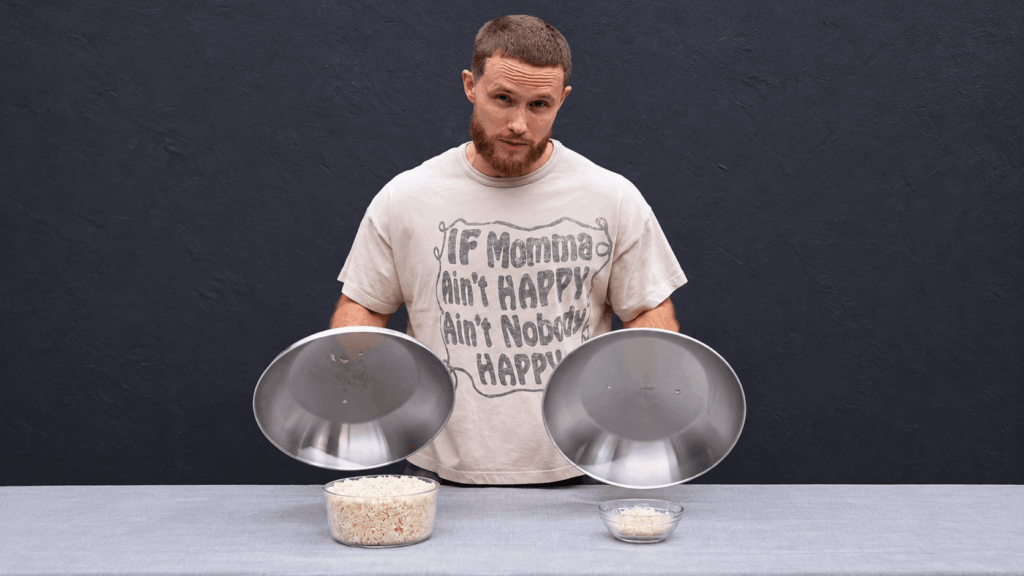
Nippard began with a comparison between traditional white rice and cauliflower rice, two popular options for bodybuilders looking to manage their carbohydrate intake.
“This is what 100 calories of white rice looks like, and this is what 100 calories of cauliflower rice looks like,” Nippard explained.
The difference was enormous.
According to Nippard, cauliflower rice provides nearly eight times the volume for the same 100 calories. That makes it an attractive option for people cutting calories while trying to keep their plates full.
However, Nippard acknowledged one downside.
“But it does taste worse, to be fair.”
Next came a comparison between strawberry Gushers and actual strawberries.
While 100 calories of Gushers amounted to a relatively small portion of the sugary snack, the equivalent amount of fresh strawberries offered considerably more food.
“Strawberries are obviously way more nutritious, but still have Gushers sometimes.”
His message was clear: Eating healthy doesn’t mean eliminating every food you enjoy.
The Surprising Truth About Peanut Butter and Peanuts
One of the most striking comparisons involved peanut butter, a staple in many bodybuilding diets.
Nippard showed how little peanut butter it takes to reach 100 calories before comparing it with an equivalent serving of whole peanuts.
Neither portion was particularly large.
“Both are good sources of fat, but very easy to overeat.”
Peanut butter is particularly deceptive because a generous scoop can quickly add hundreds of calories to a meal or protein shake. While it provides healthy unsaturated fats and some protein, its calorie density makes portion control important, especially during a cutting phase.
Whole peanuts require more chewing, but they are also calorie-dense. Neither food is inherently unhealthy, although both can make it difficult to maintain a calorie deficit when portions aren’t measured.
Ground Beef and Granola Offer More Calorie Surprises
Nippard also compared regular ground beef with extra-lean ground beef.
Because regular ground beef contains more fat, 100 calories generally provides a smaller portion than the same calorie amount of extra-lean beef.
“When I’m cutting, I usually go for extra lean cuts of meat,” Nippard explained.
Choosing leaner meat can help bodybuilders consume more protein while keeping overall calories under control.
Finally, Nippard highlighted another food that often carries a healthy reputation: granola.
“This is what 100 calories of granola looks like. Sneakily high in calories,” he said.
He compared it with 100 calories of low-fat popcorn, which provided a substantially larger portion.
Granola can contain nutritious ingredients such as oats, nuts, and seeds, but added oils, sugars, and calorie-dense ingredients can make even a small serving surprisingly high in calories.
Low-fat popcorn, meanwhile, offers significantly more volume thanks to its air-filled structure and fiber content.
What Jeff Nippard’s 100-Calorie Comparison Teaches About Weight Loss
The biggest takeaway from Nippard’s demonstration isn’t that people should stop eating peanut butter, granola, or their favorite snacks.
Instead, it illustrates the importance of understanding calorie density when building a diet.
Foods with high water content, such as strawberries and cauliflower rice, generally provide larger portions for fewer calories. Higher-fat foods, including nuts and peanut butter, pack more energy into smaller servings.
For bodybuilders trying to get shredded or anyone looking to lose weight, choosing higher-volume foods can help manage hunger without dramatically reducing the amount of food on their plates.
However, portion size is only one consideration. Protein, fiber, vitamins, minerals, and overall nutritional quality also matter.
And as Nippard made clear with his Gushers comparison, there is still room for the occasional cheat.
Image embed via YouTube @jeffnippard