Why This Multivitamin Guide will provide a pump of full essentials vitamins and minerals to keep you happy and healthy overall.
Multivitamin supplements can help fill common nutrient gaps—especially when your diet, lifestyle, training volume, or life stage makes it harder to consistently get everything you need from food alone. While multivitamins aren’t a replacement for a balanced diet, a high-quality formula can support everyday wellness goals like energy, immune function, and overall nutrient coverage.
In this guide, we’ll break down multivitamin benefits, the most important vitamins and minerals, how multivitamins compare to whole foods, when to take a multivitamin, and what to look for before buying.
What is a Multivitamin
A multivitamin is a dietary supplement that typically contains a blend of essential vitamins and minerals—often including vitamins A, C, D, and B vitamins, plus minerals like zinc, magnesium, and selenium. Brands vary widely in dosage, ingredient forms, and whether formulas are geared toward men, women, or specific goals like active lifestyles.
Multivitamins come in several forms:
- Capsules or tablets
- Gummies
- Powders
- Liquids
The best format is the one you’ll take consistently and that fits your digestion and preferences.
Benefits Of Multivitamins
With so many vitamins and minerals packed into a good multivitamin, the benefits can vary greatly to include all areas of health and wellness that we need to cover. The benefits of a quality multivitamin include:
- Muscle maintenance: Help stop free radicals from damaging muscles to keep muscle integrity intact.
- Increase energy levels: Work to reduce fatigue and provide for much needed energy to get you through the day without added caffeine or other stimulants (1).
- Promote better mood: With proper vitamins and minerals, you can stimulate brain functions that increase mood making your happier and healthier mentally.
- Reduce anxiety and mental challenges: Some of these essential nutrients are perfect for reducing levels of stress and anxiety which can lead to better functioning of the nervous system (2).
- Aid in a healthy diet: We often times miss vital nutrients from whole foods and a multivitamin can work to balance out what we missed to give our body what we need.

Important Vitamins & Minerals To Know
Vitamin A: An important vitamin for a host of functions like immune health, cell growth, and heart, kidney, and lung health. It is also crucial for vision. It can be found in spinach, carrots, and butternut squash (3).
Vitamin C: Known widely for its role in immune boosting, it also works to aid in connective tissue health and is important for the absorption of iron. Vitamin C can be found in oranges, lemons, and kale.
Vitamin D: Plays a big role in the absorption of calcium which aids in bone health. It is also essential for cell growth modulation, immune function, muscle function, and can work as an appetite suppressant. Foods with vitamin D include salmon, mushrooms, and egg yolk (4).
Vitamin B12: This vitamin includes many benefits like supporting healthy hair, skin, and nails, while also working to improve mood and reduce neurodegenerative disease. It has great energy boosting properties as well. Vitamin B12 can be found in clams, beef, and broccoli.
Riboflavin: Works to maintain energy levels, protect healthy skin and hair, promote organ growth and development, and increase blood flow (5). It can be found in eggs, tofu, and low-fat milk.
Thiamin: Important for converting food into energy to support cellular function and growth and keep you running at a high level throughout the day. Foods include sesame, flax, and sunflower seeds.
Zinc: Zinc is a powerful mineral which can boost your immune system, balance hormones, work to assist cognitive functioning, and act as a powerful antioxidant (6). Zinc can be found in dark chocolate, oysters, and meat and poultry.
Folic Acid: Helps your body produce and maintain new cells while aiding in digestion, and cardiovascular health. It can be found in legumes, eggs, and many leafy greens.

Multivitamins Vs. Whole Foods: Which Is Better?
While multivitamins are a great source of these essential vitamins and minerals, it is important to understand that we should all be getting as much of these nutrients as we can from whole foods. Multivitamin supplements should not replace meals or act as a substitute.
If you’re choosing between the two:
- Use whole foods for your daily nutrition base
- Use a multivitamin to support consistency and help cover gaps
- If you suspect a deficiency, consider bloodwork and targeted supplementation

Where To Buy Multivitamins
Multivitamins are available everywhere and that can lead to an overwhelming hunt. With so many on the market it can be challenging to make the decision on which one will benefit you the most. Health food stores will have great variety, but that means looking at a lot of labels, potentially creating more stress on yourself. Looking at reviews online can help and many brands offer great deals so you don’t break the bank in order to stay healthy.
Check out our list of the Best Multivitamins for amazing health and wellness products!
Safety & Effectiveness Of Multivitamins
On the whole, multivitamin supplements are safe to take and can work wonders for your health and wellness. Always read the label so you know exactly what is in the product and how to properly use it, as well as contacting a doctor if you have further questions. As a safe and efficient way to pump you with essential vitamins and minerals, multivitamins are highly effective supplements.

Best Time To Take
It is best to take a multivitamin with food and if you are someone who takes their pills and supplements in the morning, this will slide nicely into that routine. Reading the label will also give you directions on how best to take the respective product.
What To Consider Before Buying
Ingredients
Knowing what ingredients are in your multivitamin supplement is super important and making sure plenty of those vitamins and minerals are included is a huge factor. The right supplement will have all of those important ingredients, so you never suffer a deficiency.
Reputation Of Brand
The company producing your supplement should be reputable and working on your behalf. Don’t put quantity over quality especially with something as important as your health.
Number Of Servings & Price
Supplements can get expensive and having the right supplement at the right price can make all the difference for you. Knowing how much you are getting and how much you are getting per serving can be helpful on your decision and your wallet.
The Best Multivitamin
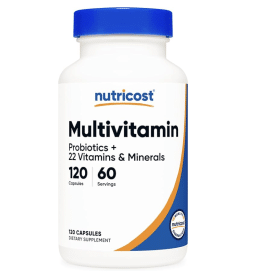
Packed with plenty of vitamins and minerals, as well as probiotics to help make sure you are as healthy as can be.
Nutricost Multivitamin is filled with highly absorbable vitamins and minerals, meaning you can take them in and put them to the best use, and it is a supplement that does not break the bank! These micronutrients almost guarantee that your body recognizes these vitamins and minerals as actual ‘nutrients from food’ instead of as synthetic supplements, making them easier to put to use, and much better for you overall.
Wrap Up
Multivitamins are amazing supplements to promote a better lifestyle overall when it comes to our health and wellness. With many benefits like muscle maintenance, immune health, digestive health, cell growth, and many more, a multivitamin should absolutely be in your daily routine. While finding the right one can be difficult, there are great choices out there that will find their way to you with the right guidance and research. Check out the top multivitamins today and really work to better yourself both inside and out of the gym.
Let us know what you think in the comments below. Also, be sure to follow Generation Iron on Facebook, Twitter, and Instagram.
*Images courtesy of Envato
References
- Sissons, Beth (2019). “The best vitamins and supplements for energy”. (source)
- Lakhan, Shaheen E.; Vieira, Karen F. (2010). “Nutritional and herbal supplements for anxiety and anxiety disorders: a systematic review”. (source)
- Harvard T. H. Chan School of Public Health. “Vitamin A”. (source)
- Pfotenhauer, Kim M.; Shubrook, Jay H. (2017). “Vitamin D Deficiency, Its Role in Health and Disease, and Current Supplementation Recommendations”. (source)
- Powers, Hilary J. (2003). “Riboflavin (vitamin B-2) and health”. (source)
- Wintergerst, Eva S.; Maggini, Silvia; Hornig, Dietrich H. (2006). “Immune-enhancing role of vitamin C and zinc and effect on clinical conditions”. (source)