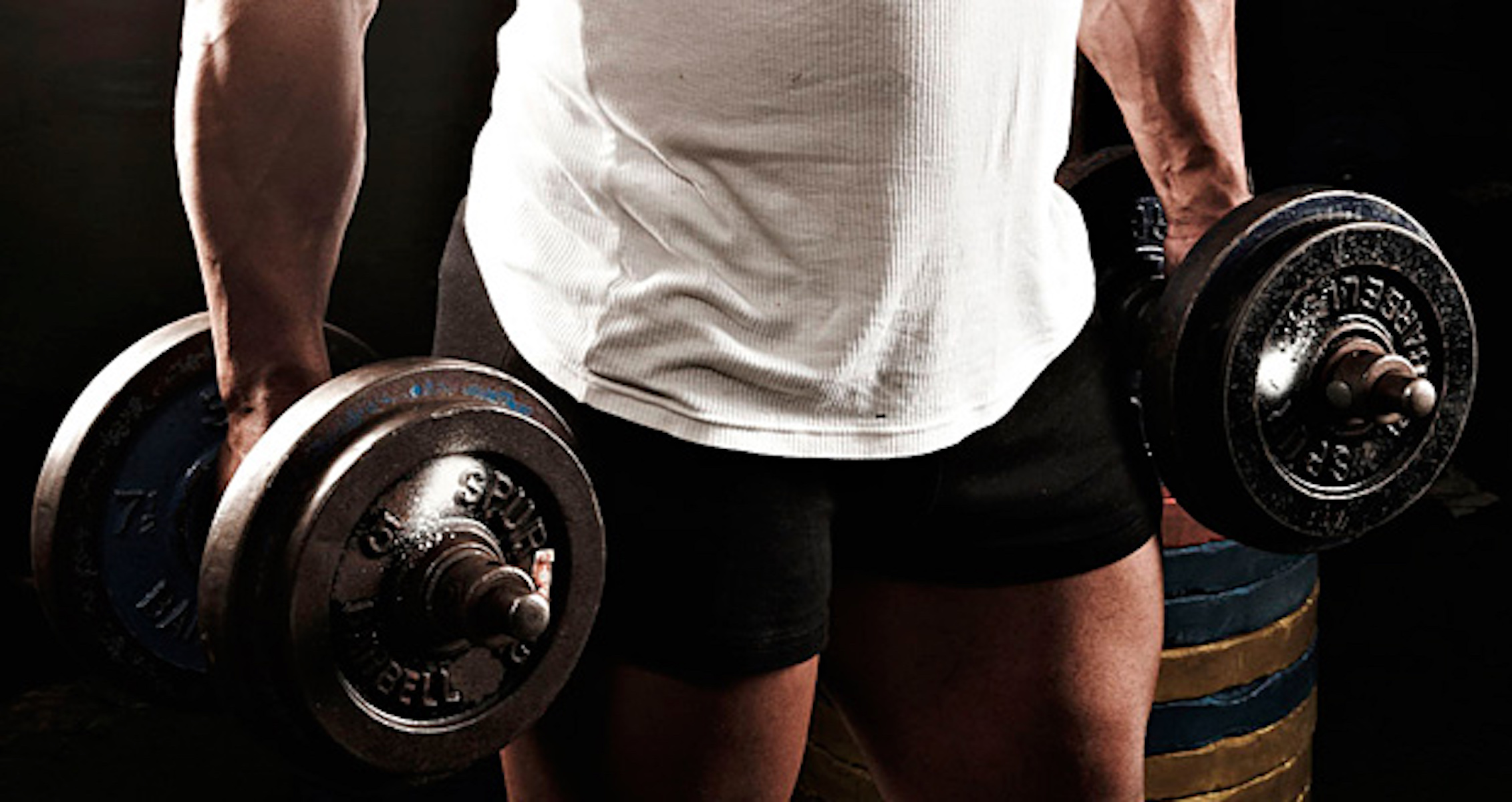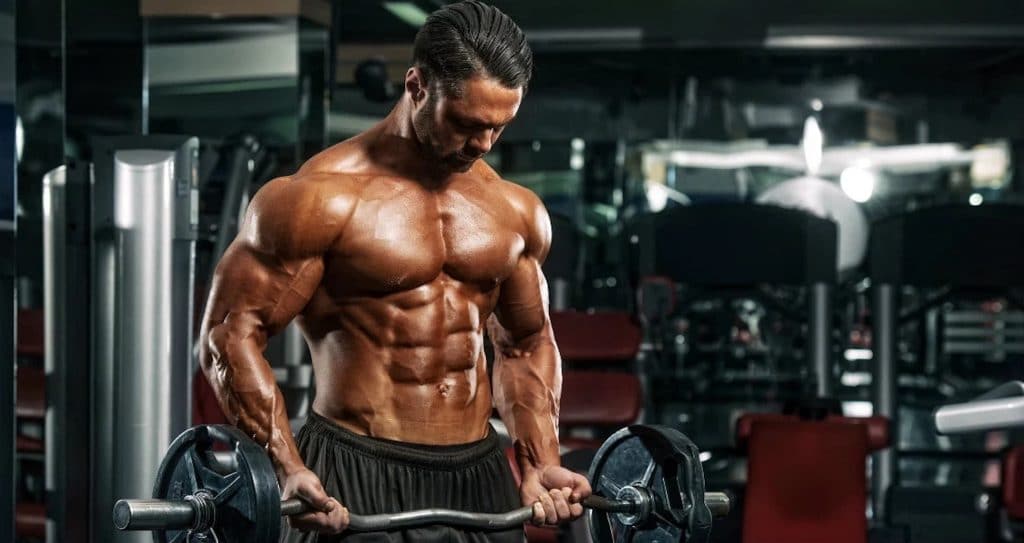
Engaging more muscle groups during a curl builds explosive power.
The biceps curl is a classic isolation exercise specifically targeting the biceps brachii — the muscle running along the top of your arm. While it’s great for building impressive, sleeve-filling arms, it also complements pulling exercises like deadlifts and bent-over rows by improving your ability to lift heavier weights and reducing the risk of injury (1).
But what if you’re ready to take your biceps training to the next level by incorporating more muscle groups and adding explosive power to your routine? Enter the power curl — a dynamic variation that combines momentum-driven movement with arm-strengthening benefits while also engaging additional muscle groups.
In this article, we’ll delve into the power curl, exploring its unique benefits, the muscles it targets, and the proper technique to execute it safely and effectively. Plus, if you’re looking to diversify your workout and further enhance your training, we’ll highlight alternative exercises to take your gains even further. Let’s dive in!
Overview — Power Curl
The power curl, surprisingly, isn’t an isolated movement. It is a compound movement that takes your training to the next level, making it more advanced than the regular biceps curl. Depending on your weight preference, you can use a barbell, dumbbell, kettlebell, or resistance band for this exercise.
Do not confuse the power curl with a cheat curl. While the cheat curl focuses on building the biceps with momentum, the power curl recruits more muscle groups (which we will explore in more detail later) with explosiveness to help grow your arms. This helps improve your athletic performance and functional movement (2).
Performing the power curl adds an extra dimension to your workouts. This is because you’re working your target muscles in a different way. So, it’s not just about building your arms, but other muscle groups, giving you an almost total body experience.
Power Curl — Muscles Worked
Here is a list of muscles that benefit from the power curl.
- Biceps Brachii
- Shoulders
- Forearms
- Wrist Flexors
- Erector Spinae
- Abs
- Obliques
- Traps
- Lats
- Lower Back
- Glutes
- Hamstrings
What seems like a curling exercise for the arms ends up being a total body workout with tremendous gains. It works both the upper body and lower body muscles. Additionally, this routine is more straightforward to learn compared to Olympic lifts, which also build full-body strength and increase an athlete’s explosive power. So, if you’re looking to improve your Olympic lifts, the power curl is a good accessory exercise to include in your exercise arsenal.
Power curls can also improve your strength and explosiveness for strongman routines, such as tyre flips or log presses. However, if you’re having trouble with doing the power curl, you can use the Romanian deadlift as an accessory exercise.
How to Do the Power Curl
In this comprehensive step-by-step guide, we take you through how to perform the power curl using a barbell.
- Load the appropriate weights onto the barbell.
- Stand just in front of the bar with your feet hip-width apart.
- Hinge your hips with a slight bend in your knees and use an underhand grip (make sure your torso is almost parallel to the floor).
- Next, slowly pull the bar from the floor. As it passes your knees, push your hips forward and use its momentum to fling (curl) the bar to your chest.
- Pause at this position and fully contract your biceps for about two to three seconds.
- Finally, slowly lower the bar by hinging your hips and taking the bar just below knee height to complete a rep.
Benefits
The power curl is an effective exercise that offers the following benefits.
Works Your Arms & Shoulders
Primarily, the target muscles for the power curl are both your arms and shoulders. Curling the weight works the biceps muscles, building sleeve-ripping and powerful arms. The shoulders also work as stabilizers during this movement.
Targets the Posterior Chain
The back and posterior chain muscles are crucial for maintaining proper posture and performing various functional movements. They help support the lifting of heavy loads, especially when performing explosive movements for enhanced performance. Building your posterior chain also prevents unnecessary injuries and improves your overall quality of life.
Activates Your Core
Your core muscles play a crucial role in maintaining exercise form, posture, and stability. When performing the power curl, you activate your core muscles, which helps keep a stable base for your movements.
Improves Explosive Power
Every athlete, at some point, needs to develop their explosive power to improve in their chosen sport or activity. It’s not all about building muscle and strength. This exercise increases the explosiveness in both your lower and upper body muscles.
Effective Accessory Exercise
If you’re having challenges with Olympic lifts or strongman routines, this workout improves your functional movements and explosiveness. It is relatively more straightforward to do and serves as an accessory exercise to these more advanced routines.
Power Curl Alternatives
Though the power curl is a prime exercise for building explosiveness, it’s beneficial to vary your routines to prevent a training plateau or monotony that can occur from doing the same routine repeatedly (3). Here are some alternatives you can try:
Box Jumps
Box jumps are effective exercises for improving explosive power and building strength. They require the use of an elevated surface, like a box, and jumping from it to the floor. The box jump is a straightforward exercise that offers exceptional benefits.
Hack Squats
Hack squats are weight training exercises that build your lower body, core muscles, back, and, to a certain degree, your upper body. You can do this routine on a hack squat machine. However, your leg placement is essential during the hack squat. So, depending on your training goals, you can use different leg placements to work specific muscles compared to the other.
Banded Deadlifts
Banded deadlifts use a resistance band to work both your upper body and lower body muscles. They are particularly effective at building muscle mass in your back and the rest of your posterior chain. You can also use deadlifts to build your explosive power and strength.
FAQs
What is a power curl?
The power curl is an advanced curl variation that not only works your arms, but also other muscle groups. It helps build explosive power in both the upper and lower body. You can use a barbell, dumbbell, resistance band, or kettlebell to perform this exercise.
What does the power curl do?
A power curl is an explosive building exercise that builds your strength and explosive power. It works both your upper and lower body muscles and also builds your functional movements.
What muscles does the power curl work?
The power curl works many lower and upper body muscles. These muscles are the hamstrings, shoulders, biceps, core, lower back, lats, traps, erector spinae, glutes, and wrist flexors. For more details on how this routine works these muscles, check out the exercise guide above.
Follow Generation Iron on Instagram, Facebook, and Twitter for more exercise guides!
References
- Coratella, G., Tornatore, G., Longo, S., Toninelli, N., Padovan, R., Esposito, F., & Cè, E. (2023). Biceps Brachii and Brachioradialis Excitation in Biceps Curl Exercise: Different Handgrips, Different Synergy. Sports (Basel, Switzerland), 11(3), 64. https://doi.org/10.3390/sports11030064
- Explosive Exercises in Sports Training: A Critical review. (n.d.). https://www.researchgate.net/publication/38145370_Explosive_exercises_in_sports_training_A_critical_review#citations
- Kassiano, W., Nunes, J. P., Costa, B., Ribeiro, A. S., Schoenfeld, B. J., & Cyrino, E. S. (2022). Does Varying Resistance Exercises Promote Superior Muscle Hypertrophy and Strength Gains? A Systematic Review. Journal of strength and conditioning research, 36(6), 1753–1762. https://doi.org/10.1519/JSC.0000000000004258