Training Split, Exercises and Fitness Journey
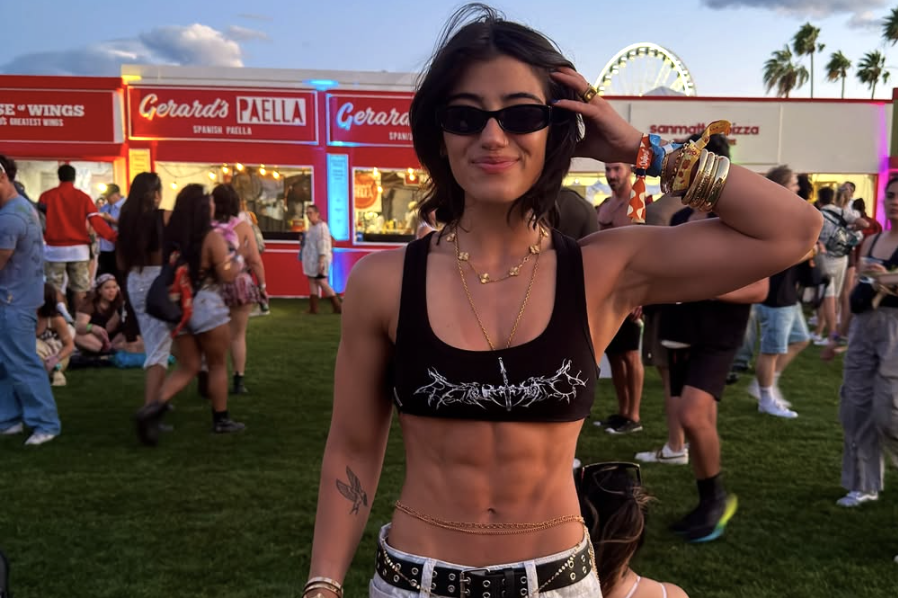
Sara Saffari has become one of the most recognizable names in the modern fitness influencer space. Known for her intense gym sessions, entertaining personality and social media presence, Sara Saffari has built a large audience by documenting her training and sharing her approach to building a strong, athletic physique.
But what does Sara Saffari’s workout routine actually look like? Her training has been described as a high-frequency bodybuilding-style split that puts considerable emphasis on the lower body while still giving the upper body plenty of attention.
Our team at Generation Iron is going to take a closer look at who Sara Saffari is, how she trains and what lifters can learn from her approach.
Who Is Sara Saffari?
Sara Saffari is an American fitness influencer, trainer, YouTuber and social media personality who was born in Kentucky in 2001. She began gaining attention online by posting fitness content, gym videos and comedic content, eventually building a substantial following across platforms such as YouTube, Instagram and TikTok.
Saffari’s fitness journey began more seriously in 2021, when she started training in the gym and documenting her progress. Before becoming a full-time fitness personality, she was also active in sports, including basketball and track.
Her content combines traditional workout videos with humor, lifestyle content and collaborations with other personalities in the fitness industry. She has also appeared alongside prominent fitness creators, helping introduce her training style to an even larger audience.
One of the most notable aspects of Saffari’s rise is how quickly she transitioned from documenting her own fitness journey to becoming a major fitness creator.
What Is Sara Saffari’s Workout Routine?
Saffari has been associated with a high-frequency bodybuilding-style training schedule. Rather than training each muscle only once per week, her routine gives her lower body and upper body muscle groups repeated attention throughout the week.
One publicly reported version of her training schedule looks like this:
- Monday: Quads and calves
- Tuesday: Push — chest, shoulders and triceps
- Wednesday: Glutes and hamstrings
- Thursday: Pull — back and biceps
- Friday: Additional leg training
- Saturday: Arms
- Sunday: Chest and back
This schedule has been described in multiple profiles of Saffari, although her exact routine can change depending on her training goals and schedule.
The biggest takeaway is the amount of training volume devoted to the lower body. Saffari’s routine frequently gives the quads, glutes and hamstrings multiple opportunities to be trained throughout the week.
Sara Saffari Leg Workout
Leg training is one of the biggest components of Saffari’s overall approach.
Her reported lower-body training incorporates movements designed to target different areas of the legs and glutes. Depending on the session, exercises associated with her routine include squats, leg presses, leg extensions, Romanian deadlifts, hip thrusts and hamstring curls.
Quads
A quad-focused session can include movements such as:
- Squats
- Leg press
- Leg extensions
- Other machine-based quad exercises
The combination of compound and isolation movements allows the lifter to train the quads through multiple movement patterns.
Squats and leg presses provide the heavy compound work, while leg extensions can be used to add additional quad volume without requiring the same level of full-body effort.
Glutes and Hamstrings
Saffari’s glute and hamstring training can include:
- Romanian deadlifts
- Hip thrusts
- Hamstring curls
- Other posterior-chain movements
Romanian deadlifts are particularly useful for training the hamstrings through hip extension, while hip thrusts place significant emphasis on the glutes.
Combining these exercises creates a lower-body session that doesn’t rely exclusively on one movement or muscle group.
Sara Saffari Push Workout
Saffari’s push training focuses on the three major pushing muscle groups:
- Chest
- Shoulders
- Triceps
A push workout can be built around compound pressing movements followed by isolation work.
For example, a lifter following the same general philosophy could begin with a chest press, move into an overhead pressing movement, and finish with exercises such as lateral raises and triceps extensions.
The advantage of this structure is that pressing movements allow the athlete to train several muscles simultaneously, while isolation exercises provide additional volume for individual muscle groups.
Sara Saffari Pull Workout
Pull workouts focus primarily on the back and biceps.
A workout inspired by Saffari’s reported training structure could include:
- Lat pulldowns
- Rows
- Pull-ups or assisted pull-ups
- Rear-delt work
- Biceps curls
The combination of vertical and horizontal pulling is important for developing a well-rounded back.
Vertical pulling movements such as pulldowns emphasize the lats, while rows provide more overall upper-back involvement. Biceps exercises then allow the arms to receive additional direct training.
Sara Saffari Arm Workout
Saffari’s reported weekly split also includes a dedicated arm day. That means the biceps and triceps can receive direct attention in addition to the indirect work they get during pull and push sessions.
An arm-focused workout might include movements such as:
Biceps
- Dumbbell curls
- Preacher curls
- Cable curls
- Hammer curls
Triceps
- Cable pushdowns
- Overhead extensions
- Skull crushers
- Machine-based extensions
The exact exercise selection is less important than the overall training principle: consistently exposing the muscles to challenging resistance while gradually progressing over time.
Does Sara Saffari Train Abs?
Core training is also part of Saffari’s fitness content. Exercises associated with her ab training include hanging leg raises, ab-wheel rollouts and weighted Russian twists.
These exercises train the core in different ways.
Hanging leg raises emphasize trunk flexion and hip flexion, while ab-wheel rollouts challenge the core’s ability to resist extension. Weighted Russian twists add a rotational component.
Rather than relying on hundreds of repetitions, a productive ab routine can use a combination of movements that challenge the core through different functions.
How Often Does Sara Saffari Work Out?
Saffari’s reported training schedule is extremely frequent, with some versions of her routine involving six or even seven training days per week.
That doesn’t necessarily mean someone needs to copy her schedule to build muscle mass.
Training frequency should be based on experience, recovery, exercise selection and total training volume. A beginner attempting to train seven days per week could quickly accumulate more fatigue than they can effectively recover from.
For an experienced lifter, however, dividing training volume across multiple days can make it easier to focus on individual muscle groups while keeping individual workouts manageable.
What Makes Sara Saffari’s Training Effective?
The most useful lesson from Saffari’s training isn’t necessarily the exact number of days she spends in the gym.
It’s the consistency behind the training.
Building a physique requires repeatedly challenging the muscles over a long period of time. A workout split only works when the person following it consistently performs the exercises, recovers properly and progresses over time.
Saffari’s approach also demonstrates the value of prioritizing specific muscle groups. Her frequent lower-body training makes sense for someone whose goal is to emphasize leg and glute development.
Progressive Overload
Progressive overload is one of the most important principles behind resistance training.
That doesn’t necessarily mean adding weight to every exercise every workout. Progress can come from:
- Adding repetitions
- Increasing resistance
- Improving technique
- Increasing range of motion
- Performing more quality sets
- Improving control and tempo
Over months and years, these small improvements can add up to significant changes in strength and muscle development.
High Training Frequency
Saffari’s reported routine also demonstrates one way to distribute training volume throughout the week.
Instead of trying to complete an enormous leg workout once every seven days, a lifter can spread lower-body work across multiple sessions.
This can make individual workouts more focused and allow an athlete to attack certain muscle groups while they are relatively fresh.
Can You Follow Sara Saffari’s Workout Routine?
You can use Saffari’s training split as inspiration, but copying a fitness influencer’s exact routine isn’t automatically the best choice for everyone.
A beginner may benefit from training three or four days per week rather than attempting an extremely high-frequency program.
An intermediate or advanced lifter may be able to handle significantly more volume and frequency.
Your training schedule should ultimately account for your experience level, recovery ability, goals and available time. Someone trying to build a physique similar to Saffari’s should focus less on copying every individual exercise and more on understanding the principles behind the routine.
Train consistently. Prioritize progressive overload. Give major muscle groups enough weekly volume. Recover adequately. And maintain a nutrition plan that supports your goal.
Sara Saffari Workout Routine: Final Thoughts
Sara Saffari’s rise from a relatively new gym-goer to a major fitness influencer illustrates how quickly the fitness industry has changed through social media.
Her training style is characterized by high frequency, significant lower-body emphasis and a bodybuilding-oriented approach to resistance training. Her reported weekly split includes dedicated quad, glute, hamstring, push, pull and arm sessions, along with additional upper-body work.
While most people don’t need to train exactly like Saffari, her routine offers several useful lessons for anyone interested in building muscle.
Consistency matters. Training volume matters. Exercise selection matters. And, perhaps most importantly, results come from following a structured approach long enough to actually make progress.
For anyone inspired by Sara Saffari’s physique or training style, the best starting point isn’t necessarily copying her seven-day schedule. It’s creating a sustainable program that you can progressively improve over time.
Let us know what you think in the comments below. Also, be sure to follow Generation Iron on Facebook, Twitter, and Instagram.
Header image courtesy of Sara Saffari Instagram