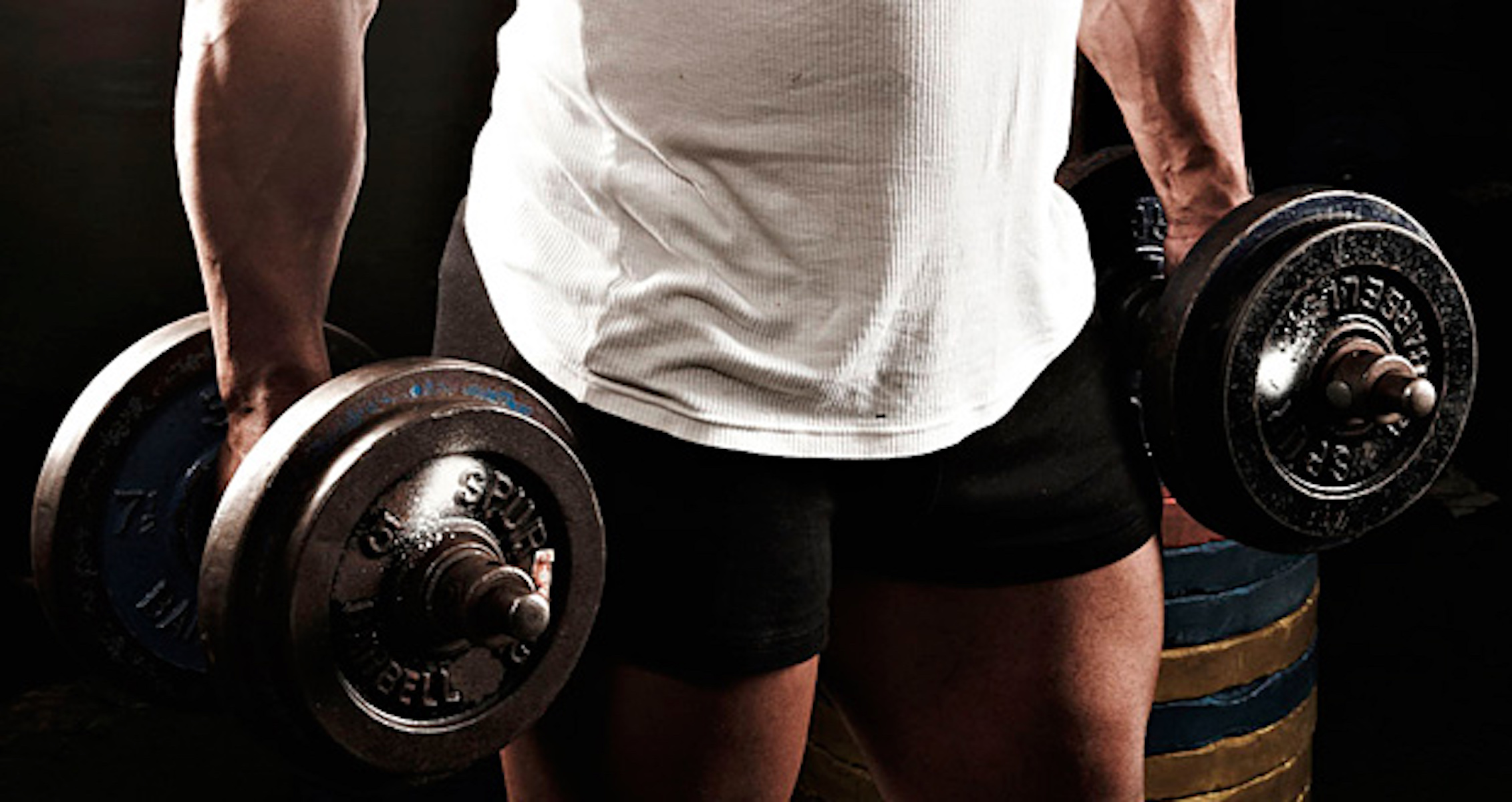
Try this row variation named after prominent powerlifter Matthew Kroczaleski.
Training your back is essential for maintaining proper posture and safely lifting heavy objects without risking injury. Strong back muscles also play a key role in preventing disability, as back pain affects 60-80% of adults at some point in their lives (1). Among the best exercises for targeting the lats and rhomboids is rowing, a highly effective movement for building back strength.
One potent variation is the Kroc row, named after powerlifter Matthew Kroczaleski. Its relative obscurity adds an element of novelty, which can make your training both more engaging and effective. In this guide, we’ll dive into everything you need to know about Kroc rows — what muscles they target, their benefits, and how to incorporate them into your weekly workouts seamlessly.
Overview — What Are Kroc Rows?
Kroc rows are a dumbbell row variation that works your upper body muscles. Due to its volume, this routine is effective for exceptional strength and muscle gains. Mathew Kroczaleski, the athlete this exercise is named after, used it during training sessions. However, it was Jim Wendler, a powerlifter, who, after witnessing the exercise, called them Kroc rows.
Kroc rows are demanding and offer a unique way to engage the muscles in your back. Additionally, by doing this exercise unilaterally, you can focus better on addressing imbalances and increasing your range of motion. Using one arm at a time also fosters a better mind-muscle connection, a beneficial factor for growth (2).
Kroc Rows — Muscles Worked
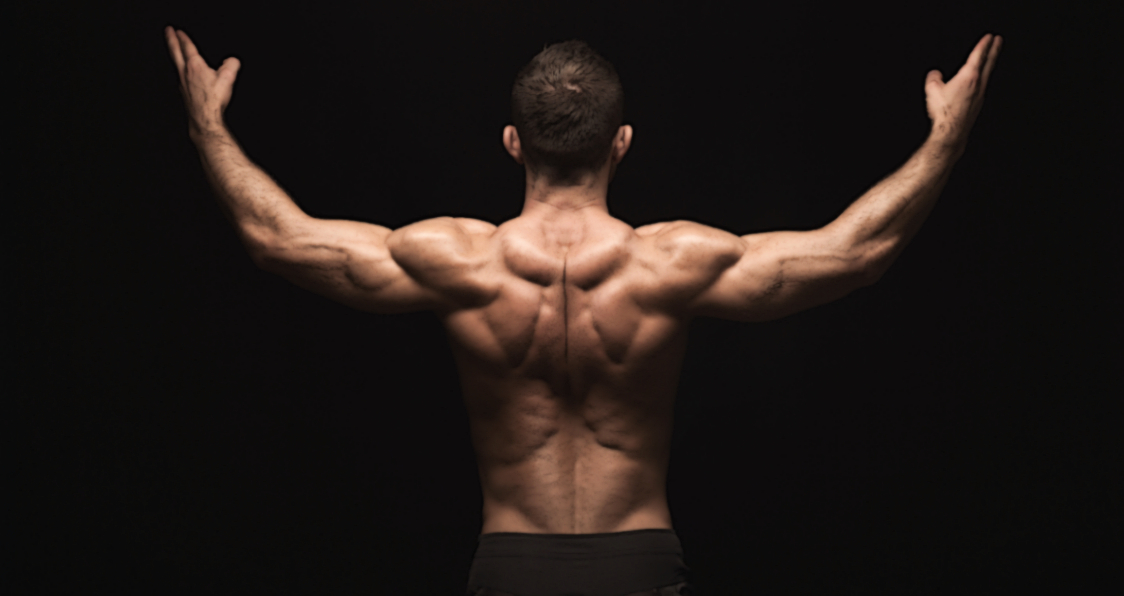
Kroc rows target your lats, posterior delt, erector spinae, traps, rhomboids, forearms, and biceps. Core muscles, such as the abs, also contribute to stability and proper exercise form.
Traps & Rhomboids
These muscles are in the upper back and move the shoulder blade, lessening and increasing the weight’s pull during Kroc rows.
Lats
These are the largest muscles in the back. The lats play a role in extending and adducting the shoulder joints, which aids in pulling the weight to your hip.
Erector Spinae
The erector spinae runs down your entire back and helps keep it neutral while supporting the spine, especially during heavy pulls and controlled movements like Kroc rows.
Posterior Delts
The posterior delts are one of the three heads of the shoulder found in your back. They help with shoulder adduction and extension of the lat muscles. These are two movements carried out during Kroc rows.
Biceps & Forearms
The biceps are located in the upper arm and help with flexing your elbows and pulling your dumbbells toward your hips. The forearms influence your grip strength and the flexing of the elbow when lifting heavy during the Kroc row.
How to Do the Kroc Row
Usually, when performing the Kroc row, you use just one dumbbell to work one side of the body before repeating the same movement for the other side. You can vary it by using different weights, such as a kettlebell, resistance band, or even a cable machine. However, here is how you can perform this exercise using a dumbbell.
- Set the flat bench to hip-height length and grab a dumbbell using an overhand grip.
- Hinge your hip and bend, resting your other arm on the bench. Then, adjust your feet to a shoulder-width distance using a staggered stance. This helps with your balance during the movement.
- Set your back at a 45-degree angle to the flat bench, with the weight hanging at your side, and engage your core muscles. Also, keep your shoulders down and push your chest out. This is your starting position.
- Next, with momentum from your hips, slowly pull the dumbbell by pulling with your elbows until you fully retract your shoulder blades. Be careful not to move your shoulders.
- Hold this position for about two to three seconds and slowly, in a controlled manner, return the weight to the starting position.
- Repeat this as many times as you can, then switch to the other hand and repeat the exact movement.
*Note: It is essential to maintain a high number of reps and use relatively heavy weights for this movement. You can also use a lifting chalk to help improve your grip strength. Additionally, to protect your lower back from injury, maintain a neutral spine position throughout this exercise.
Benefits
The benefits of this exercise are immense. They are great for working the upper body muscles. Here are some benefits of doing this exercise.
Builds a Great Back
Performing the Kroc row is effective for your back muscles. This routine targets most of the muscles in the back, including the lats, traps, posterior delts, and rhomboids.
Work Your Arms
The Kroc row trains the muscles responsible for many arm functions, including gripping, holding, and lifting heavy weights. Doing this exercise can build your arms and strengthen your grip, making you more functional.
Activates Core Muscles
Your core muscles help you maintain good posture during Kroc rows. The more Kroc rows you do, the stronger your core. A stronger core is crucial for preventing unnecessary injuries during training.
Addressed Muscle & Strength imbalances
The Kroc row is a unilateral exercise that works on each side of your body. This allows you to address some muscle and strength imbalances. To improve your weaker side, add more load or do more reps.
Kroc Rows — Alternatives
Research shows that alternatives that effectively target similar muscles or muscle groups can contribute to superior muscle growth (3). So it is vital to vary your back training. Apart from Kroc rows, here are some other back exercises to include in your weekly back workout.
Omni Grip Lat Pulldowns
Omni grip lat pulldowns will work your back muscles to exhaustion. It is similar to a typical lat pulldown, but in this case, it utilizes three different grips during a triset to target your arms and back muscles. These grips include the neutral, wide, and reverse grip.
Dumbbell Rows
The primary difference between these two routines is that while Kroc rows emphasize the use of momentum, high reps, and heavy weights, dumbbell rows focus on maintaining strict form and minimizing momentum. However, together, they provide well-rounded and exhaustive back training, as they both work similar muscles and use similar movement patterns.
Deadlifts
Deadlifts are effective weight training exercises that build immense muscularity and thickness in your back. They also train your lower body muscles and shoulders and improve grip strength. You can also use different deadlift variations, like Romanian deadlifts, sumo deadlifts, or stiff-leg deadlifts if you want to tweak your deadlift routines.
Wrapping Up
The Kroc row is an excellent back-building exercise you can add to your exercise arsenal. It allows you to add as much weight as possible, which can help you achieve the muscle mass increase you need for your back and arms. Kroc rows also train you to move weight with momentum.
This Kroc rows rundown shares the multiple benefits of Kroc rows and how to do the exercise using a dumbbell. It also highlights other essential back routines to add to your training. Will you be adding Kroc rows to your training this week?
Follow Generation Iron on Instagram, Facebook, and Twitter for more exercise guides!
References
- Gordon, R., & Bloxham, S. (2016). A Systematic Review of the Effects of Exercise and Physical Activity on Non-Specific Chronic Low Back Pain. Healthcare (Basel, Switzerland), 4(2), 22. https://doi.org/10.3390/healthcare4020022
- Calatayud, J., Vinstrup, J., Jakobsen, M. D., Sundstrup, E., Brandt, M., Jay, K., Colado, J. C., & Andersen, L. L. (2016). Importance of mind-muscle connection during progressive resistance training. European journal of applied physiology, 116(3), 527–533. https://doi.org/10.1007/s00421-015-3305-7
- Kassiano, W., Nunes, J. P., Costa, B., Ribeiro, A. S., Schoenfeld, B. J., & Cyrino, E. S. (2022). Does Varying Resistance Exercises Promote Superior Muscle Hypertrophy and Strength Gains? A Systematic Review. Journal of strength and conditioning research, 36(6), 1753–1762. https://doi.org/10.1519/JSC.0000000000004258