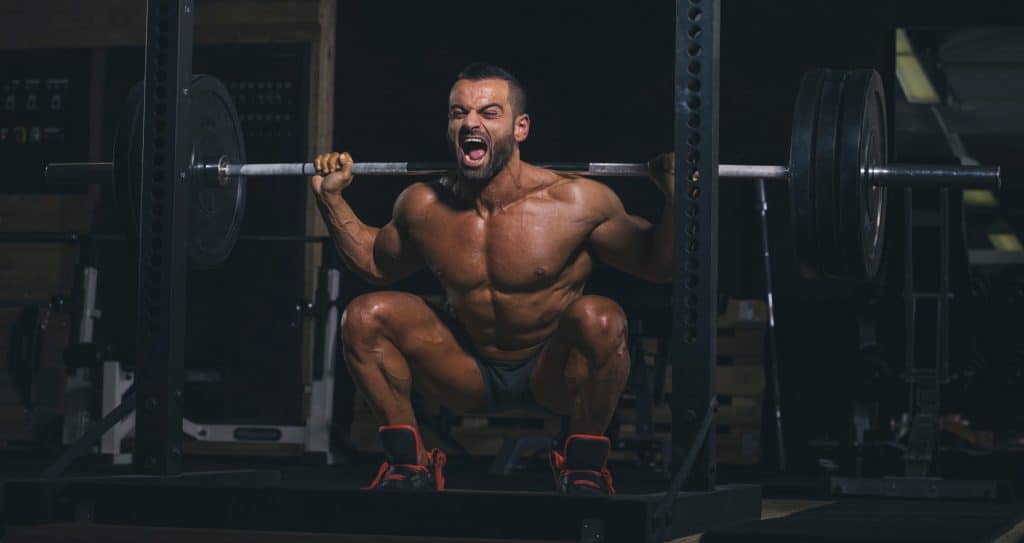
Wide stance squats emphasize your glutes and adductors.
Squats are often hailed as the king of exercises — and for good reason. They strengthen the posterior chain, improve mobility, and boost explosive power, all of which contribute to enhanced athletic performance. Plus, squats are an excellent calorie burner, making them a key player in improving overall body composition (1).
The benefits of squats are undeniable, but what makes them even more versatile is the variety of options available to target different muscle groups. One standout variation is the wide stance squat, which places extra emphasis on the glutes and adductors, making it a valuable addition to your workout routine.
Curious about how to perform the wide stance squat or looking for other effective alternatives to diversify your training? Keep reading for a detailed breakdown of this powerful squat variation and tips to take your lower-body workouts to the next level.
Overview — What Is the Wide Stance Squat?
The wide stance squat is a variation of the standard squat, targeting your lower body muscles. One might think that the wide stance squat is the same as the sumo squat. However, they are not; sumo squats are significantly wider with the feet turned out significantly.
They can be a bodyweight exercise. This means you can perform this routine conveniently anywhere and anytime as long as you have enough floor space. However, if you’re looking for more resistance and better gains, you can use kettlebells, barbells, dumbbells, weight plates, or even resistance bands.
Wide Stance Squat — Muscles Worked
Just like regular squats, wide stance squats work multiple muscle groups. It is essential to place your feet at a wider than shoulder-width distance to get the benefits of the workouts. Here are some of its target muscles below:
- Erector Spinae
- Adductors
- Calves
- Quadriceps
- Gluteus Maximus
- Hamstrings
- Core
The important thing about the wide stance squat is that it focuses on the adductors, which are the muscles in your inner thighs. To achieve a fully developed lower body experience, consider combining regular squats, narrow squats, and wide stance squats.
How to Do the Wide Stance Squat
We talked earlier about using different equipment to perform this exercise, including using your body weight. However, if you’re using a barbell for this workout, here is how you can go about it:
- Load the barbell with your appropriate weight and place it in a squat rack at shoulder level so it is easy to unrack.
- Next, grab the bar with a slightly more than shoulder-width grip while placing your upper back under it so it carefully rests on your traps.
- Engage your core, lower your shoulders down and back, and then lift the bar off the rack while taking one or two steps back.
- Now, turn your feet out slightly and place them at more than shoulder-width stance (wide stance). This is your starting position.
- Next, take a deep breath, then hinge your hips while bending your knees slowly into a squat position.
- Continue going down until your hips are parallel to the floor. Remember to keep your chest up and back straight throughout this movement.
- Hold this position for about two to three seconds.
- Drive through your feet into the floor and slowly return to the starting position.
- Repeat this movement for a prescribed number of reps, and when you’re done, return the barbell to the squat rack.
Benefits
The wide-stance squat is an effective routine that you can try. Adding them to your workouts gives you a plethora of benefits.
Works the Glutes
Performing the wide stance squat effectively works your lower body muscles with less strain on your knees. This study shows that wide stance squats are necessary for greater activation of the gluteus maximus without exposing the knees to injury (2).
Builds Your Lower Body Muscles
The wide stance squat isn’t just limited to glute activation. It also works the rest of your lower body muscles, like the quads, adductors, hamstrings, and calf muscles, giving you that overall leg experience. This improves your mobility, explosive power, and stability, leading to better athletic performance.
Great Way to Burn Calories
If you’re looking for a routine that can reduce your body fat while improving your muscularity, the wide-stance squat is an effective option to try. It engages various muscle groups, leading to high energy expenditure.
Activates Your Core
When performing the wide stance squat, you activate your core muscles to help maintain proper form and prevent any injuries. This improves your core muscles, which are also crucial for maintaining the correct posture.
Convenient & Easy to Do Anywhere
The wide stance squat, similar to a traditional squat, is primarily a body weight routine. This means they are easy and convenient to do anywhere and at any time. All you need is adequate floor space, and you are ready to work those lower-body muscles.
Variations
Alternatives are beneficial because they add variety to your exercise experience. Let’s be honest, doing only wide stance squats can get tiring and boring. Even experts advise combining various exercises that build similar muscle groups to optimize muscle-strength gains. Here are some excellent variations you can try.
Wide Stance Deadlifts
Deadlifts build muscularity in your back and improve your lower body. They are full-body routines and are effective for building strength and power. However, wide stance deadlifts, just like your wide stance squats, work your posterior chain and place a greater emphasis on your hip mobility. So, doing this routine is an effective way to improve your functional movements.
Leg Presses
Leg presses solely focus on your lower body muscles. With this routine, it is easy to change your wide stance to work your preferred target muscle. For instance, a wide stance leg press will give you more inner thigh and glute activation. You can play around with different foot placements to meet your exercise goals.
Reverse Lunges
Reverse lunges are a great way to work your lower body muscles, just like the wide stance squats. They are body weight movements and are easy to execute. However, if you’re looking for more resistance with this routine, you can always use free weights. Unlike the wide stance squats, reverse lunges work your body unilaterally. This means you can address strength and muscle imbalances and build a better mind-muscle connection, which is an effective factor for growth.
FAQs
What does a wide stance squat work?
The sumo stance squat is an excellent squat variation that works your lower body muscles. They are easy on the knee joints and give you maximum glute activation. This exercise isn’t just limited to the glutes; it also works your posterior chain, quads, erector spinae, adductors, and core muscles.
Is a wide stance better for the glutes?
Yes, compared to some squat variations, the wide stance squats are excellent for your gluteus maximus. According to research studies, when performing squats with a wide stance, the EMG results for gluteus maximus activation were significantly higher compared to a narrow or standard stance.
What are the benefits of a wide stance?
Adopting a wide stance during squats or deadlifts offers more posterior chain activation. This helps build your lower body muscles, enhancing mobility, improving explosive strength, and giving you a better body composition. For more specific benefits, like in the case of the wide stance squat, you can take a look at the exercise guide above.
Follow Generation Iron on Instagram, Facebook, and Twitter for more exercise breakdowns!
References
- Takai, Y., Fukunaga, Y., Fujita, E., Mori, H., Yoshimoto, T., Yamamoto, M., & Kanehisa, H. (2013). Effects of body mass-based squat training in adolescent boys. Journal of sports science & medicine, 12(1), 60–65.
- Paoli, A., Marcolin, G., & Petrone, N. (2009). The effect of stance width on the electromyographical activity of eight superficial thigh muscles during back squat with different bar loads. Journal of strength and conditioning research, 23(1), 246–250. https://doi.org/10.1519/jsc.0b013e3181876811