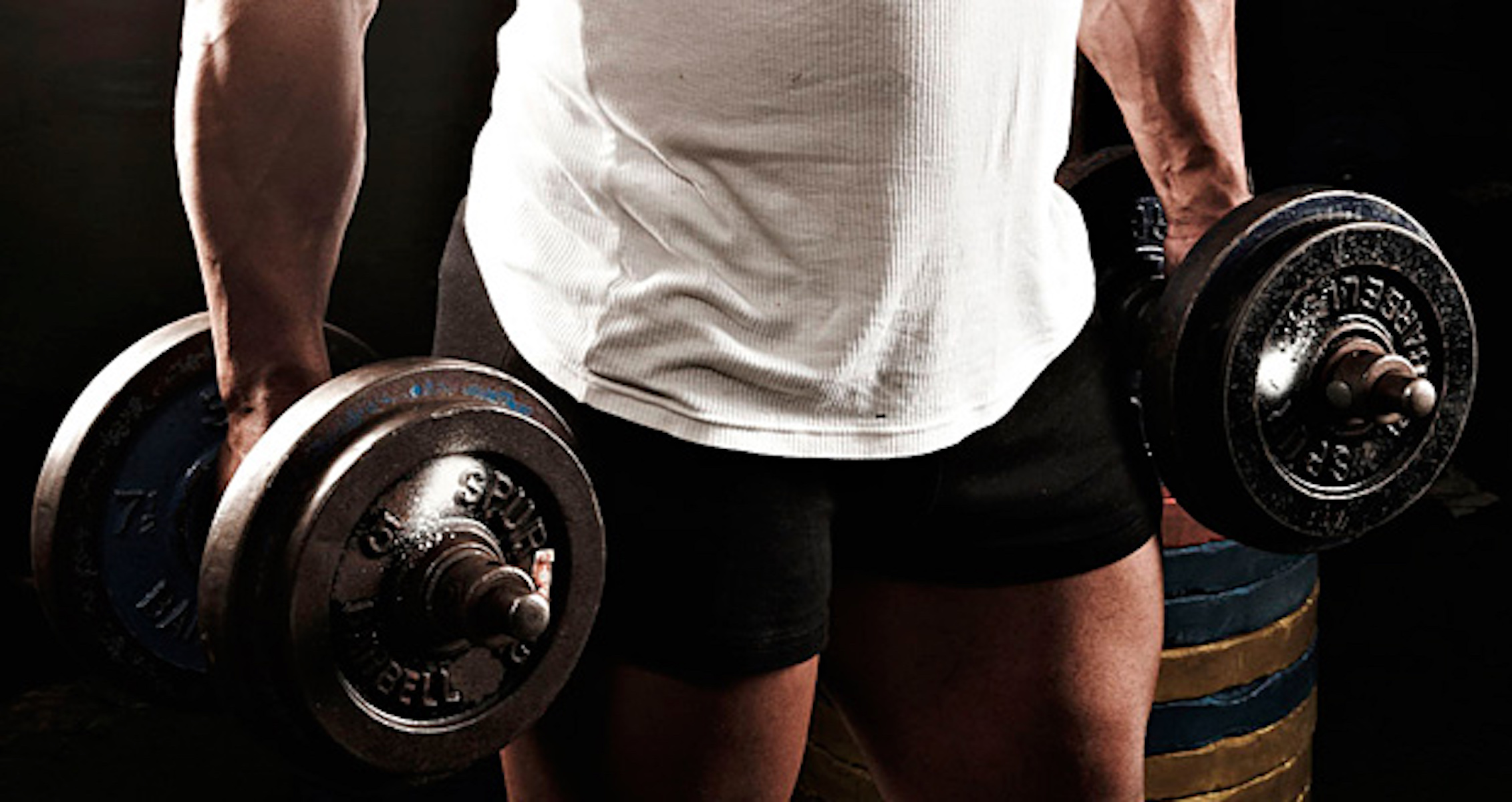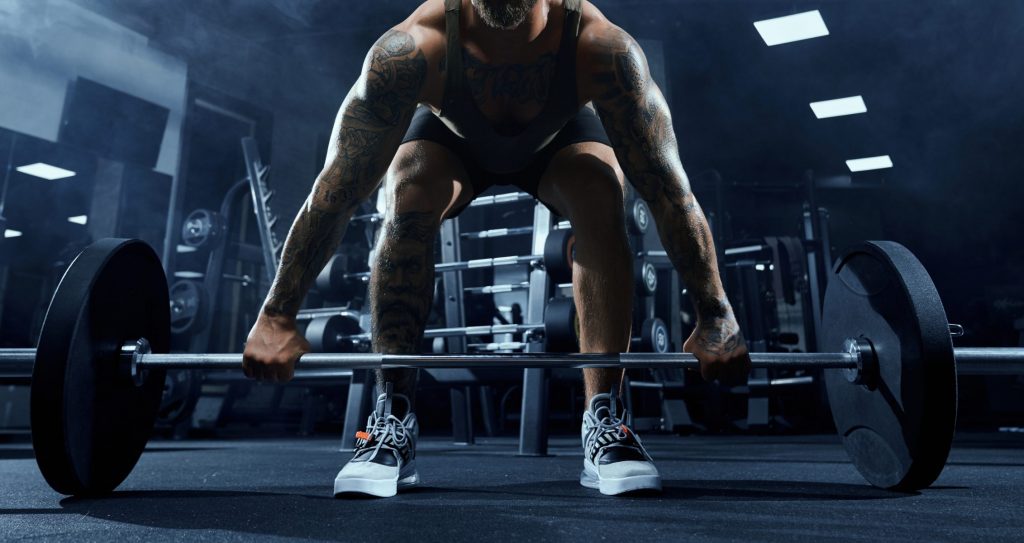
Adding resistance bands to the deadlift makes the movement more challenging at every degree of the lift.
Deadlifts are one of the most effective full-body routines for building strength and adding muscle mass. People typically refer to them as the “king of exercises,” and athletes primarily execute them using a barbell.
Though performing deadlifts works the full body, this routine places a special focus on your posterior chain muscles and lower body. So, a deadlift workout is a go-to for those looking to improve explosive movements, stability, and functional movements (1).
Looking for ways to tweak your deadlifts? The banded deadlift provides more resistance for your deadlift training, adding time under tension and challenge through each degree of the lift. In this guide, we dive into the banded deadlift, highlighting its key benefits and target muscles. You’ll also find a comprehensive step-by-step guide on how to perform this exercise effectively. Additionally, this article provides three excellent alternatives to improve your training further.
Banded Deadlift — An Effective Deadlift Variation
What is the banded deadlift, and why is it so important? Well, the banded deadlift is a deadlift variation that works your full body by strengthening and building its target muscles. Unlike the conventional deadlift that uses a barbell, the banded deadlift, depending on your training, incorporates the use of a resistance band with or without a barbell.
The resistance band provides resistance during deadlifts. It places constant tension on your target muscles throughout the movement. This study shows that time under tension can be important in optimizing muscle growth (2).
Also, if you don’t have access to a barbell, resistance bands are an excellent alternative if you’re insisting on a deadlift routine. All you have to do is place your feet on the band and perform your deadlift routine. If you have maxed out all the weights in the gym and are looking for more to add to your free weights (barbells or dumbbells), consider incorporating resistance bands, which we’ll explore below.
The idea is that the banded deadlift is an exercise you can do anywhere. So whether you’re on the road or at home, all you have to do is get your bands and start deadlifting.
Banded Deadlift — Muscles Worked
The banded deadlift is a compound movement that works the majority of your upper and lower body muscles, but with a special emphasis on your lower body. Here is a list of its target muscles below:
- Posterior Chain: These are the muscles located at the back of your body. They are the erector spinae, traps, lats, glutes, hamstrings, and calves.
- Quads: You can see this muscle in front of your leg.
- Core: The core muscles comprise the abs and obliques. They help keep your body stable during your deadlift routine.
- Forearms: The forearms are important because they determine your grip strength. The stronger your grip, the more effective your exercise.
How to Do the Banded Deadlift: Set Up
Performing the banded deadlift is a bit different from the conventional deadlift. Unlike traditional deadlifts that require your hands to be out and in front, banded deadlifts usually have the hands by the sides.
Here is a detailed step-by-step guide on how to do the banded deadlift using a resistance band only:
- Hold the two ends of the resistance band and step on the middle, placing your feet at hip-width distance.
- Stand upright, keep your back straight, and push your chest out while slightly bending your knees as you begin to initiate the movement. This is your starting position.
- Now, engage your core muscles and hinge your hips as you slowly lean forward and go down as low as possible.
- Hold in this position for two to three seconds and slowly return to the starting position.
If you want to do this routine with a barbell, all you have to do is attach the band to the barbell and secure it to the platform using your feet. Then, you can perform a regular deadlift, but with the resistance band in place.
Benefits
Resistance band deadlifts are an effective deadlift variation. Here are some benefits of performing this exercise.
Works the Full Body
Banded deadlifts are a great full-body routine. They work both the upper and lower body muscles, improve functional movements, and build muscle mass. Some of these muscle groups include your posterior chain, quads, core muscles, and arms.
Improves Functional Movements
Banded deadlifts, just like the traditional deadlifts, are key to improving your functional movements. Consistent training in these movements will automatically translate to better movement techniques, such as bending, jumping, and even climbing. This helps improve your athletic performance and overall quality of life.
Great Alternative Exercise
Anyone can perform this exercise anywhere, whether at home, in the gym, or even on the go. All you need is a resistance band, and you do this exercise just like a regular deadlift. They are a great routine for improving your deadlift movements.
Activates the Core
Your core muscles are crucial for helping to maintain proper posture. They also help prevent injuries, especially when you’re doing specific movements or lifting heavy weights. During the banded deadlift, you activate your core muscles.
Good for Recovery
If you’re facing any injuries, especially in your lower back, banded deadlifts serve as an excellent form of rehab. You can always use light resistance bands to strengthen those inactive and weak muscles (3).
Banded Deadlift Alternatives to Try
Yes, the banded deadlift is an effective workout to include in your routines. However, experts advise including other alternatives to keep your exercises interesting and prevent a training plateau. Here are some interesting options to add to your exercise arsenal.
Jefferson Squats
Jefferson squats are a great alternative routine to the band deadlifts for building your upper and lower body muscles. They help improve your mobility, explosive power, and, to a certain extent, burn calories. However, remember that with this routine, you need to strike a good balance to make it work.
Rack Pulls
Rack pulls are great for progressive loading and building your lockout strength. Unlike deadlifts, which use a full range of motion, rack pulls use a reduced range of motion. So, if you have challenges with your lower body because of injuries, consider trying rack pulls.
Suitcase Deadlifts
Suitcase deadlifts are a variation of the conventional deadlift. So, this means they work similar muscle groups and have the same benefits. However, the upside of this routine is that it adopts a unilateral training approach. This means you can work each side of your body to address muscle-strength imbalances and work through injuries.
FAQs
What are banded deadlifts good for?
Banded deadlifts are compound exercises that work your upper and lower body muscles. They are suitable for improving functional movements, explosive power, and building muscle mass and strength. They are convenient to do anywhere on the go.
What is the difference between a barbell deadlift and a banded deadlift?
The barbell deadlift is the traditional deadlift, which uses a barbell. Banded deadlifts are a variation of the barbell deadlift that uses a resistance band to build muscle and strength. You can use them along with a barbell to create more resistance, which is good for muscle growth.
What are the benefits of deadlift exercise?
The benefits of the deadlift exercise are numerous. First, they are full-body routines. They are also effective workouts for building muscularity in your back. Deadlifts are compound routines that improve your functional movements, explosive power, and strength.
Follow Generation Iron on Instagram, Facebook, and Twitter for more exercise breakdowns!
References
- Coratella, G., Tornatore, G., Longo, S., Esposito, F., & Cè, E. (2022). An Electromyographic Analysis of Romanian, Step-Romanian, and Stiff-Leg Deadlift: Implication for Resistance Training. International journal of environmental research and public health, 19(3), 1903. https://doi.org/10.3390/ijerph19031903
- Burd, N. A., Andrews, R. J., West, D. W., Little, J. P., Cochran, A. J., Hector, A. J., Cashaback, J. G., Gibala, M. J., Potvin, J. R., Baker, S. K., & Phillips, S. M. (2012). Muscle time under tension during resistance exercise stimulates differential muscle protein sub-fractional synthetic responses in men. The Journal of physiology, 590(2), 351–362. https://doi.org/10.1113/jphysiol.2011.221200
- Fischer, S. C., Calley, D. Q., & Hollman, J. H. (2021). Effect of an Exercise Program That Includes Deadlifts on Low Back Pain. Journal of sport rehabilitation, 30(4), 672–675. https://doi.org/10.1123/jsr.2020-0324