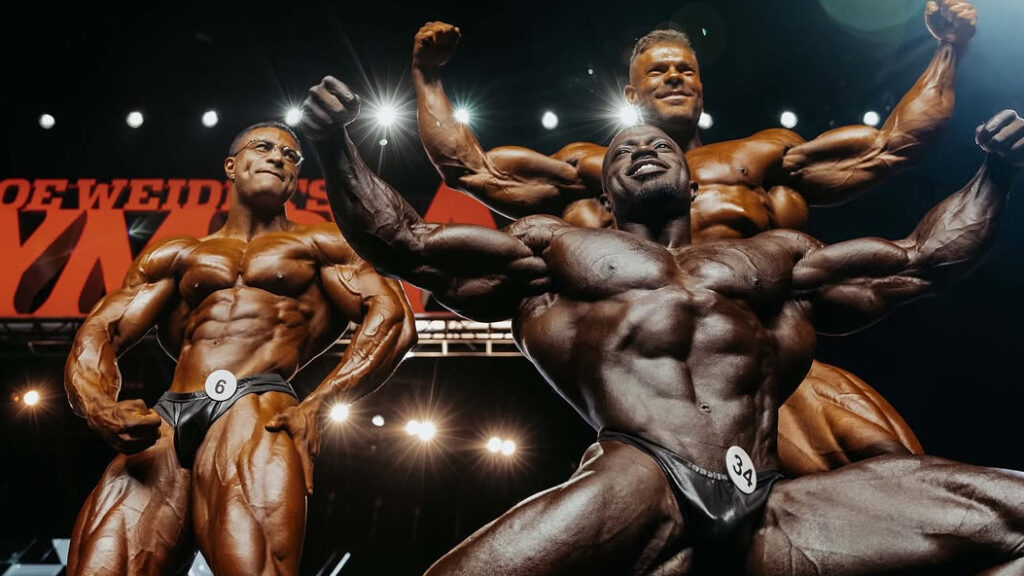
Four-time Mr. Olympia Jay Cutler believes the growth of Classic Physique could be preventing some promising bodybuilders from reaching their full potential
Classic Physique has become one of the most popular divisions in bodybuilding, but is its success coming at the expense of Men’s Open? Four-time Mr. Olympia Jay Cutler raised that question during a recent episode of the Cutler Cast, where he was joined by Classic Physique standout Terrence Ruffin, better known as “Ruff Diesel.” The two discussed how weight restrictions could be holding back younger competitors who might otherwise develop into successful Open bodybuilders.
Jay Cutler Believes Classic Physique Could Be Holding Back Future Men’s Open Stars
Classic Physique was introduced in 2016 as an alternative for competitors who wanted to emphasize symmetry, proportions, conditioning, and aesthetics without pursuing the extreme size associated with Men’s Open bodybuilding.
The division has grown significantly over the last decade, particularly during Chris Bumstead’s six-year reign as Classic Physique Olympia champion. However, Cutler wonders whether its popularity is encouraging athletes with greater size potential to remain in a weight-restricted category.

During his conversation with Ruffin, Cutler pointed to former Classic Physique competitors who have successfully transitioned into the Open division.
“Do you think Classic Physique holds some guys back?” Cutler asked.
Ruffin acknowledged that it can, particularly for athletes who have the genetics and frame to carry considerably more muscle.
“I think it does hold some guys back,” Ruffin said, agreeing that certain competitors could become successful Open bodybuilders.
The conversation turned to Anton Ratushnyi, one of the younger athletes who has made a name for himself in Classic Physique. Ruffin suggested that Ratushnyi might eventually need to move into the Open division.
“I think Anton’s gonna have to switch to the Open,” Ruffin said.
Lee Priest has also urged the young star make the move.
Cutler believes the issue extends beyond individual competitors.
“I think that we’re missing some talent because of your division,” Cutler said.
The bodybuilding legend questioned what might happen if younger athletes concentrated on building as much muscle as possible rather than constantly trying to meet Classic Physique weight limits.
Ruffin agreed that some competitors could benefit from making that decision earlier in their careers.
“If you’re in your early, early 20s and you’re struggling to make weight for Classic, just don’t do it. Just go to Open,” Ruffin said.
Terrence Ruffin Explains Why Moving From Classic Physique to Men’s Open Isn’t Easy
Although Ruffin agreed with Cutler’s concerns, he also explained that making the transition to Men’s Open is much more difficult than many competitors realize.
Some Classic Physique athletes believe that removing their weight restrictions will allow them to quickly add enough muscle to become competitive in the Open division. However, Ruffin has seen competitors struggle to make significant improvements after moving up.
“They’ll grow like 10 pounds and then they’ll stop and they can’t get any bigger,” Ruffin explained.
He pointed to Brett Wilkin and Urs Kalecinski as examples of athletes who have made promising transitions.
“I think the only two people who have done a decent job of it is Brett and Urs,” Ruffin said.
Kalecinski’s move from Classic Physique to Men’s Open has been particularly noteworthy. The German bodybuilder decided to pursue a larger physique after establishing himself among the world’s leading Classic competitors.
The discussion also touched on Mike Sommerfeld, Wesley Vissers, and Ramon Rocha Queiroz as athletes with the potential to explore other divisions.
Ruffin believes Sommerfeld could immediately become a top-five competitor in the 212 division, although he stopped short of predicting that he could defeat reigning 212 Olympia champion Keone Pearson.
Classic Physique Has Also Changed Men’s Open Bodybuilding for the Better
Despite concerns about losing potential Open competitors, Ruffin believes Classic Physique has had a positive influence on bodybuilding as a whole.
The two-time Arnold Classic champion credited the division with encouraging Open competitors to pay greater attention to their presentation and overall proportions.
“I think Classic has done a lot of cool stuff for the sport,” Ruffin said.
“In particular, I think it’s affected the Open in a sense of like the guys care a little bit more about their waist. They care a little bit more about presentation.”
Ruffin specifically mentioned competitors such as James Hollingshead and Michal Krizanek, who have worked to improve their posing.
For Ruffin, the importance of Classic Physique goes beyond aesthetics. He admitted that the division may have allowed him to enjoy a much longer professional bodybuilding career than he otherwise would have had.
“I’m truly, truly grateful,” Ruffin said. “I don’t think I would have been competing at this point.”
Can Classic Physique and Men’s Open Continue to Grow Together?
The conversation comes at an interesting time for professional bodybuilding. The 2026 Mr. Olympia featured Nick Walker capturing his first Men’s Open title, while Classic Physique continued to showcase an increasingly competitive field following Bumstead’s retirement.
Ruffin believes Classic Physique has helped bring more attention to the sport while influencing how athletes approach conditioning, posing, and symmetry.
Cutler, meanwhile, sees an opportunity for younger bodybuilders to consider whether their long-term potential might be greater without weight restrictions.
Both agreed that athletes should ultimately compete in the division that best suits their physiques.
The question is whether the next generation of Men’s Open stars is already competing in Classic Physique, waiting for the opportunity to grow.
Image embed via Instagram @mrolympiallc