Bodybuilding Legend Lee Priest Tell You How to Build Iconic Arms Without Risking Your Health
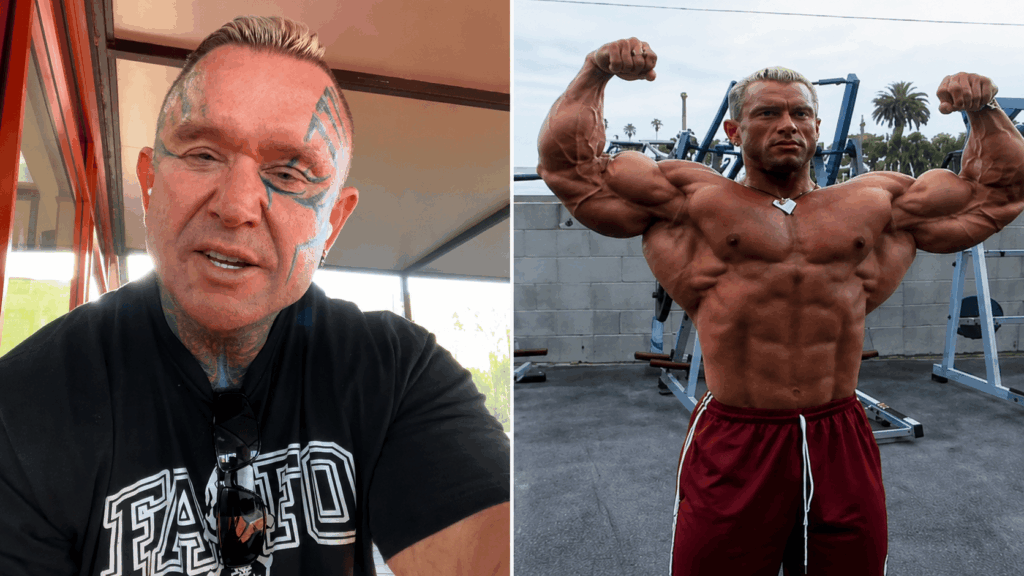
Australian bodybuilding legend Lee Priest built one of the most iconic arm physiques in bodybuilding history. He was once a renegade of the sport, which Generation Iron chronicled exclusively in the documentary Lee Priest Vs Bodybuilding. Now he’s breaking down how lifters can build massive arms without risking injury.
In a recent discussion and workout breakdown, Priest explained that smart exercise selection, controlled reps, and managing wear and tear become even more important as lifters age or accumulate injuries.
Known for his freakishly dense biceps, triceps, and forearms during the 1990s and early 2000s, Priest remains one of the most respected voices in old-school bodybuilding training. Unlike many modern influencers pushing reckless overload, Priest emphasized training hard while still protecting the body for longevity.

Lee Priest’s Arm Training Philosophy
Priest has long believed that heavy basics and high volume are still king for arm growth, but he also warned against ego lifting and unnecessary strain on elbows and shoulders. One of the biggest themes in his training advice is maintaining tension without forcing painful lockouts or sloppy cheat reps.
In the YouTube clip, Priest said one of the ways he avoids injuries is by having a dedicated arm day:
“I just do arms by themselves, I wouldn’t do a heavy triceps workout the day before you got to do chest or shoulders because then a lot of your push power is going to be gone, or I wouldn’t go have a massive biceps workout the day before back, so I do the major big body parts first, then do arms later.”
That mindset has become increasingly relevant in modern bodybuilding where joint issues often derail physiques long before muscle potential is reached.
Lee Priest’s Arm Workout Breakdown
Based on the workout details and Priest’s long-established arm programming, his approach centers around heavy compound movements mixed with isolation work for maximum blood flow and contraction.
Biceps
- Dumbbell Concentration Curls
- Standing Barbell Curls
- Alternating Dumbbell Curls
- Preacher Curls
- Dumbbell Preacher Curls
Triceps
- Close-Grip Bench Press
- Two-Arm Dumbbell Extensions
- French Presses
- V-Bar Cable Pressdowns
- One-Arm Dumbbell Extensions
Forearms
- Reverse Curls
- Hammer Curls
- Wrist Curls
- Dumbbell Wrist Curls
Priest has repeatedly said that arm training should not just focus on biceps peaks. If you’re looking for those showoff guns, Kai Greene showed Generation Iron how to get them here.
Priest believes complete arm development comes from balancing biceps, triceps, and forearms equally, something clearly reflected in his programming.
High Volume, Heavy Weight, Controlled Execution
One of the more surprising parts of Priest’s philosophy is just how much volume he used throughout his career. Priest often performed 20 or more working sets for biceps alone during peak training phases. However, he balanced that intensity with strict form and constant tension instead of reckless momentum lifting.
He also strongly advocated for exercises like close-grip bench presses, standing barbell curls, and dumbbell extensions because they allowed lifters to overload the muscles safely while still controlling the movement.
Even decades after his competitive prime, Priest’s arms remain one of the gold standards in bodybuilding history. And while modern training trends constantly evolve, his message remains simple: train brutally hard, recover properly, and don’t sacrifice your joints chasing numbers.
Featured image via YouTube @realleepriest