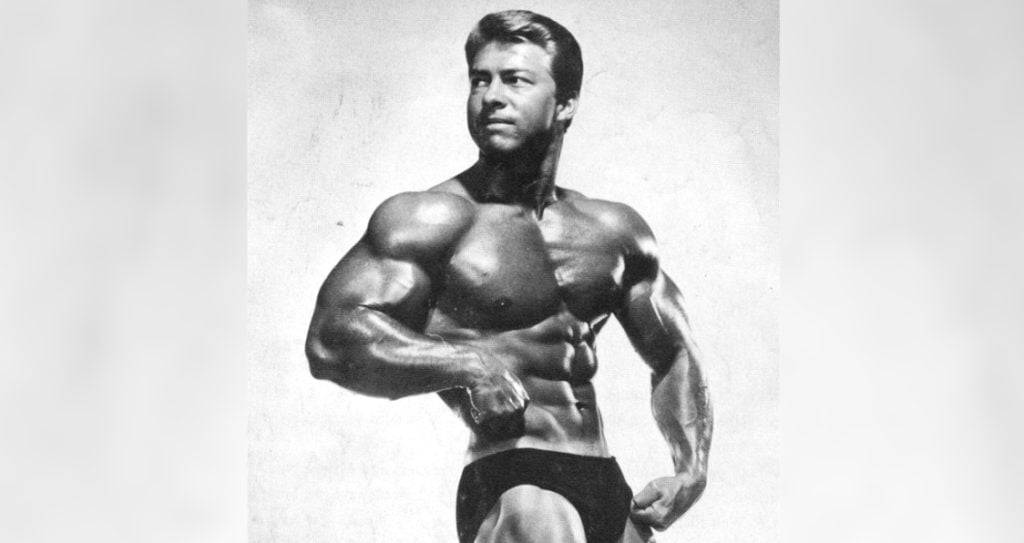
The inaugural Mr. Olympia champ followed three and six-day training splits.
It’s impossible to talk about Mr. Olympia without mentioning Larry Scott, the legend who set the standard during bodybuilding’s Golden Era of the 1960s. As the winner of the inaugural Mr. Olympia competition, he became an icon of well-defined, total muscle mass.
This article delves into a comprehensive breakdown of Larry Scott’s workout routine, his dietary philosophy, and the key elements that made him a champion. Discover what set Larry Scott apart and how he established a benchmark in the world of bodybuilding.
| Full Name: Larry Scott | ||
| Weight | Height | Date of Birth |
| (93-97 kg) 205 -213 lbs | (170 cm) 5’6” | 10/12/1938 |
| Profession | Era | Nationality |
| Bodybuilder & Personal Trainer | 1959-1964 | American |
Who Is Larry Scott?
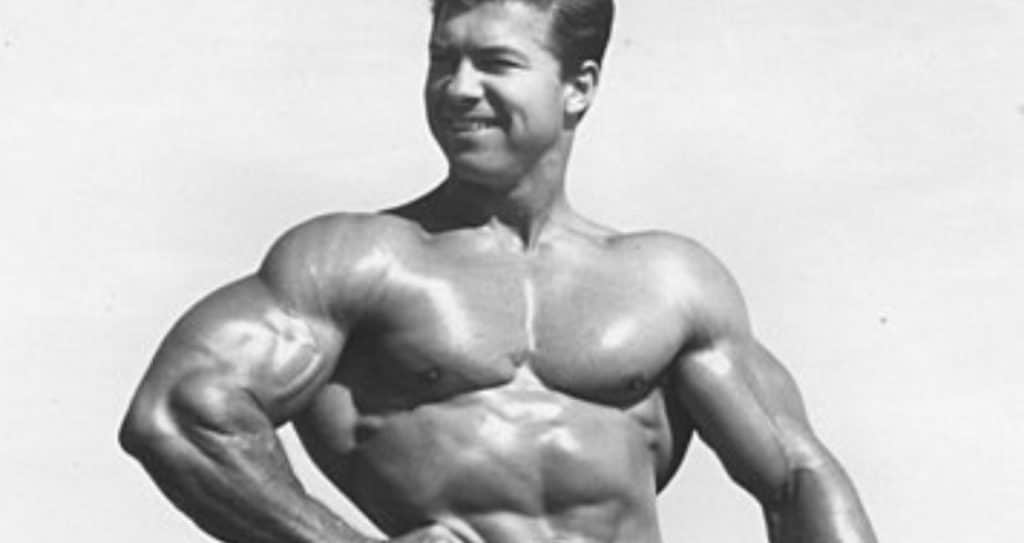
The late Larry Scott was an iconic athlete from the Golden Era of bodybuilding. He became the inaugural winner of the first Olympia in 1965. However, he wasn’t always a mass monster. Larry Scott was born in Salt Lake City, Utah, and grew up as a skinny, small kid. Still, he made it to the highest peaks of the Golden Era of bodybuilding.
Inspiration
At sixteen, he stumbled on a bodybuilding magazine in a dumpster. He was hooked on the muscular physiques and saw a note that read, “everyone could build a big and muscular body.”
He got home and immediately started training to transform his build for years, but found little success. Scott was told he had narrow shoulders, which was usually an automatic disqualification, but he never gave up and focused on improving his physique.
However, he later began to follow a strict diet and training program and gained about 50 lbs. This encouraged him to go deeper into bodybuilding, and at the age of 20, he had built his physique to a point that was ready to compete on stage.
Bodybuilding Competitions
After winning the Mr. Idaho competition, Larry Scott moved to California; this significantly helped establish his place among the greatest ever. He also won the IFBB Mr. America championship in 1962 and the Mr. Universe title in 1964. This made him the bodybuilding sport’s golden boy, which was an impressive feat to achieve in the world of bodybuilding.
In the first two Olympia competitions, Larry Scott went home with the crown in 1965 and 1966, making him the inaugural Olympia champion and back-to-back winner.
Retirement
Shockingly, at the young age of 28, “The Legend,” as he is fondly called, decided to retire from bodybuilding. He wanted to focus more on family and becoming a personal trainer. Occasionally, he also modeled for various health and fitness magazines because of his impressive physique.
Larry Scott’s passion for bodybuilding and fitness also pushed him to publish several articles in magazines, creating an awareness of health and bodybuilding. Some of his works went on to inspire other bodybuilding legends, like Frank Zane and Arnold Schwarzenegger.
He spent the remaining days of his life in Salt Lake, Utah, where he was born. In 2014, at the age of 75, Larry Scott died of complications from Alzheimer’s disease.
Larry Scott’s Full Workout Routine
Larry Scott employed numerous training methods during his time to build strength and muscle. He had a passion for weight training and rarely missed his training days. He always found new ways and methods to build muscle. His focus was always to be a better version of himself.
The Legend understood his weaknesses and always sought ways to improve them. For instance, his underdeveloped shoulders and arms never discouraged him. In fact, he had arm curl exercises like preacher curls to work his lagging muscles. He was so well known for it that they named it the “Scott Curl.”
Scott had two types of training splits: the three-day training split and the six-day training split.
Three-Day Training Split
The three-day split involved training three days a week using full-body splits. It was one exercise per muscle group, but with six sets of very high volumes. This study shows that muscle hypertrophy increases with higher training volumes (1). The rep range of his exercises, on average, was usually between six and eight, but when training his lower legs, he typically used high rep ranges.
This is how Scott’s three-day training split looked.
| Exercises | Sets | Reps |
| Barbell Squats | 6 | 8 |
| Neck Bench Presses | 6 | 6-8 |
| Behind the Neck Shoulder Presses | 6 | 6-8 |
| Lat Pulldowns | 6 | 8-10 |
| Barbell Tricep Extensions | 6 | 6-8 |
| Preacher Curls | 6 | 6-8 |
| Calf Raises | 6 | 15-20 |
| Bent Knee Leg Raises | 1 | 100-150 |
Six-Day Training Split
Larry Scott’s six-day workout split involved him training five days a week using a bro split. He averaged at least five sets with 10-12 reps. Here is how his training split was done weekly.
Chest
| Exercises | Sets | Reps |
| Barbell Wide-Grip Bench Presses | 5 | 5-8 |
| Incline Dumbbell Bench Presses | 5 | 5-8 |
| Dip Bars | 5 | 10-12 |
| Incline Dumbbell Flys | 5 | 8-12 |
| Decline Dumbbell Flys | 5 | 8-12 |
| Push-Ups | 3 | AMRAP |
Shoulders
| Exercises | Sets | Reps |
| Standing Barbell Overhead Presses | 5 | 5-8 |
| Dumbbell Presses | 5 | 5-8 |
| Barbell Front Raises | 5 | 10-12 |
| Dumbbell Lateral Raises | 5 | 10-12 |
| Bent Over Rear Delt Flys | 5 | 10-12 |
Arms
| Exercises | Sets | Reps |
| Dumbbell Curls | 5 | 10-12 |
| One Arm Biceps Curls | 5 | 10-12 |
| Overhead Barbell Triceps Extensions | 5 | 10-12 |
| One Arm Triceps Extensions | 5 | 10-12 |
| Barbell Reverse Curls | 5 | 10-12 |
Back
| Exercises | Sets | Reps |
| Wide-Grip Chin-Ups | 5 | 5-10 |
| Hanging Bar Scapular Rotations | 5 | 10-12 |
| One Arm Lat Pulldowns | 5 | 8-12 |
| Close-Grip Seated Cable Rows | 5 | 10-12 |
| Cross Bench Dumbbell Pullovers | 5 | 10-12 |
Core
| Exercises | Sets | Reps |
| Sit-Ups | 3 | 15 |
| Bent Knee Raises | 3 | 15 |
| Hanging Leg Raises | 3 | 15 |
Legs
| Exercises | Sets | Reps |
| Close Stance Barbell Squats | 5 | 5-8 |
| Hack Squats | 5 | 5-8 |
| Stiff Leg Deadlifts | 5 | 5-8 |
| Leg Extensions | 5 | 10-12 |
| Standing Calf Raises | 5 | 15-20 |
Larry Scott’s Diet
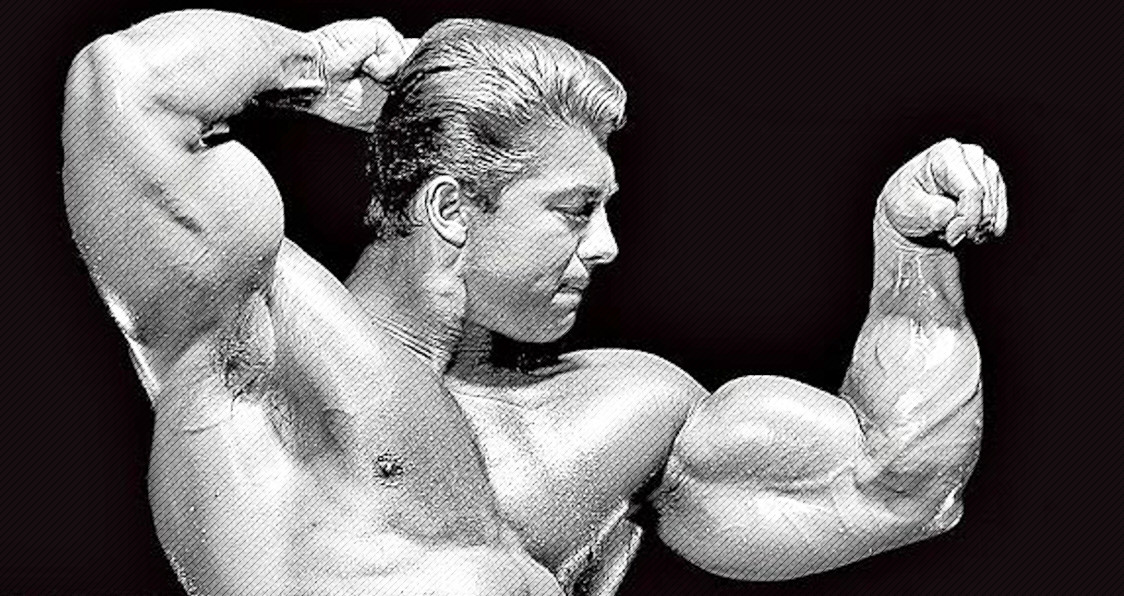
Besides Larry Scott’s workout routine, the inaugural Mr. Olympia champ followed a high-protein diet with high fats and low carbs. Scott also did protein powders and supplements to help support his muscle building (2). He ate six to seven meals daily to keep his energy levels high. Here is what a typical meal day was for Larry Scott.
Meal One
Meal Two
- Protein Shake
- Whole Milk
Meal Three
- Vegetables
- Steak (8 oz)
- One Cup of Cottage Cheese
Meal Four
- Six Eggs
- Cheese
- Toast Bread
Meal Five
- Protein Shake
- Whole Milk
Meal Six
- Steak with Cheese
Follow Generation Iron on Instagram, Facebook, and Twitter for more workout routine insight!
References
- Schoenfeld, B. J., Contreras, B., Krieger, J., Grgic, J., Delcastillo, K., Belliard, R., & Alto, A. (2019). Resistance Training Volume Enhances Muscle Hypertrophy but Not Strength in Trained Men. Medicine and science in sports and exercise, 51(1), 94–103. https://doi.org/10.1249/MSS.0000000000001764
- Carbone, J. W., & Pasiakos, S. M. (2019). Dietary Protein and Muscle Mass: Translating Science to Application and Health Benefit. Nutrients, 11(5), 1136. https://doi.org/10.3390/nu11051136